


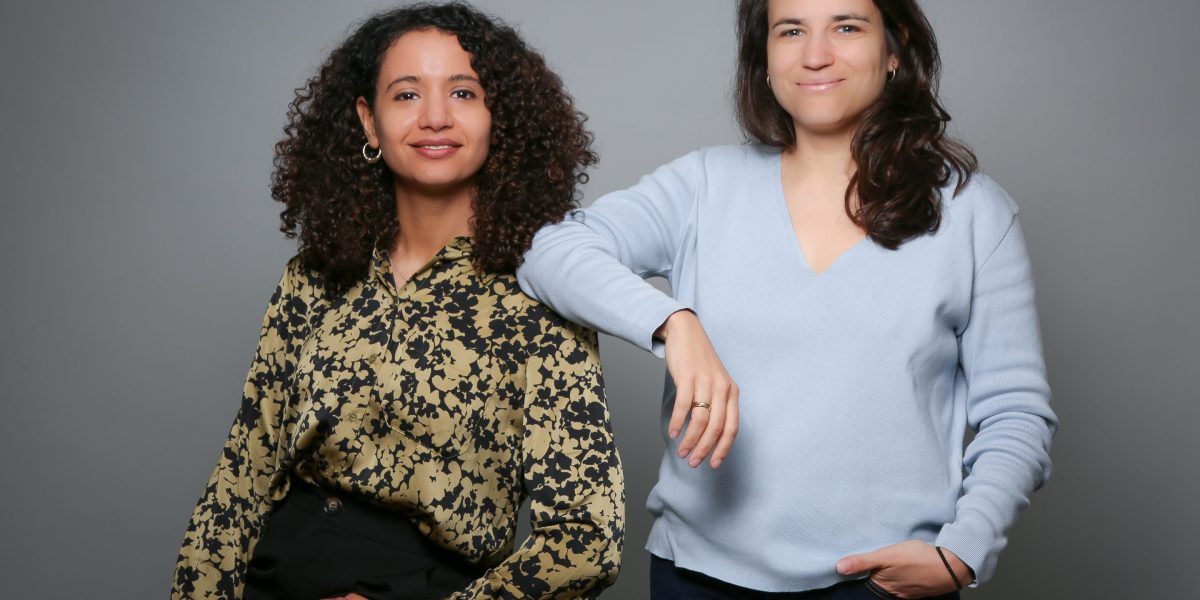
Two former Palantir employees hoping to use AI to transform the process for filing and managing patents have secured $20 million in investment for their London-based startup, Ankar.
The Series A funding round for Ankar was led by venture capital firm Atomico, with participation from Index Ventures, Norrsken, and Daphni. The company had announced a £3 million ($4 million) seed round in May that was led by Index, with support from Daphni and Motier Ventures.
Ankar was founded by Tamar Gomez and Wiem Gharbi in 2024. The pair met while working at Palantir, where they both encountered the time-consuming process of trying to obtain patents for new technology. Gomez, who has a business background, worked as a development strategist for Palantir, while Gharbi, who is a data scientist by training, worked on machine learning applications. They took the name Ankar for their new company from the name of an omniscient and powerful knight found in pre-Islamic poetry.
“We are trying to turn IP that has been viewed as a cost center for a very long time into more of a strategic and competitive asset that we need today in a world that is becoming more and more competitive,” Gharbi, who is Ankar’s chief technology officer, told Fortune.
The new funding for Ankar comes as intellectual property has become increasingly critical to corporate value. Intangible assets like IP now represent up to 90% of the value of S&P 500 companies, according to the World Intellectual Property Organization. Yet the systems for protecting those assets remain stubbornly outdated, according to Gomez and Gharbi, who say they witnessed how time-consuming and difficult it is to obtain a patent when they were working at Palantir.
“To go from something that’s in the head of the inventor—an innovation—to something that is a bankable asset that can be leveraged by the company in the form of a patent took years, basically,” Gomez, who is Ankar’s CEO, said. “The tools to do so were incredibly legacy or just non-existent. It was like a hodgepodge of manual processes.”
Patent attorneys can spend weeks searching multiple databases and reading patent filings to try to determine the extent to which, if any, prior patents might conflict with the new invention they were hoping to protect. Then it can take many more weeks to craft a patent application with the right arguments to try to overcome any objections from patent examiners. Securing a patent can take up to 24 months.
Ankar wants to use large language models to streamline that process. Because these models can search for phrasing that has the same meaning, even if it doesn’t use the exact same keywords, they can quickly surface patent filings from databases that previously would have taken multiple searches and hours of reading to discover.
The startup’s invention discovery tool searches across 150 million patent applications and 250 million scientific publications and produces reports assessing how “novel” an invention is and what claims have already been made by previously patented inventions that might be similar (what’s known in the patent world as “prior art.”) The platform helps inventors harvest their ideas and guides patent attorneys through drafting applications, including spotting gaps in existing patents where claims for a new invention might get the most traction. It also supports patent lawyers when they have to respond to possible challenges from patent examiners, giving them a single view of the entire history of the application process.
“Patent claims are basically the scope of protection for your invention—like, what are the most important pieces of my invention that I want to protect? [Ankar’s] tool can help suggest an initial set of claims and then help the patent attorney think through potential options for broadening these claims,” Gharbi said. “So it’s no longer about just helping you kind of generate words, because we think that the value of just generating words is going to decrease over time. It’s going to become more about like, how do I generate the best qualities of the scope of protection?”
The company has secured some notable early customers, including global cosmetics giant L’Oréal and global law firm Vorys. Ankar says that so far its customers have reported an average 40% boost in productivity, with hundreds of hours shifted to high-value strategic work.
Jean-Yves Legendre, competitive IP intelligence manager at L’Oréal, praised Ankar in a statement, saying that the startup “understood patents, spoke our language, and adapted to our needs.”
Many global companies, particularly in automotive, electronics, and R&D-heavy sector are redoubling efforts to protect their intellectual property, concerned that generative AI will make it easier for competitors to replicate product designs, architectures, and processes. At the same time, many companies are eager to record and protect their IP because they want to use it to train or fine-tune their own AI models to help boost productivity.
Ankar plans to use the new funding to double its current 20-person headcount and expand its engineering, product, design, and go-to-market teams across Europe and the U.S.

