


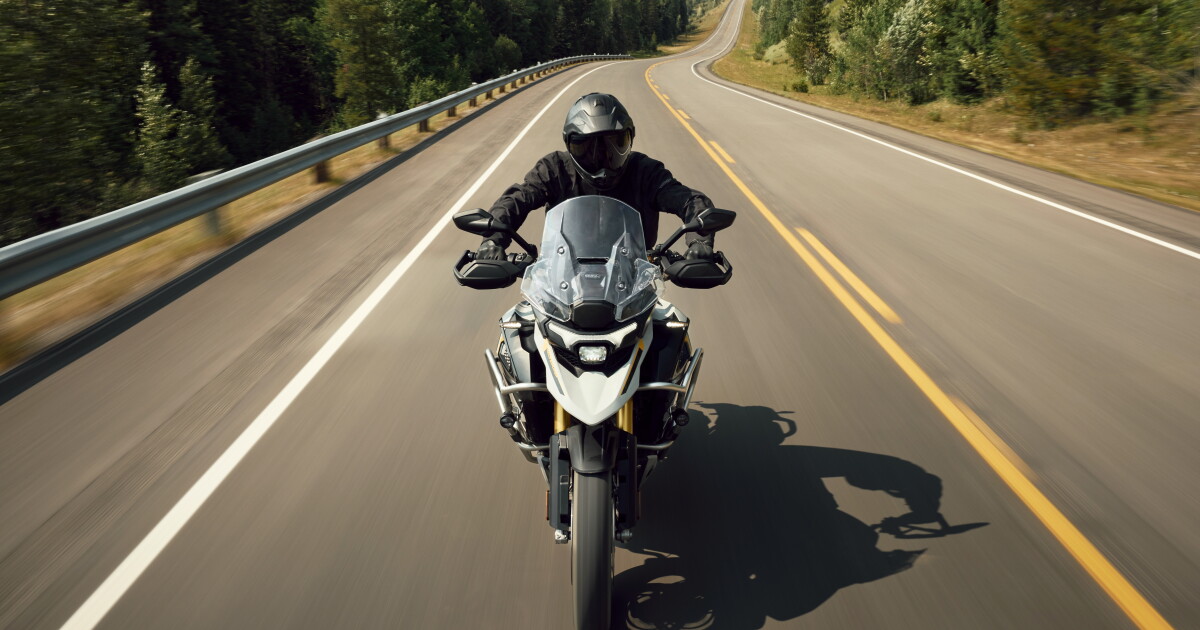
Remember when Triumph sneakily gave the world a glimpse of the new Tiger 1200 on Sam Sunderland’s world-record attempt? Well, the real deal’s finally here, and much of what was anticipated on the latest and greatest Tiger has also come to life.
Triumph’s halo adventure bike not only gets more power with the new generation, but also adds automatic suspension that lowers the bike and an even bigger suite of radar-based rider aids. Changes don’t only come in the form of additions, though, as Triumph has made a few subtractions from the package as well.
Out goes the 21/18-inch front/rear wheel option, as all-new Tiger 1200 trims will now come with a 19/17-inch setup. Even the suspension travel has been reduced from 8.6 inches (220 mm) to 7.8 inches (200 mm) across all models. That means the once dirt-oriented Rally models are now much more similar to the road-going GT models. The reason? To make the motorcycle more accessible and increase road comfort.
While my adventure-oriented mindset doesn’t like that decision personally, I can see why Triumph has gone that route. It’s very similar to what BMW has done with the R 1300 GS, albeit for that Adventure model. Motorcycle companies want to make their big adventure bikes more accessible to an even bigger audience. Reducing the tire sizes is usually the most cost-effective way to do that.
Triumph
For Triumph specifically, both the GT and Rally models come as is, with the Pro trim offering a 5.2-gallon (20-liter) fuel tank and Explorer trim coming with an even bigger 7.9 -gallon (30-liter) tank in addition to a tire pressure monitoring system.
All four trims continue to be powered by the 1,160cc T-plane triple, although the engine has received a substantial round of revisions. Power is now rated at 155.8 hp at 9,250 rpm, representing a 7.9 hp gain over the outgoing model, while torque remains virtually identical at 95.9 lb-ft (130 Nm).
However, that torque has now shifted further down the rev range, available at 6,750 rpm. Triumph has also tweaked the first three gearbox ratios as well, aiming to deliver stronger acceleration and improved drive where riders are likely to use it most.
The tweak in the power comes from the engine getting a redesigned cylinder head, new pistons, lighter intake and exhaust valves, and revised fuel injection. There’s also a newer, less restrictive exhaust system intended to improve gas flow and combustion efficiency, although Triumph has retained the familiar high-mounted exhaust layout on the right side.

Triumph
Triumph has also revised the camshaft design to deliver a more gradual valve-opening action. The company has also refined the transmission and final-drive system, claiming smoother, quieter operation and cleaner gear changes.
Elsewhere, the Tiger 1200 still comes with a tubular steel frame with a bolt-on aluminum subframe. A pair of 49-mm Showa upside-down forks and a monoshock feature updated semi-active EERA Heightflex technology. That rear shock also gets automatic preload adjustment, allowing it to compensate for changes in load and maintain the motorcycle’s intended ride height and chassis geometry regardless of the load.
Triumph calls it the most sophisticated system it has ever fitted to a motorcycle. The updated electronic damping now offers three settings: Firm, Medium and Soft. A redesigned hydraulic bump stop is intended to absorb harder impacts more effectively, particularly when the bike encounters rougher surfaces or larger obstacles.

Triumph
There’s a new automatic lowering function that drops the seat by 1.1 inches (30 mm) as the bike comes to a halt. Once you pull away, the suspension restores its normal height within seconds. With the optional low seat fitted, the bike can settle to just 31.1 inches (790 mm) at a standstill. That’s incredibly impressive for a machine that weighs between 551 lb (250 kg) for the GT Pro and 590 lb (268 kg) for the Rally Explorer.
There’s another neat trick: the center stand. The updated Showa system includes a Centre Stand Assist function that temporarily increases rear suspension preload as the stand is kicked, making the process less of a workout. No kidding!
The suspension electronics also draw information from several sensors during the ride, including the six-axis IMU, to adjust the bike’s behavior according to riding conditions. The objective is to keep the Tiger composed across everything from broken trails and sudden braking inputs to fast, flowing stretches of tarmac.

Triumph
That’s not all – the electronics package is equally impressive. All four Tiger 1200 trims now feature radar hardware at both ends, bringing a comprehensive set of Bosch-developed rider assistance systems into the mix. The front sensor is positioned beneath the windscreen, while its rear counterpart sits above the number plate. Together, they enable adaptive cruise control, forward collision alerts, following-distance assistance and group riding functions.
Rear-facing radar adds features like blind-spot monitoring and warnings when traffic approaches from behind. Adaptive cruise control also gains Curve Speed Control, which adjusts its operation for bends, and Overtake Assist to help when passing slower traffic. But if you’re someone who prefers a more conventional arrangement, you can still opt for standard cruise control.
The cockpit has received a major upgrade as well, with a 7-inch HD TFT touchscreen replacing the previous display. It comes with automatic brightness adjustment and an IP6K9K rating for resistance to dust and high-pressure water. Smartphone integration is part of the package, with both Apple CarPlay and Android Auto supported.
Depending on the variant, you can choose from as many as eight riding modes. Eight! Road, Rain, Eco, Sport and Off-road are common to the range, alongside two user-configurable settings. The Rally versions add a dedicated Off-road Pro mode for more experienced riders looking for fewer electronic interventions.

Triumph
The redesigned cockpit is framed by revised front-end bodywork, including new radiator shrouds, a reshaped beak and an updated windscreen. Lighting has also improved with an adaptive LED headlamp that uses information from the IMU to illuminate the road further while cornering. It adjusts the beam as the motorcycle leans, providing additional lighting at 15 and 30 degrees of lean.
The last time the Tiger 1200 Rally was updated, it marked a clear push towards making the big ADV more capable off the beaten path. However, this latest update suggests the company is taking a slightly different direction, with some of those dirt-focused ambitions seemingly taking a back seat. That raises an interesting question: is Triumph moving away from what originally attracted adventure riders to the Rally, or simply responding to how most owners actually use their motorcycles?
The British manufacturer may have realized that the typical Tiger 1200 spends considerably more time eating up highway miles, tackling daily commutes and wandering along the occasional gravel track than navigating genuinely challenging terrain. If that’s the case, prioritizing comfort, electronic assistance and easier low-speed maneuverability could make the Rally a more appealing all-rounder.
Ultimately, the updated Tiger 1200 feels like Triumph is trying to make its flagship adventure tourer less demanding to live with. The extra power, radar assistance, clever suspension and self-lowering technology certainly make a compelling case for long-distance touring, but they also raise the question of how much electronics and automation an adventure motorcycle really needs.

Triumph
There’s no denying that the Rally may have lost a little of its hardcore edge, but perhaps Triumph believes that’s a worthwhile trade-off for a motorcycle that more owners can comfortably enjoy every day. Whether traditional ADV enthusiasts agree is another matter.
The new Tiger 1200 will arrive in dealerships by December this year. Pricing starts at US$22,995 for the GT Pro, rising all the way to $25,995 for the Rally Explorer.
Source: Triumph Motorcycles

