


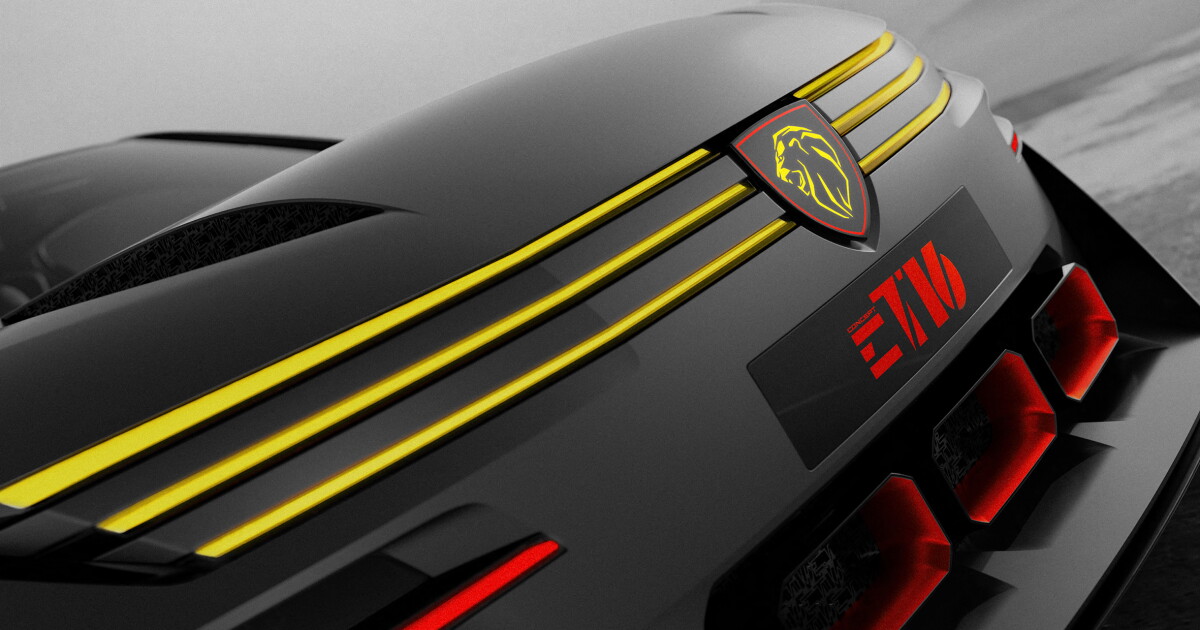
The Peugeot E-T16 Concept unveiled at this week’s Paris Motor Show is the most powerful, technologically advanced machine the French brand has ever created.
It’s an extreme tri-motor “hyperhatch” that shatters the boundaries of established hot hatch performance and serves as a showcase of technology.
It was developed secretly by the same elite Peugeot Sport specialists that created the E-208 GTi that we featured a few months back. But with 816hp and all-wheel-drive, the E-T16 is clearly in a different league.
Peugeot E-T16 Concept | The Reveal
The car’s structural tub and body panels are made from lightweight carbon-weave composites keeping weight to a lean 3,549 lb (1,610 kg) and a power-to-weight ratio of 4.4 pounds per brake horsepower. That’s even more powerful than the Tesla Model S Plaid and not far off the US$330,000 Ferrari 296 GTB, which has a twin-turbo petrol V6 hybrid. Just in curb weight, the Peugeot E-T16 undercuts the Hyundai Ioniq 5N by a massive 1,312 lb (595 kg) while packing 175 more horsepower.
This vehicle’s mechanical and electrical architecture involves state-of-the-art science. A single high-RPM electric motor manages the front axle, the rear axle is driven by a compact dual-motor assembly. This configuration feeds real-time grip, yaw and velocity data into a central computer, executing independent, instantaneous torque vectoring across the rear wheels. By constantly over-speeding the outside wheel during aggressive cornering, the system eliminates understeer entirely.
The car goes car from 0 to 62 miles per hour (100 km/h) in just 2.5 seconds. The sprint from 0 to 186 mph (0 to 300 km/h) takes just 16 seconds.
Peugeot/Stellantis
Perhaps the major engineering breakthrough of the E-T16, however, lies in how it solves the arch-enemy of high-performance electric vehicles: extreme thermal degradation. In conventional high-performance EVs, hard acceleration and sustained high-speed driving force the battery cells to generate immense internal heat. When a battery gets too hot, its internal resistance increases, forcing the electronic management system to restrict power output to prevent permanent cell damage.
Most electric cars combat this by laying a flat cooling plate underneath the battery. This works for normal highway cruising but creates a bottleneck during intense track use. Heat must travel through the entire height of the battery to reach the cooling fluid at the bottom, leaving the top and core dangerously hot.
Peugeot Sport’s lateral-wall cell cooling network flips this architecture problem. High-pressure cooling channels run vertically along the side walls of each cell to create a much larger surface area for heat exchange. This is constantly fed by high-velocity air rammed through massive side intakes, directly chilling the cooling fluid.
Peugeot/Stellantis
The significance of this thermal management is that it allows the E-T16 to survive three consecutive, flat-out laps of the Nürburgring with zero performance drop-off. In contrast, most premium electric sports cars begin cutting their power output before completing even a single lap of the 12.9-mile (20.8-km) German circuit.
By maintaining optimal core cell temperatures under maximum track abuse like this, the E-T16 proves that high-output EVs can deliver sustained, repeatable hypercar performance – not just short, isolated bursts of straight-line speed.
Energy is supplied via a dense 85-kilowatt-hour pack running on an 800-volt electrical architecture, allowing a 10-to-80% DC fast charge in under 15 minutes while providing a maximum highway driving range of 249 miles (400 km).
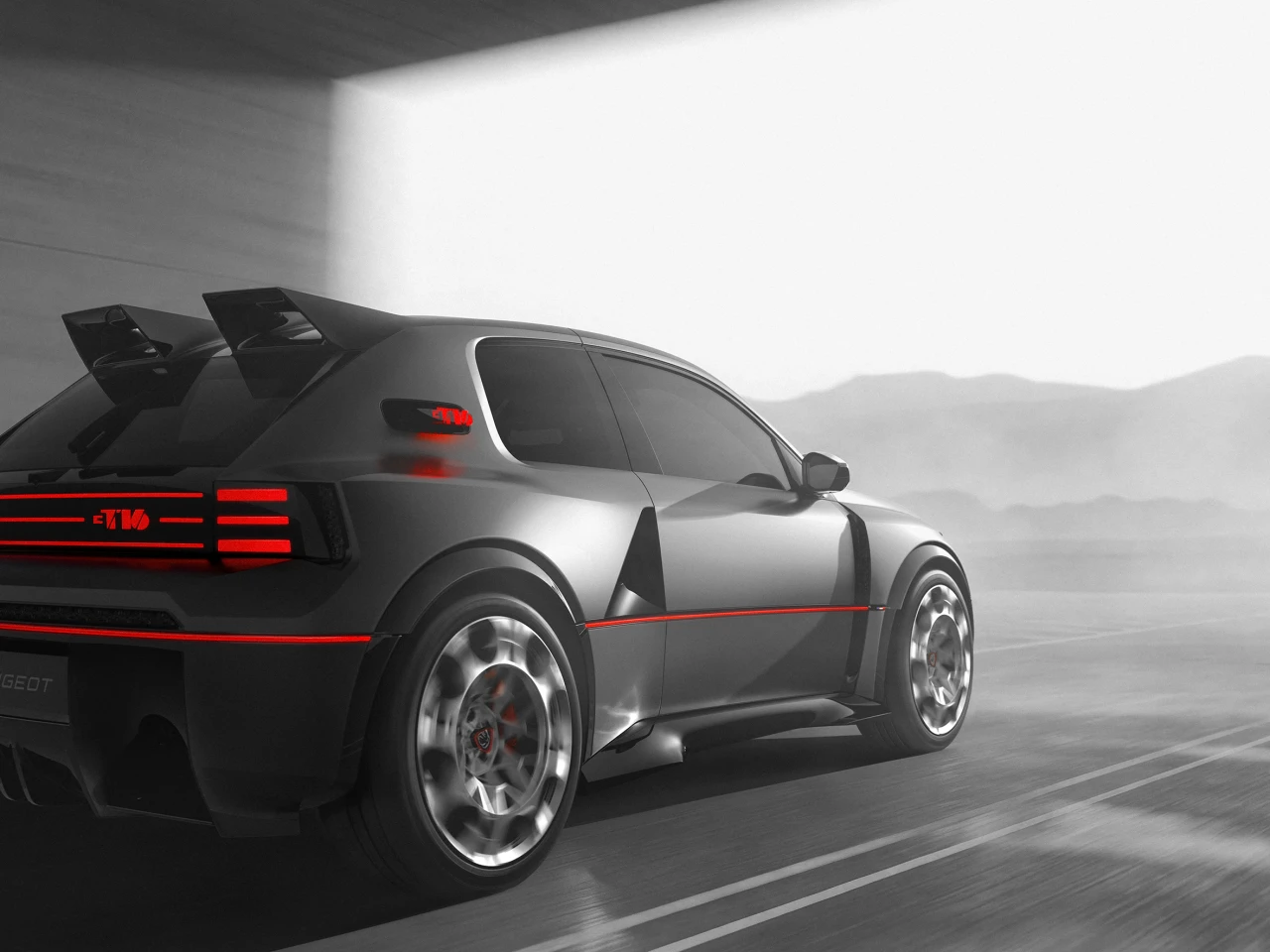
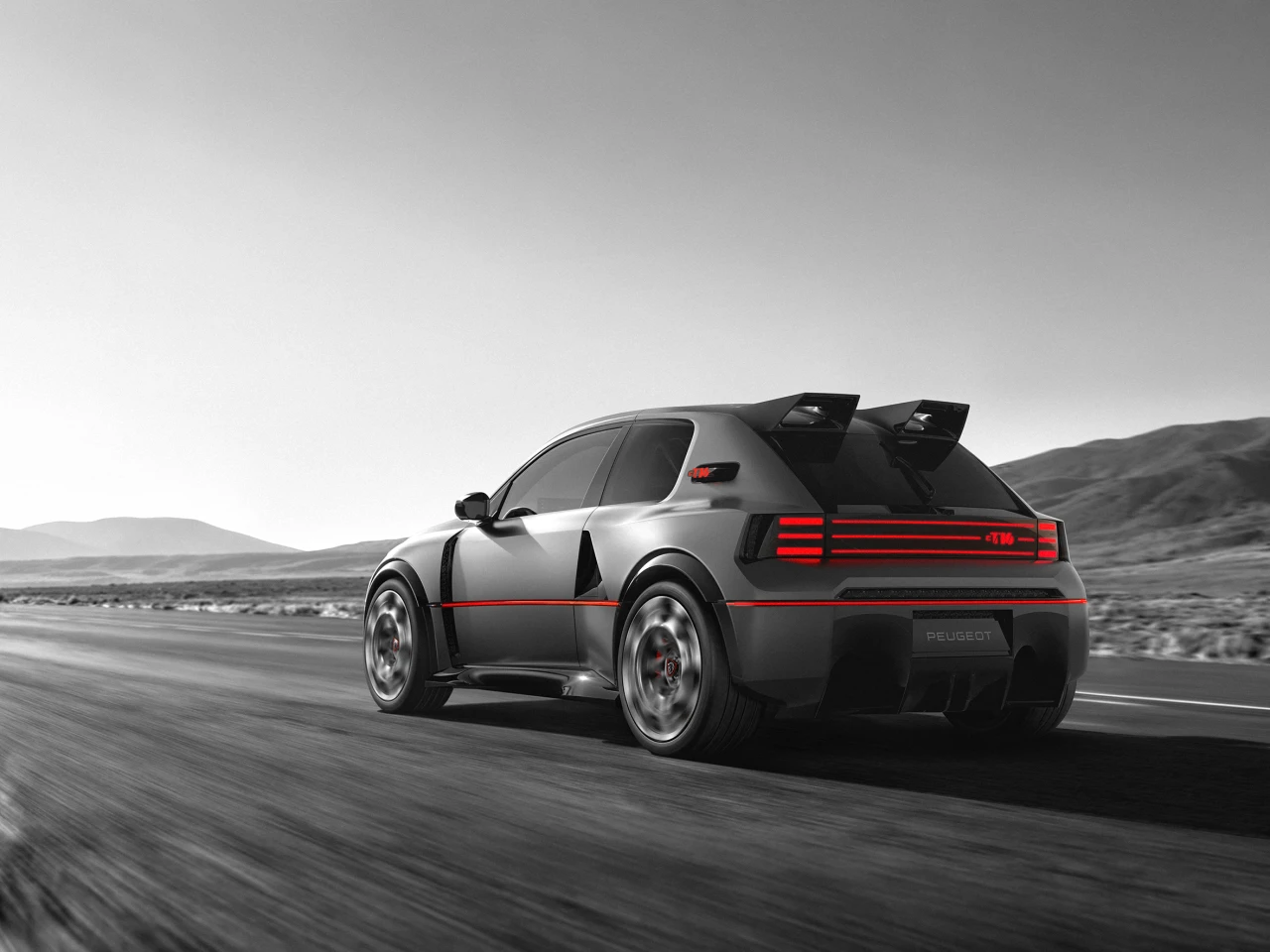
Visually, the vehicle has modern, ultra-aggressive proportions. Boxy, flared wheel arches house Michelin Pilot slick rubber measuring 10.8 in (275 mm) wide at the front and a massive 12.4 in (315 mm) at the rear. For aerodynamic balance, a split “cat-ear” roof spoiler works in tandem with an active underbody diffuser featuring adjustable blades that actively manipulate downforce at high velocities.
Peugeot/Stellantis
In a striking piece of mechanical theater, the entire rear carbon fiber clamshell bodywork can tilt upward on twin hydraulic struts, exposing the inner suspension packaging, the dual rear motors and a bespoke integrated storage vault engineered to hold two racing helmets.
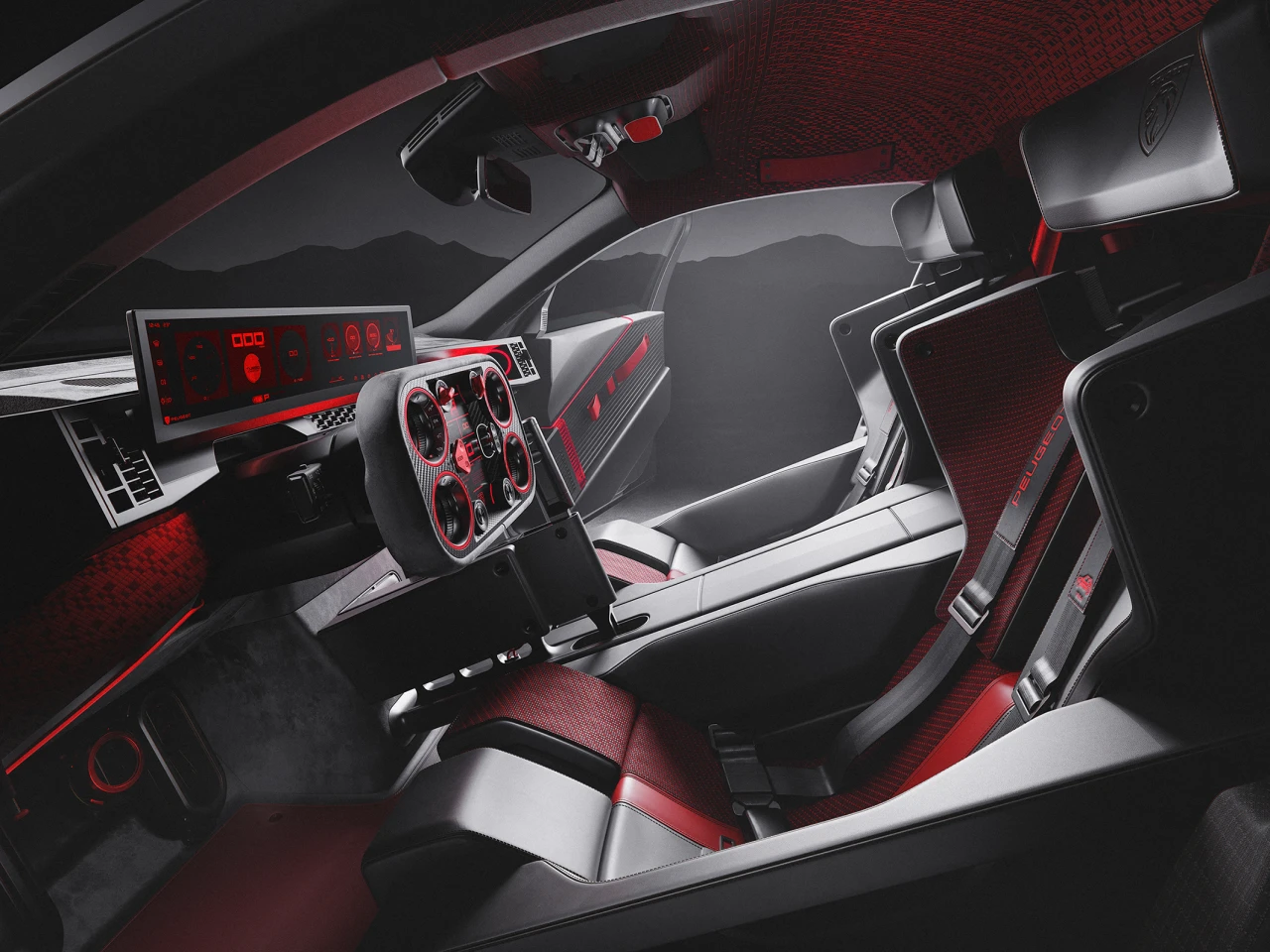
The high-performance ethos continues inside. The motorsport-inspired cabin deletes standard dashboard trim in favor of raw carbon-fiber bucket seats, four-point racing harnesses and a sweeping 21-inch curved panoramic display. This outputs real-time track telemetry, active motor temperatures and live g-force data.
The primary interface is Peugeot’s revolutionary Hypersquare steering control. Utilizing advanced digital steer-by-wire technology, this rectangular yoke replaces a mechanical steering column completely with precise electronic actuators. It automatically modulates variable, speed-dependent steering ratios, enabling drivers to execute a full lock-to-lock maneuver with a mere 180-degree rotation of the hands. This identical by-wire dashboard architecture is already transitioning into mass production on the upcoming E-208.
Peugeot/Stellantis
The reveal of the E-T16 Concept at the 2026 Paris Motor Show set off shockwaves. It was star of Peugeot’s press conference at the center of its massive 14,000-square-foot (1,300-sq-m) pavilion. The company explicitly framed the ultra-high-tech monster as the roadmap for a rollout of seven new road-going models destined for global markets over the next four years. Peugeot’s elite Sport Engineering squad, the group behind the brand’s hybrid Le Mans Hypercar and the freshly launched E-208 GTi hot hatch, is building a fully drivable prototype.
Peugeot CEO Alain Favey told the audience that the brand is tempted to pull the trigger on an exclusive, limited-production run. According to Favey, the project is moving forward with serious road-homologation in mind. If enough collectors and performance enthusiasts step forward, Peugeot is ready to open the order books.
Source: Stellantis

