


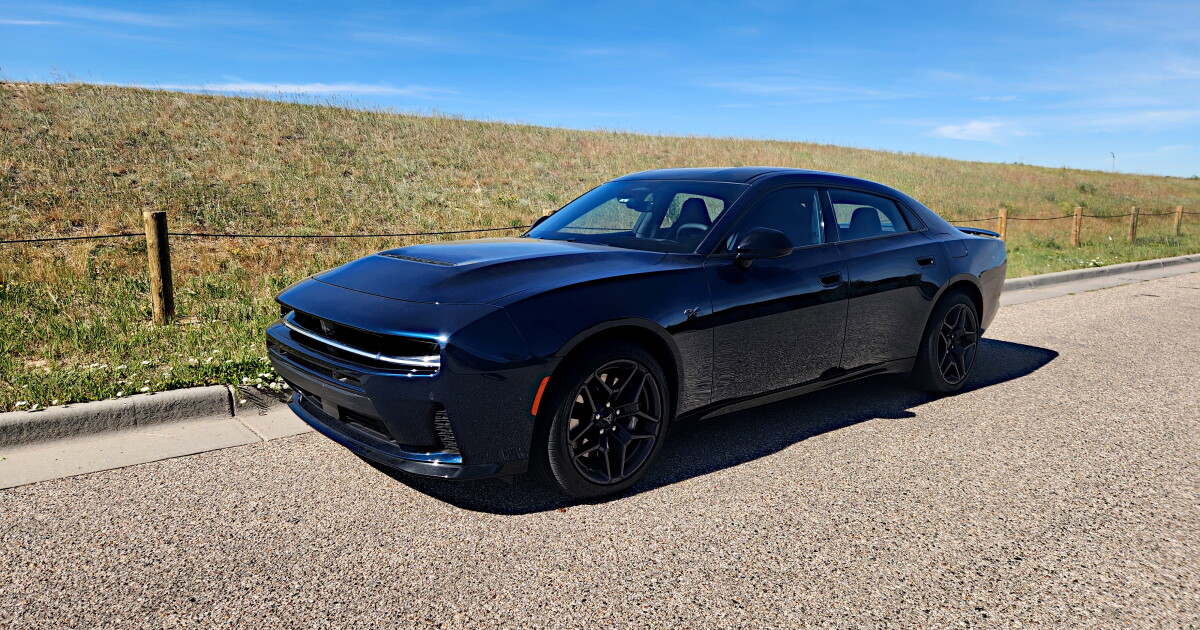
It’s easy to pan the Charger Sixpack as a muscle car wannabe based purely on it having two cylinders less than traditional cars in this genre. Then you drive one. That changes that thinking, and quick.
At a glance
- The Charger is designed as a muscle car, not a GT destroyer
- Two engine choices for your hooliganism
- AWD that can be shut off
- Not a Hemi replacement, but its own thing
- Be ready to go FAF
Muscle car enthusiasts aren’t known for being excited about anything less than eight cylinders. Or electrification. But this is 2026 and the world is weaning off larger displacements. The Dodge Charger Daytona brought the EV experience to muscle car fans, who largely seem to have rejected it. So a mid-step was needed. Something to appeal to the crowd who still loves the sound of an engine resonating pipework, but doesn’t want it to be faked via speakers.
Enter the Sixpack. The 2026 Dodge Charger Sixpack is powered by a 3.0-liter twin-turbocharged Hurricane inline-six. Attached to exhaust pipes that make beautifully rumbled sound without becoming a JDM spitter or European putter. It’s definitely American.
Add to that the Charger Sixpack’s quick-on-the-uptake launch and fast pace, and it’s pretty obvious that Dodge didn’t forget about the point of a muscle car. Yes, the Charger is still big, heavy, wide, and battleship-like in its handling. And it runs really, really fast in a straight line. Which is what sets a muscle car apart from, say, a GT-R or M3.
Aaron Turpen / New Atlas
The new, twin-turbocharged Hurricane engine comes in two flavors. The Charger R/T gets 420 horsepower (309 kW) and 468 lb-ft (634.5 Nm) of torque. The Scat Pack turns the boost knob a little farther toward “insurance claim” and produces 550 horsepower (404.5 kW) and 531 lb-ft (720 Nm).
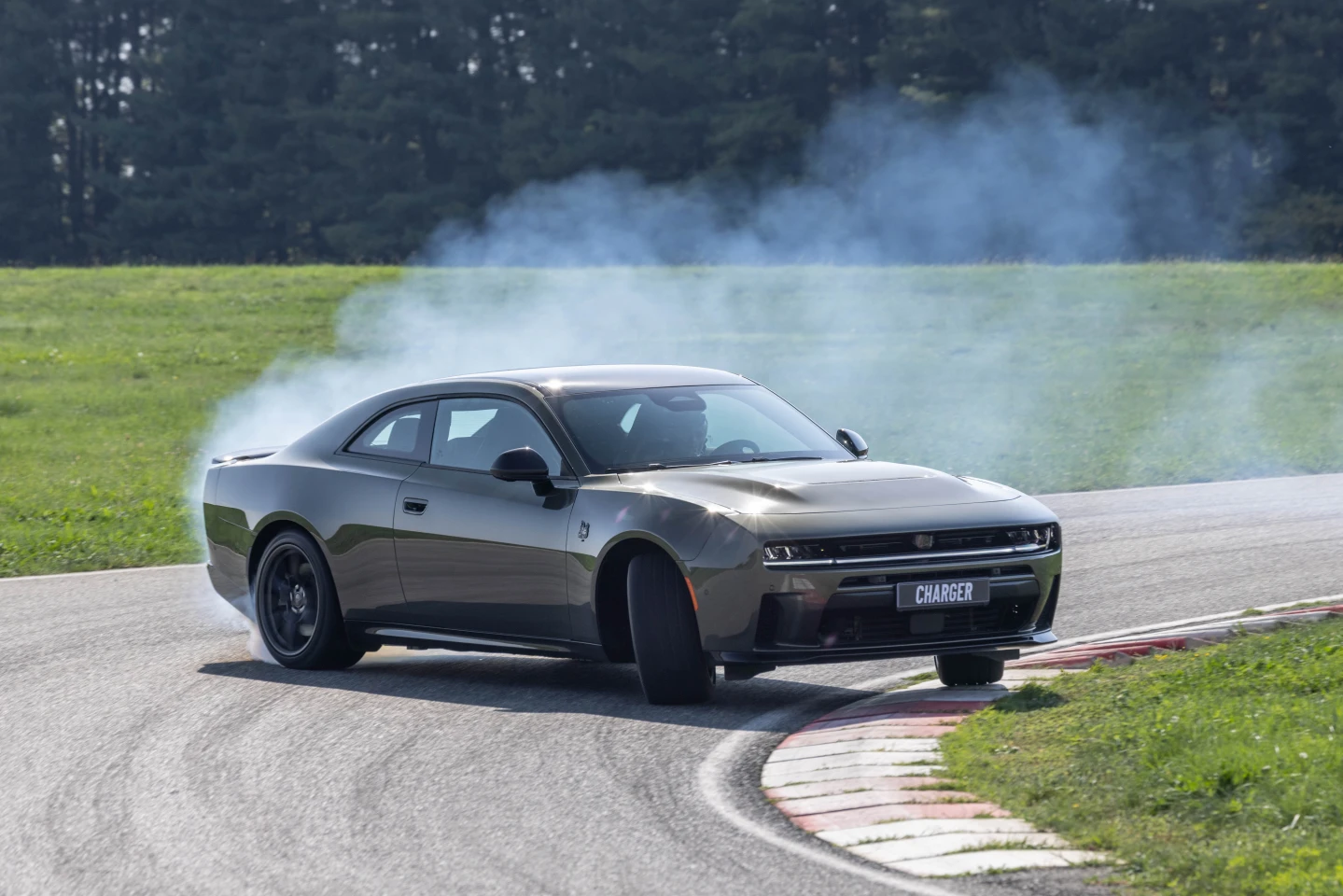
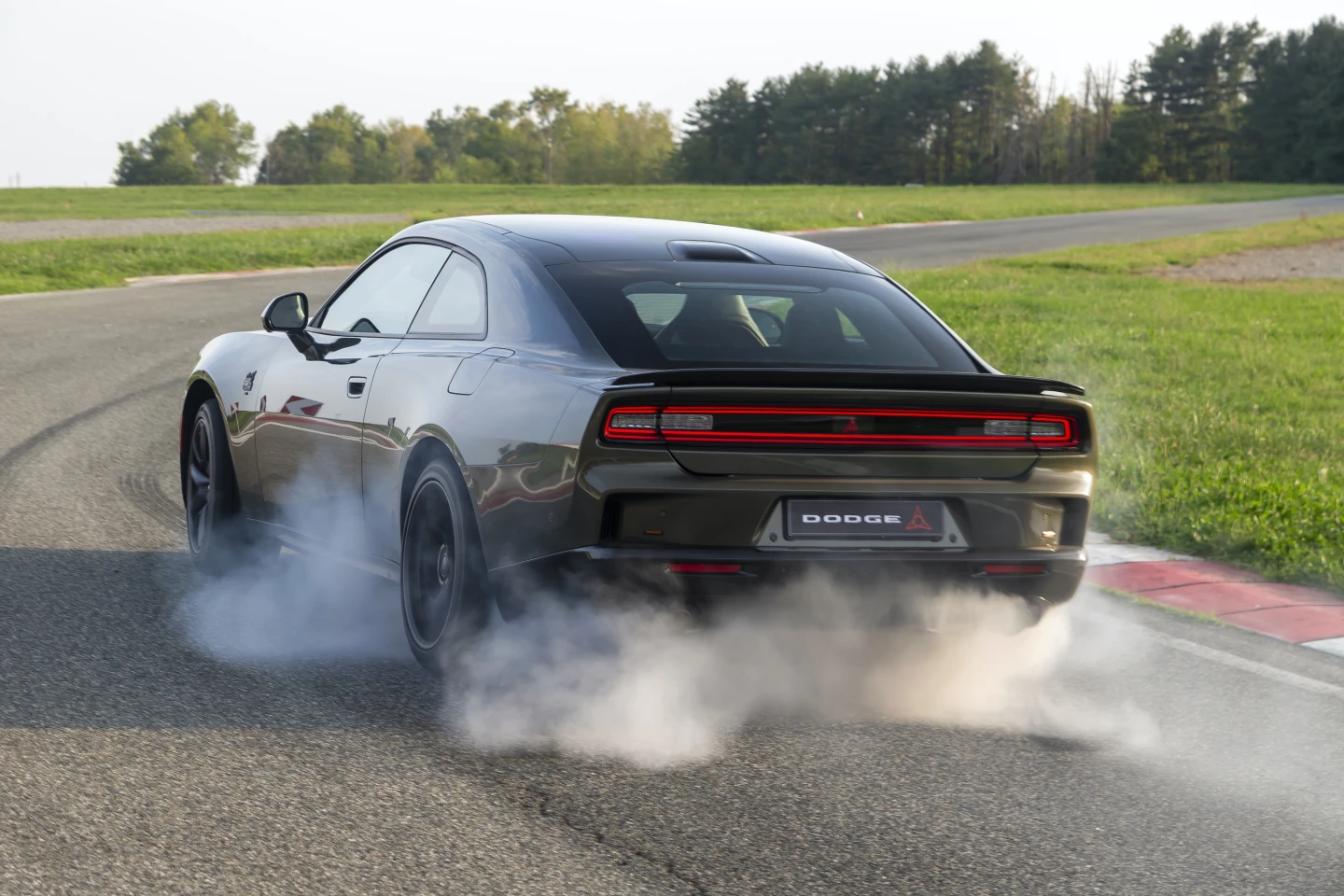
Both are paired with an eight-speed automatic and all-wheel drive. Yes, all-wheel drive. While the engine is definitely pushing out some horses, it’s that AWD part that really makes it fly off the line. As any Godzilla fan already knows. This being Dodge, of course, the AWD is optional and can be shut off at will when the driver prefers rear-wheel madness. Making things like burnouts and donuts, also traditional muscle car tire disposal activities, an option.
If you remember my explanation of how to do this from the previous-generation Challenger GT, that’s how it works in this new Charger. Hold down the squirrely button and then launch.
The Scat Pack is capable of running from 0 to 60 mph (92 km/h) in roughly four seconds. Most drivers can expect about 4.5 or so on public roads in amateur hands. Quarter miles can be run in the 12-second range. Add about one and two seconds respectively for the R/T version.
Either way, that’s properly quick and can be competitive at most non-pro tracks.
Dodge
The best part is how effortless it feels. The Hurricane doesn’t need to scream to make power. The turbocharged six produces a wall of torque low in the rev range, so when you bury the throttle, the Charger doesn’t stop to consider your request. It simply leaves. There’s a reason AWD is popular amongst lower-displacement drag runners.
Now for the downsides. The Hurricane six-cylinder does not sound like a Hemi. At all. Not even close. I think Dodge was smart to not even try. It’d be sacrilege. Instead, Mopar is doing something new. Well, new to them.
There’s no way a V6 can produce the deep, lumpy, mechanical thunder of a V8. Dropping two cylinders and losing almost three liters of displacement means there’s no option for shaking a garage on its foundations or setting off car alarms while waiting for a red light.
Instead, Dodge went for pipe tuning and resonance. There’s still a butt tickle from the seat when revving. There’s still beautiful notes coming from the rear exhaust. It’s its own thing. The Charger Sixpack isn’t attempting to be what the previous-generation V8s were.
I personally applaud Dodge for doing that. Rather than try to recreate the fat block experience of muscle cars past, it has done something different. Without losing the core appeal of a muscle car: speed and power in a huge sedan while making glorious fuel-burning noises.
Dodge
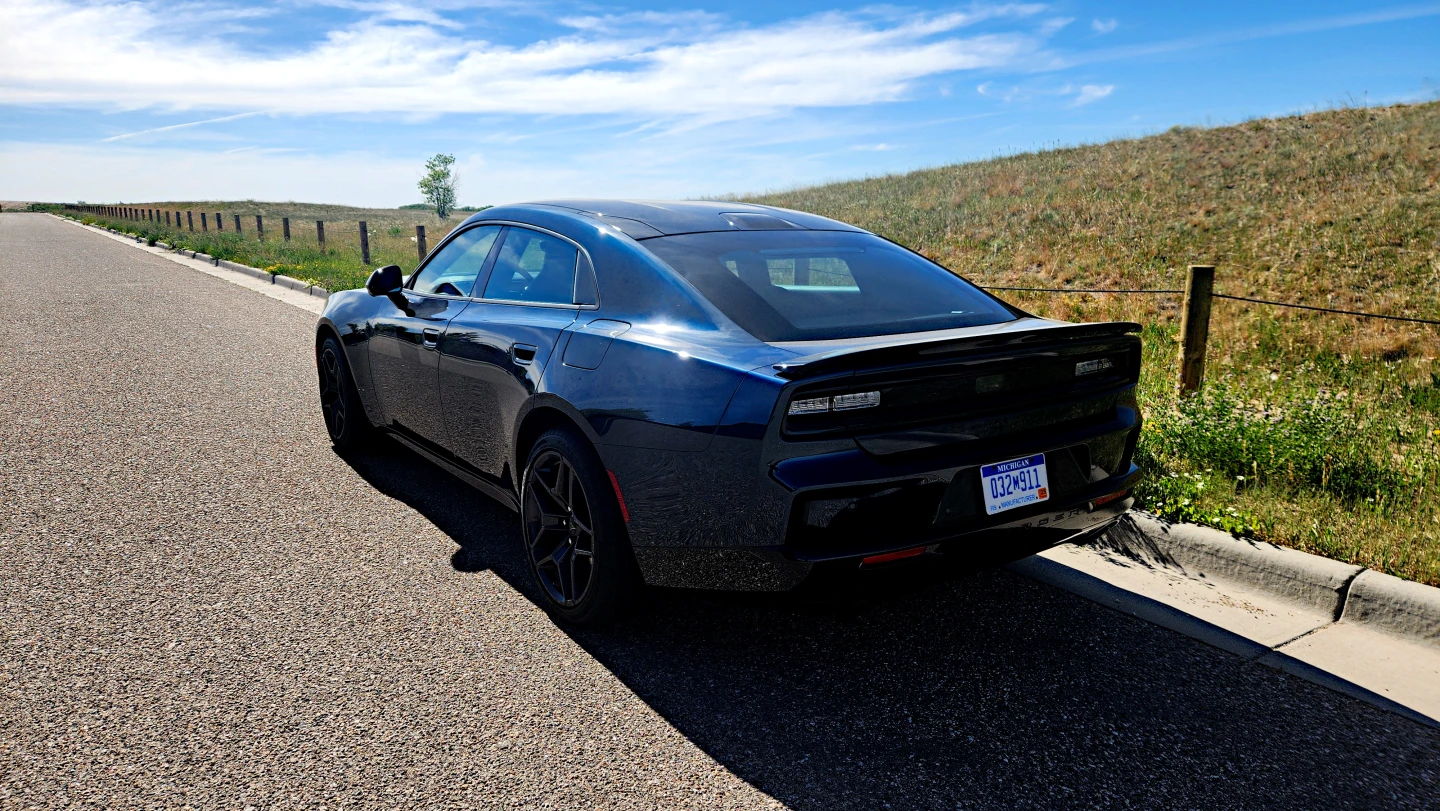
That gets us to the next point of the Charger Sixpack: it’s enormous. It’s heavy, ponderous, and thick in both proportion and feel. It weighs close to 4,900 lb (2,223 kg) in some configurations. That’s a couple of hundred pounds heavier than the previous-generation V8 model.
This means you don’t drive the Charger like a lightweight sports car. You don’t toss it around like a Miata or dance through corners like a Cayman. Instead, you point this considerable amount of Dodge at the horizon and let the engine’s torque do the talking.
And that’s actually really entertaining. The Charger feels planted and substantial. There’s a certain confidence that comes from knowing you’re piloting several thousand pounds of American engineering rather than a lunchbox with racing stripes.
The downside is that physics remain stubborn. You can give a 4,900-lb car excellent brakes, sophisticated suspension, and modern chassis electronics; but, eventually Newton shows up with the bill. The Charger can corner surprisingly well for its bulk, but it’s the last part of that sentence that makes the point. It’s still a lot of mass to shift.
Aaron Turpen / New Atlas
The next big surprise is how civilized the Charger has become. The old Charger was a little rough around the edges. That was part of the charm. It felt like Dodge had taken a large engine, attached it to a large car and then just sort of threw some over-stuffed interior bits into it.
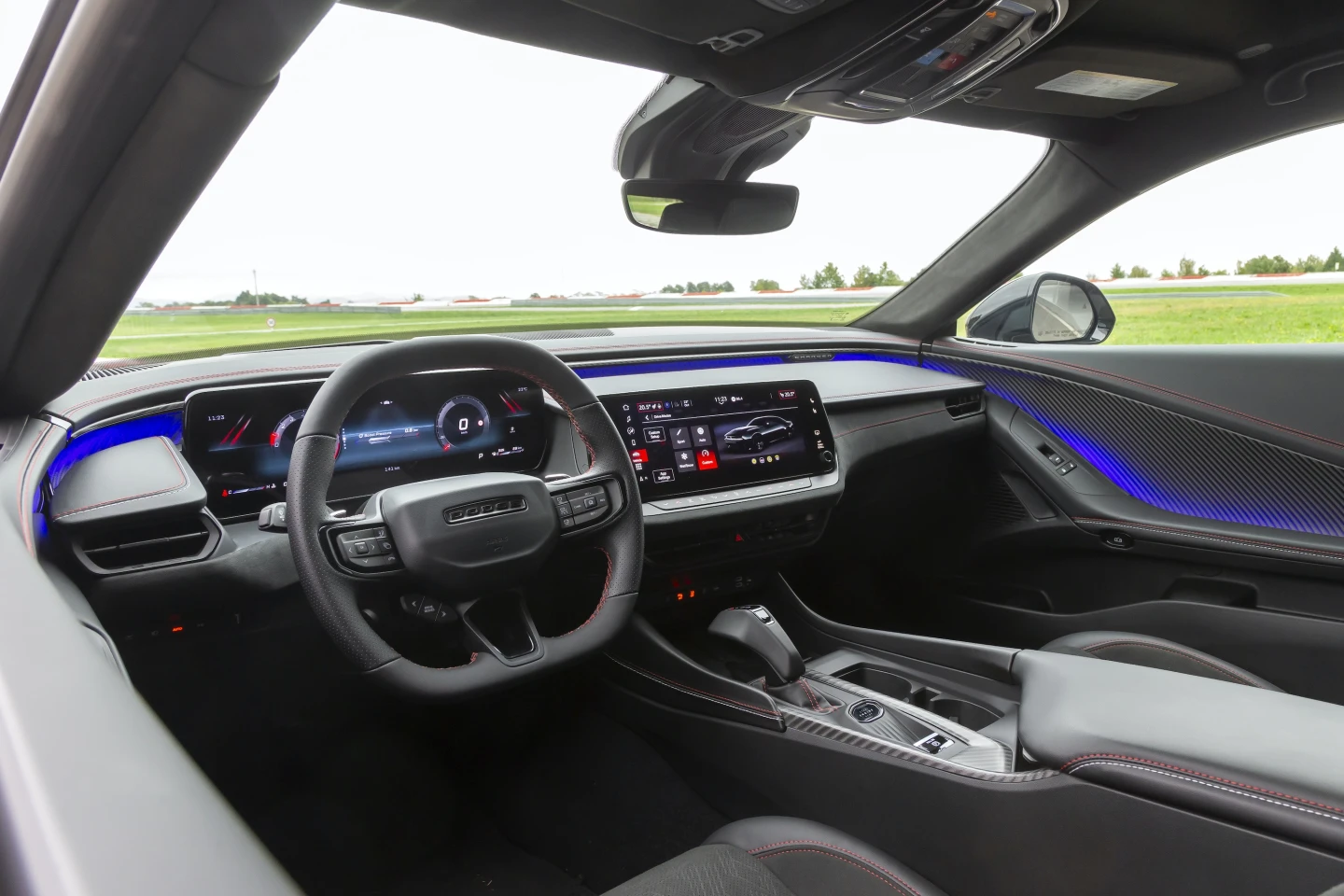
The new Charger feels much more sophisticated. The chassis is composed. The ride is surprisingly comfortable. The steering is reasonably precise. The cabin is quieter and substantially more modern. It’s still a Mopar thickly-padded interior, but it’s a little more thought out. Less “we just took this off the drag strip and shoved new seats in” than it was.
It’s more of a grand tourer than Chargers past. Though I’d never compare it to a Jaguar or 7-Series as such.
And yes, there are large digital displays, modern infotainment, performance screens, and considerably better materials. But thankfully, Dodge hasn’t decided that every function needs to be buried three menus deep in a touchscreen.
Dodge
There are still physical controls. Hallelujah.
The biggest question is whether the Charger can retain its identity without the Hemi. The Daytona proved that Mopar fans aren’t necessarily ready to give that up. The Sixpack offers a bit of an outstretched hand to try to woo those buyers back to the Dodge fold.
But that’s difficult. The Charger was never merely about acceleration. Plenty of cars can go quickly. It was about the entire experience. The engine. The sound. The attitude. The adrenaline those all produced. And the sense that Dodge had built something kind of unreasonable and then discovered that nobody tried to stop them.
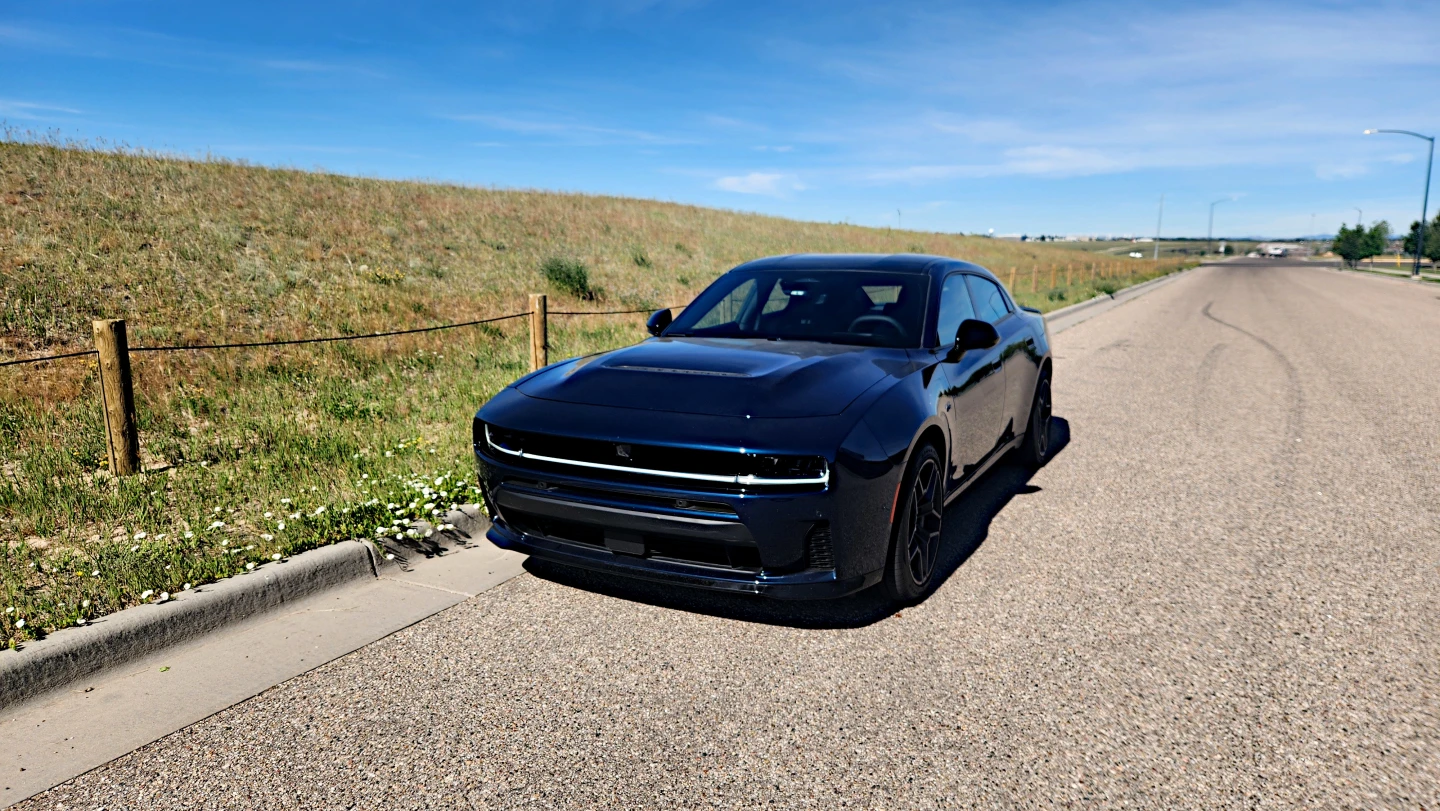
The Sixpack keeps some of that attitude. It keeps the speed. It keeps the aggressive styling. It even keeps enough rear-drive hooliganism to give the accountants something to complain about. But the V8’s personality is gone. And you notice.
Aaron Turpen / New Atlas
For some, asking to accept that and give the twin-turbo six a chance may be asking too much. For others, like myself, I found the tradeoff to not be an equal bargain, but still a good trade. I like this new Sixpack for what it is. It’s not a replacement. It’s a new thing. And it’s good.
Many will hate it without giving it a try. And that’s too bad.
Product page: 2026 Dodge Charger Sixpack

