


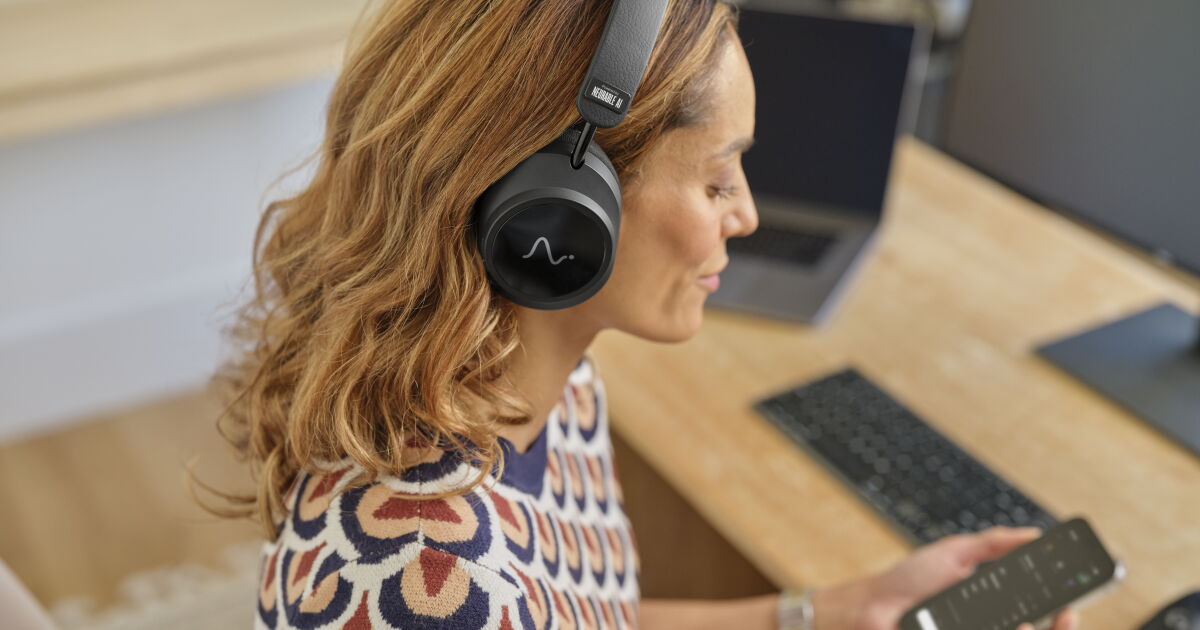
Neurable One hides 12 EEG sensors inside premium ANC headphones to track focus and fatigue, turning brain activity into real-time biofeedback while still working as an everyday pair of wireless headphones.
After a decade of research and partner products, Neurable is finally building the whole package itself. The One is the first product designed, built, and sold entirely by the company, which spun out of a University of Michigan brain-interface research lab in 2015.
Neurable
Twelve EEG sensors are woven directly into the ear pads, seamlessly blending into the cushion fabric so they don’t stand out as conspicuous electrodes. Their readings feed into an app that tracks focus, detects fatigue, and builds a long-term record of how those signals change over time.
From the outside, the One still looks like a regular pair of premium over-ear headphones – and that’s exactly the point.
Electroencephalogram (EEG) measures the electrical activity at the surface of your head, and this tech itself isn’t new. The harder part is getting a useful signal outside the lab, where traditional EEG often involves gel caps, trained operators, and tightly controlled movement.
Neurable’s signal-processing algorithms are designed to filter out real-world interference from walking, jaw movement, music, and even the headphones’ own active noise cancellation. Its electrodes (six per ear) record at 16-bit resolution and 125 Hz, backed by more than 80 patents. In case you were wondering, Neurable stresses that none of this amounts to reading thoughts, words, images, or mood.

Neurable
The app turns those electrical activity patterns into a biofeedback loop. It shows your focus in real time during work sessions, subtly shifts the audio when your attention drifts, and suggests a break when the signals indicate that you’re getting fatigued. You can also use a one-minute, eyes-closed check-in before and after changes such as a second coffee, a poor night’s sleep, or some time away from your desk. Meanwhile, weekly and monthly reports highlight longer-term trends.
Eight metrics are tracked, including Focus, Load, Sleepiness, Brain Battery, and Alpha Peak Frequency. These are largely benchmarked against your own previous results instead of a population average. The idea is to see whether changes in behavior move your personal baseline, not to assign an absolute score.
On the audio side, the One relies on 40-mm beryllium drivers, active noise cancellation, and an ambient mode backed by six microphones. Bluetooth 5.2 supports multipoint connectivity alongside AAC and aptX decoding. Battery life is rated at 22 hours for regular playback, dropping to 12 hours with EEG tracking active, with USB-C quick-charging delivering two hours of use from a 15-minute top-up.

Neurable
The Neurable One costs US$499 and, for now, is only available in the US. The first 700 units are already shipping, and new orders are estimated to take between four and eight weeks (in other words, you’ll receive your pair sometime in November if you order today). The companion app is available for iOS and Android, and the headphones come with a one-year warranty.
Like other wearable wellness tech, the One comes with an important caveat: it isn’t a medical device and isn’t intended to diagnose, treat, or monitor any condition. Neurable also says it doesn’t sell brain data or use it for advertising.
The pitch raises an interesting question: can brain-state monitoring become as commonplace as heart-rate tracking, now that the sensors can be tucked away into something people already routinely wear for hours?
10 Years of Brain Research, Now in a Pair of Headphones | Ramses Alcaide
Product page: Neurable One

