


Wood is an excellent construction material. It’s durable, strong, lightweight, insulating, and one of the most sustainable materials you can think of. But it has one major limitation: it doesn’t bend as easily as, let’s say, plastic or metal. Today, there are two main ways to make wood curve, but both have significant drawbacks.
The first is steam bending, which uses heat and moisture to temporarily make wood more flexible. As you can imagine, achieving high temperatures and high pressure is very energy-intensive. Besides, this method doesn’t work equally well with every type of wood, can cause cracking, and it makes the final material less durable.
The second method is bent lamination. Instead of bending one solid piece, the wood is cut into thin strips, coated with adhesive, stacked back together, and pressed against a curved mold. Once the adhesive cures, the wood keeps its new shape. This method is quite complex and time-consuming, and also not very environmentally friendly.
Researchers at the Smart Materials unit of the Italian Institute of Technology (IIT) have been working on a third option that could overcome these limitations.
“It is essential to develop new sustainable methods that increase its workability and versatility, making it suitable for an ever-wider range of applications. Our method moves precisely in this direction: it makes it possible to bend wood sustainably and with low energy consumption, without compromising either its natural mechanical properties or its biodegradability,” explains Martina Nardi, a researcher in IIT’s Smart Materials unit.
So, how did the scientists achieve that feat? The answer is Cyrene.
Italian Institute of Technology
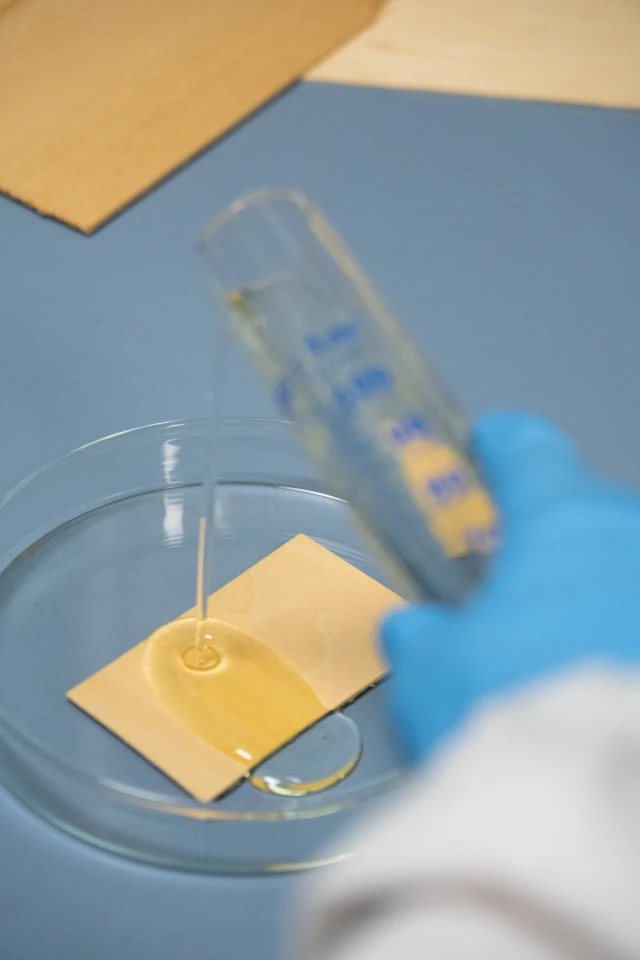
Cyrene is a bio-based liquid solvent derived from cellulose. Instead of cutting wood into layers or using toxic chemicals and heat, the researchers soaked solid wood in a mixture of Cyrene and water.
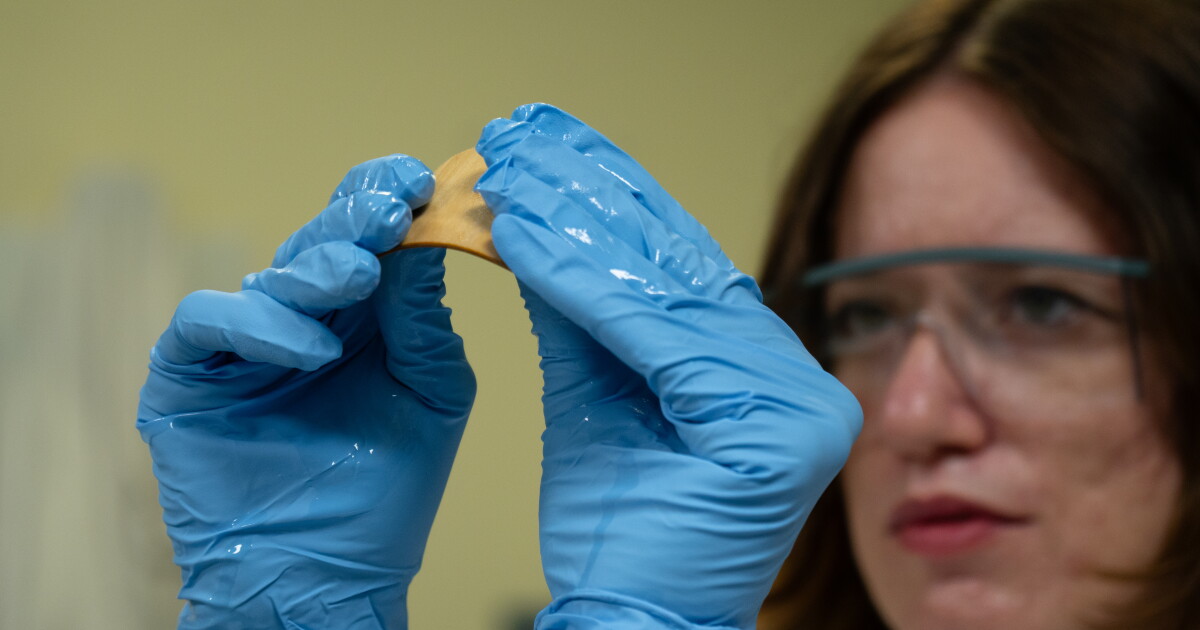
What does this mixture do? It basically gets into the molecules of the wood, particularly lignin, and changes the way those molecules interact with each other. It loosens them, so they can move more freely, making wood much less stiff and more flexible. Once the wood is bent into a new shape and dried, it stays in its new form while also regaining its original durability.
Another advantage of the process is that it doesn’t require extremely high temperatures. In the experiments, the Cyrene-water mixture was heated to around 65 °C (149 °F) , so it’s a pretty energy-efficient method compared with conventional technologies.
Italian Institute of Technology
According to the researchers, Cyrene is a fully green solvent, which means it’s not toxic to people. Because there are no petrochemical adhesives, the products made of cured wood can be easily recycled or biodegraded.
This method was tested on different types of wood, including linden, alongside balsa, Bahia walnut, okoumé, and ash. The treated sheets of wood became flexible enough to bend and roll with relatively little force – just like plastic.
For now, the catch is that the tested wood sheets were relatively thin – 2 to 5 millimeters only. The next challenge will be scaling up this technology and applying it to larger pieces of wood as effectively.
If successful, this method could eventually find applications across multiple industries, from furniture and interior design to musical instruments and toys.
Source: Italian Institute of Technology

