


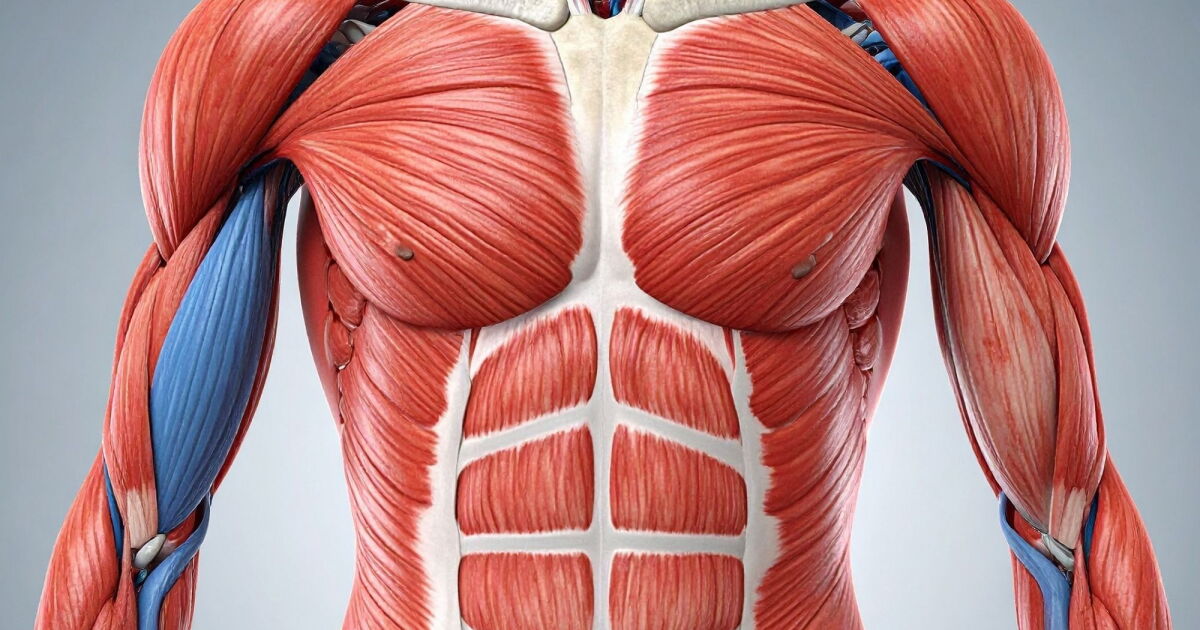
Frequent resistance training and cardiovascular workouts are critical for maintaining our mental and physical health as we age.
For many, getting enough exercise to reap the rewards may simply not be an option. A discovery by researchers from the Chinese Academy of Sciences and the National Clinical Research Center for Orthopedics might give bed-bound or disabled individuals a way to stave off the worst effects of aging.
Transplanting twitching grafts of muscle tissue into the backs of aging and obese mice proved to provide the animals with a variety of metabolic and anti-aging benefits, including increased muscle mass, improved bone density, and a drop in blood sugar and cholesterol.
While the results may not translate directly into ways for humans to “gain without pain,” they may provide insights that inform future anti-aging or even hormone-based therapies based on stem-cell and genetic engineering.
Muscles aren’t just machines that move our bones from place to place. They are chemical factories that churn out signals governing a range of bodily functions, from bone growth to immunity to brain development. Neglecting our muscles is to neglect a critical part of our endocrine system.
While most of us are capable of lifting weights or heading outside for a brisk walk each day, not everyone is so fortunate, leading researchers to consider other ways to encourage muscles to produce plenty of hormones.
Transplants of muscle stem cells are a promising avenue for research, having distinct advantages over other tissues in their ability to encourage the growth of new blood vessels and limitations on rapid growth.
Yet they also have a low survival rate, typically dying within a couple of days due to host rejection or oxygen demands.
By taking stem cells from a host’s own body and encouraging them to differentiate before mixing them with a commercially available, soluble matrix gel, researchers may have cracked the most critical problems in the transplant process.
(Liu et al., Nature, 2026)
Transplants of mature muscle tissue based on stem cells taken from the mouse’s own quadriceps were found to survive for more than 81 days in experiments. After being implanted beneath the skin of their backs, the tissues developed their own blood supply and began to contract spontaneously.
Significantly, the “myografts” boosted the regeneration of a variety of other tissues in adult, elderly, and obese mice. Not just muscles throughout their bodies, but tissues in their bones, liver, and brain.
Mice treated with the grafts also did better on tasks testing their memory and spatial learning.
Taking their experiments a step further, the team engineered myografts to produce a hormone they typically wouldn’t make, giving mice with their parathyroid glands removed the ability to make parathyroid hormone again, returning serum calcium and phosphate to a safe level.
With no signs of cancerous growth or the grafts migrating, the process appears relatively safe, opening the way for further research into self-transplants made of mature muscle cells as a means of treating numerous conditions.
For most of us, the results emphasize the role muscles play in maintaining our general health. Understanding the benefits muscle cells have as endocrine workhorses could help keep us all healthier in the long run.
This research was published in Nature Aging.
Source: MedicalXpress

