


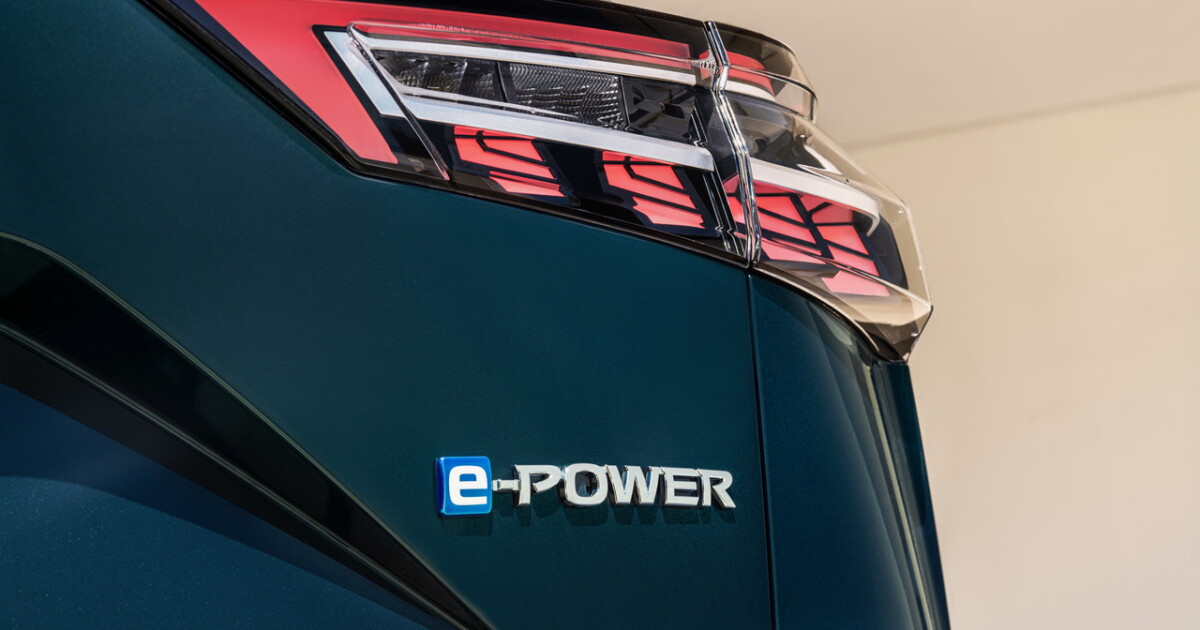
Nissan has just completed a stunning world-record fuel-economy drive of 1,230 miles (1,980 km) on a single tank of fuel – demonstrating the abilities of its latest ‘series hybrid’ engine system.
The Nissan Qashqai e-Power compact SUV drove across Colombia from the streets of Bogotá to the Caribbean coast under strict independent monitoring. The vehicle averaged an astonishing 102 mpg (Eur)/85 mpg (US).
Under Nissan’s series hybrid system, the vehicle is driven by an electric motor using a battery topped up by a petrol engine. There’s no plugging-in and the petrol engine never drives the car.
Nissan
This means the e-Power car covered the equivalent of LA to Dallas on a single 14.5-gallon (~55-liter) tank of fuel without plugging into a charger once. Guinness has awarded it the title of ‘longest journey completed by a non-plug-in extended-range electric vehicle SUV.’
While the record was set in South America using a European-spec vehicle, it is a massive commercial warning shot fired directly at its competitors in the United States.
For years, Toyota and Honda have gathered massive profits from surging hybrid sales in North America. Nissan’s bet on pure battery electric vehicles like the Leaf and Ariya ignored US buyers who aren’t happy to go fully electric.
This record set a few weeks ago changes that. Nissan is about to introduce the same e-Power system to American roads via the upcoming 2027 Nissan Rogue Hybrid.
In Toyota’s Prius or a traditional hybrid, a petrol engine and an electric motor take turns turning the axles. The wheel in Nissan’s e-Power system are driven 100% of the time by the electric motor. It uses a 1.5-liter turbocharged three-cylinder gasoline engine that purely acts as an enclosed, onboard power station feeding electrical energy to a compact 2.-kWh battery and a high-torque electric motor.
By cutting the physical link between engine and wheels, Nissan software allows the engine to run at optimum thermal efficiency.
One qualification about Nissan’s record-breaking run: the drive started at about 2,600-m elevation (8,660 ft) in the mountains and ended at sea level, meaning long descents of many hours. Nissan’s e-Pedal regenerative braking will have converted gravity into free electrical energy at these points, continuously topping up the battery pack without using any gasoline.

Nissan
The upcoming US version of the Rogue utilizes a specialized variable-compression turbo engine designed to maintain peak electrical generation efficiency at high American highway speeds, aiming for a real-world rating somewhere over 40 mpg.
The record proves that the silent cabin, instant torque and smooth deceleration of electric-vehicle (EV) driving does not have to be derived from a charging grid. For American buyers suffering from EV range anxiety or lacking a home plug-in system, Nissan’s plug-less EV strategy might be the most disruptive auto technology to land in the US in a decade.
Note that while Nissan markets it as a unique e-Power system, other automakers use a similar configuration with different names. Honda’s e:HEV system powers urban driving entirely via electric motors, switching to a direct engine link only at highway speeds. Mazda employs a compact rotary engine as a dedicated generator in its MX-30 R-EV. Even American truck makers have adopted the tech, with the Ram 1500 Ramcharger using a V6 generator to tow heavy loads without plug-in constraints. The fastest-growing segment in China consists of full-sized SUVs where the wheels are 100% driven by electric motors, utilizing highly efficient, enclosed 4-cylinder engines exclusively to charge onboard batteries.
Nissan’s system does progress the format uniquely though. The e-Power is special because it uses software and hardware to mask the fact that a gas engine is running. In a standard series hybrid, engine revs vary from buzz to scream based on electrical demand, creating a jarring, disconnected drone that drivers hate.
Nissan has engineered a software algorithm that artificially forces the engine’s sound and RPMs to rise in perfect, linear lockstep with the car’s physical road speed. It tricks your brain into thinking you are driving a normal, well-tuned gas car, even though the engine is just a generator.

Nissan
And it is the only brand that couples a full-time electric drive to a smart variable-compression turbocharged engine. When you are coasting or driving slowly, it switches to a high compression ratio (14:1) for maximum, record-breaking fuel economy. When you press the throttle and the electric motor needs massive power instantly, the engine shifts to a low compression ratio (8:1) to activate the turbocharger and pump out maximum juice.
The engine isn’t revving away all the time anyway. The e-Power computer tracks tire vibrations so that when it detects you have driven onto rough asphalt or a loud highway, it activates the engine to charge the battery. Because road noise is already loud, you don’t hear the engine turn on. When you slow down into a quiet residential area, the engine shuts off so you can cruise in EV silence.
Source: Nissan

