


Two years ago, the list of signs and symptoms required to diagnose a patient with the neurodegenerative autoimmune disease multiple sclerosis underwent a massive overhaul.
Changing the definition of a disease is no small task and can have serious consequences for individuals requiring medical assistance.
Now, experts responsible for the new criteria have published a commentary reflecting on the update and what we might expect to see in the future.
“This commentary looks critically at the new criteria and explains why these changes matter, what challenges may arise as they’re used, and what can be done to address them,” says neurologist Jiwon Oh, Medical Director of the Barlo Multiple Sclerosis Program at St. Michael’s Hospital.
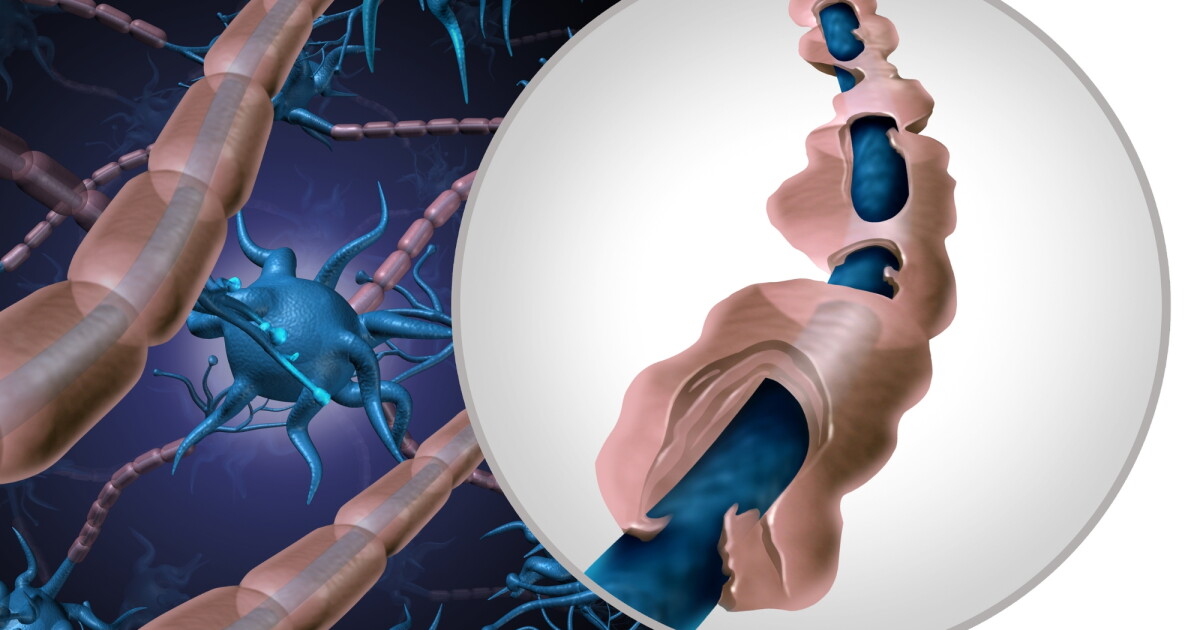
Oh leads a group of nearly 30 specialists in multiple sclerosis (MS), a chronic condition that arises when the immune system attacks protective coatings on nerve cells, reducing their speed and efficiency.
It is a condition that progressively worsens over time, producing a diverse array of symptoms that include numbness, blurred vision, muscle weakness, and dizziness. Getting on top of the condition as soon as possible can provide those with the condition with a better prognosis and more time to adjust to future changes.
In 2001, the New Zealand neurologist Ian McDonald led a panel in developing a diagnostic framework for MS that incorporated magnetic resonance imaging scans (MRI). This “McDonald criteria” required signs of lesions in at least two areas of the brain characteristic of the condition. Each lesion also had to emerge at different moments in time.
Medical research has moved quickly over the past two decades, with biomarkers emerging that have the potential to distinguish the condition’s development at earlier stages. As a result, the criteria have had frequent updates; in 2005, 2010, and then in 2017.
The latest, released in 2024, were perhaps the most significant adjustments to date. These added a new site – the optic nerve – to characteristic areas where lesions can be recognized, for example. A recently developed spinal fluid test is also now able to confirm the disease, providing specialists with another convenient diagnostic tool.
The revision also recommends additional laboratory tests for infants and older patients to rule out common illnesses that can present as MS.
Changing any kind of diagnostic criteria for a progressive disease is a balancing act. Too strict, and it risks excluding individuals in the earliest stages of the condition. Too loose, chances of misdiagnosis increase, putting patients on the wrong path to treatment.
The experts express that the changes to the 2017 criteria are intended to address this issue through the addition of testing.
“Emphasizing the importance of paraclinical tools is intended to minimize misdiagnosis, a frequent issue even among neurologists and radiologists who specialize in MS care,” the authors write in their commentary.
For people at risk of MS, this is all great news. Research in the field is progressing at breakneck speed, with emerging treatments on the horizon. Having better criteria to track the condition’s progress based on what we now know about the underlying mechanisms could allow for therapies to target stages as they appear.
Around 2.8 million people worldwide live with some form of MS. As we better understand the potential role of viral infections in triggering the disease, it may be possible to reduce its prevalence significantly.
Until then, having clear ways to intervene as early as possible is the best hope we have at giving people the best quality of life medicine can provide.
This commentary was published in Nature Medicine.
Source: Unity Health
Fact-checked by Bronwyn Thompson

