


From a snake’s venomous fangs to the sharp spines that cover a cactus, puncture tools can be found right across the animal kingdom. While they come in all shapes and sizes, there’s a fascinating force driving their diverse designs.
In a fascinating and comprehensive study carried out by University of Illinois at Urbana-Champaign researchers, the team looked at 140 different types of these tools essentially designed to pierce another organism in some form.
“There’s a vast diversity of puncture tools in nature, like fangs and stingers and spines and thorns,” says lead author Philip Anderson, a professor of evolution, ecology, and behavior. “It’s ubiquitous across the entire tree of life, including plants, animals, fungi, bacteria and viruses.”
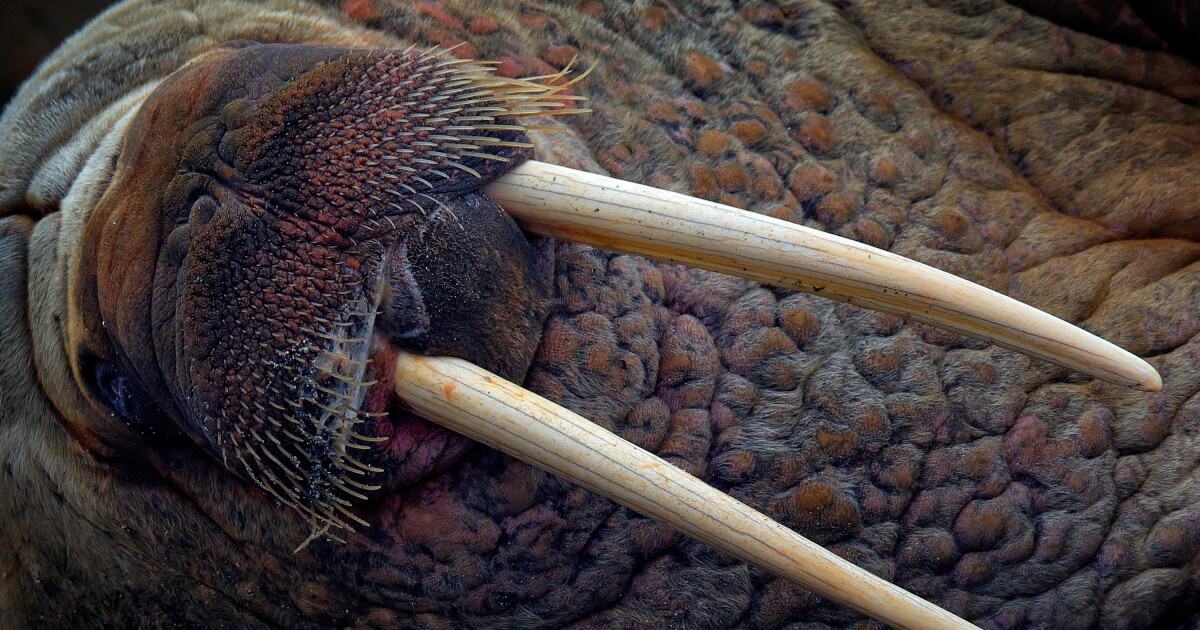
Top, left to right: Gary Todd, Jbjensen1, Josh Plueger/USAF; bottom, left to right: Michelle Passeroti/NOAA, Stefanie Leuker, Joel Garlich-Miller/USFWS. Graphic by Diana Yates
While you don’t need to be a zoologist to know that weapon diversity is driven by factors like physiology, environmental pressures, and purpose, the scientists turned up a rather interesting commonality that’s deeply tied to evolution.
Through their work, Anderson – who has studied the laws of physics and biomechanics in evolution for more than two decades – and team found that puncturing tools are shaped by a fundamental trade-off between piercing efficiency and the strength required to prevent them from bending or breaking.
“Scientists are interested in finding underlying physical laws that all this diversity has to adhere to,” Anderson says.
We only need to look at Darwin’s finches to know that a lot of evolutionary biology studies tend to view morphology through a lens of specific function. Observing evolutionary processes in this way gives us critical information about adaptation and the environment, but the Illinois researchers were interested in seeing if there was a broader principle at play when it came to another type of “same but different” feature.
And whether physics was actually more of a driving force – no pun intended – behind nature’s design than we give it credit for.
“When it comes to biology, I think we need to embrace the diversity of it,” Anderson says. “If there was a universal law, then I would expect all puncture tools to look more similar to each other, but they don’t. There’s great variety in how these puncture tools work.”
In an effort to further our understanding of why such diversity of puncture tools exists across the plant and animal kingdom, the team modeled the primary characteristics of these piercing appendages.
“We took two very basic measurements, one of which is its taper,” Anderson explains. “If you look at a puncture tool from the side, is it a big broad triangle, like a shark’s tooth? Or is it a thin, elongated triangle, like a fang? And then we also looked at its cross-section. Is it more round, like an elephant’s tusk? Or is it flattened, like a stingray barb?”
Through this assessment, the scientists saw a pattern emerge: each tool appeared to have its pros and cons, delicately balancing function with biology. And underneath that, physics.
The study noted that rounder puncture tools, when viewed as a cross-section, looked to be more effective for inflicting a fracture, while flatter piercers seemed better at penetrating materials at a deeper level, as less displacement was at play.
“The flatter it is, the easier time it should have inserting itself, because it has to push the material apart less,” he said. “You’re making a very thin wound versus a wide, circular one.”
But this is where the tradeoff comes into play. As the team describes, flatter puncture tools have the potential to be more vulnerable to breakage or buckling – not ideal for the plant or animal that has invested an immeasurable amount of energy to grow the things in the first place.
Because of this, the researchers calculated each tool’s ability to resist this kind of buckling or breaking. And what they uncovered was how none of nature’s bizarre designs are by chance. Instead, there appears to be a precision that carefully finds the Goldilocks zone where form and function meet.
Using simulations, the team analyzed the puncture performance of 25 cones – which varied in taper and cross-sectional shape – in order to model the diversity of piercing tools seen across the 140 specimens investigated. For each cone, the scientists calculated the energy it took for the tool to “create a fracture and insert itself”, explains Anderson.

Dave Pape/Graphic by Diana Yates
They found that there was no “perfect” model that had the strength and piercing power in a single package; every example was a lesson in compromise.
“We could see a combined performance, where maybe you’ve got a tool that’s decently resistant to buckling and also does a good job of puncturing,” Anderson says. “But if you tried to make it better at resisting buckling, you would lose puncture performance, and vice versa.
“So, you’re almost looking for a middle ground where both of these types of performance are being as optimized as they can be,” he adds.
Even though my field is zoology, for some reason this reminds me of car-racing video games I played decades ago. You could either choose a fast and light car that came with some loose steering around bends, or a slower vehicle that couldn’t catch a sprinter but handled superbly on those winding cliffside tracks.
While I know that’s an odd comparison given what I specialize in (and it’s definitely not car design), it’s a simple way to explain how every organism – including humans – has a finite energy budget, and this must be distributed across competing essential functions, from growth and reproduction to defense. This is more commonly known as the Principle of Allocation.
And this principle, the researchers discovered, is something that animals and plants with piercing tools all have in common – despite how morphologically disparate these tools may be.
However, through their modeling, the scientists did find some tools that may be puncturing above their weight. The cones that scored best with strength and piercing power were similar to a scorpion’s stinger, a king cobra’s fangs, a rose thorn, a shark’s tooth, a red-tailed hawk’s talons, an army ant’s mandibles, and the “love dart” of a land snail.
Side note: If you are not well-versed in the snail’s fascinating high-stakes reproductive mechanism known as the love dart, you should be.
Meanwhile, the best tools for puncturing – like cactus spines – were also the most vulnerable to buckling. However, as the scientists note, this itself is a trade-off, as a cactus has plenty of these and can risk losing a few in the act of defending its entire body. A carnivore’s canines, however, are high investment and a finite resource, so these are built for longevity – but they don’t have the same piercing power.
These differences can then be looked at through a behavioral lens, where a less-efficient but longer-lasting tool serves other purposes, such as gripping prey with a low risk of breaking a tooth in the process. So a deep puncture is a worthy trade-off.
“A mammal doesn’t want to break its tooth because it only gets two: the baby tooth and the adult tooth,” Anderson adds. “So, evolutionarily, it’s more important. You get better survivorship if you prevent that tool from breaking.”
The scientists also highlight the purpose of fish spines, which appear to have less to do with piercing the flesh of other animals and more about palatability that serves as a defense mechanism.
“It may not be that the fish need to be puncturing other animals,” Anderson said. “Maybe they’re just making themselves too big to swallow.”
The study could prove particularly useful in the field of biomimicry, where engineering takes cues from nature to design more effective machines for human use.
“Rather than looking at just one organism at a time and saying, ‘We’re going to mimic that,’ I think we’re finding that it would be more useful to look at overall trends, to see what a range of biological puncture tools are doing, and draw inspiration from that,” Anderson adds.
The research has been published in the journal Science Advances.
Source: University of Illinois at Urbana-Champaign
Fact-checked by Mike McRae

