


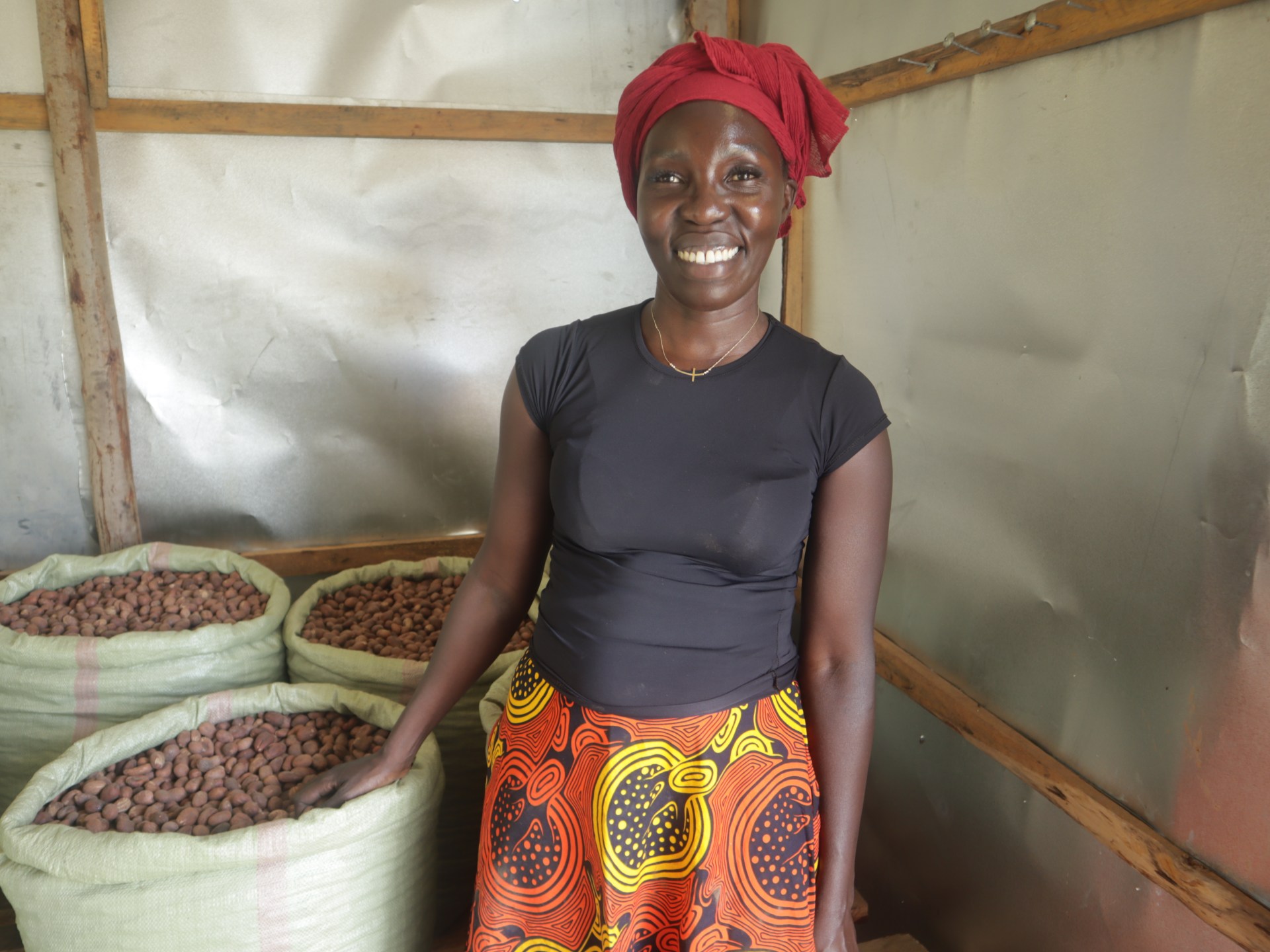
Alebtong, Uganda – When Lucy Everlyn Atim returned home after six years working as a child rights activist in South Sudan’s refugee settlements, her favourite shea tree was gone.
Known locally as moyao, the tree had shaped her childhood. Every morning, she and her friends gathered beneath its branches to eat its sweet, creamy fruit before walking to school.
Its disappearance was not an isolated loss. Across northern Uganda, many more shea trees had been cut down for charcoal.
“I got concerned,” Atim, now in her mid-thirties and a climate activist, told Al Jazeera.
“The destruction of shea trees is alarming. These trees need to be protected, but people also need an alternative source of fuel.”
Uganda loses an estimated 122,000 hectares of forest each year, largely to charcoal production and logging. With about 90 percent of households relying on charcoal for cooking, indigenous species such as shea and Afzelia africana continue to disappear.
Research by Makerere University found that mature shea tree populations on fallow land fell from about 20 trees in 2008 to between 10 and 15 by 2017.
“There is still scant data on the declining shea tree population in northern Uganda,” Dr Patrick Byakagaba, the Makerere University environmental researcher who led the study, told Al Jazeera.
“More needs to be done to determine their density, sapling survival and regeneration.”
Tracking the decline is difficult, he said, because charcoal producers often uproot entire trees, leaving no stumps behind to count.
While working in South Sudan, Atim met a woman in Yida making fuel briquettes from discarded shea husks.
“I got curious. I knew this was something that could be replicated back home,” she recalled.
In 2023, she founded Moyao Africa Initiative, a social enterprise that turns shea waste into fuel briquettes, while helping women earn a living from processing shea butter.
The initiative employs six staff and works with more than 1,200 women organised in savings groups to collect shea waste, produce briquettes and process butter.
“In most households, women carry the burden of finding cooking fuel. By training them to make and sell briquettes and shea butter, we’re creating an income while providing an affordable alternative to charcoal,” she said.
Learning fuel
On a hot afternoon in Alebtong, 15 women sit on woven mats attending a training session led by Moyao Africa Initiative.
They are chairpersons of savings groups from across the district, learning to turn discarded shea husks into cooking fuel.
When the trainer asks about the process, the women answer almost in unison: collect the husks, crush them, mix them with clay and cassava flour, mould them, dry them and store them.
The lesson soon moves from theory to practice. Some women pound dried shea husks in wooden mortars while others dig up clay soil. Nearby, another group stirs thick cassava paste, the binder that holds the mixture together before it is pressed into moulds and left to dry in the sun.
Among them is Catherine Akello, chairperson of the Oteno Moyao Africa Women’s Group in Abwoc village.
Before joining the initiative, Akello valued only the shea kernels, which she processed into butter for her family. The husks were thrown away.
Now they have become a source of fuel.
“I don’t have to worry about buying charcoal whenever I want to cook because I make my own briquettes from shea husks,” Akello, a 47-year-old mother of five, told Al Jazeera.
“As a group, we’re also able to save money from the products we sell, and that helps us support our families when emergencies arise,” she said.
Demand is growing, but production remains limited by the seasonal shea harvest.
To meet it, Atim is saving to buy a carboniser, crusher and briquette-making machine costing about $530. The equipment would allow the initiative to process more shea waste and produce briquettes throughout the year.
“Our plan is to increase shea butter production from 600 litres to 6,000 litres. That means more shea husks and, in turn, more briquettes. It will help us meet demand even when raw materials are scarce,” she said.
Shared future
Renewable energy expert Bosco Odyek told Al Jazeera that turning shea husks into briquettes offers a practical alternative to charcoal by putting waste material to use.
Using a carboniser, he says, would produce cleaner-burning, smokeless briquettes that burn more efficiently.

Beyond fuel production, Moyao Africa Initiative runs environmental clubs in 20 schools across Alebtong District and works with the National Agricultural Research Organisation (NARO) to distribute tree seedlings, encouraging communities to restore the landscape.
Paul Mwirichia, a humanitarian and development expert, told Al Jazeera that such initiatives are important but access to clean energy remains beyond the reach of many rural households.
“We have very good policies,” he said.
“The challenge is implementation. Government needs to support indigenous organisations like Atim’s because they understand the problems affecting their communities, and people trust them to address those challenges.”
For Atim, the work is about saving the tree that shaped her childhood.
The shea tree is gone, but she hopes turning discarded husks into fuel will mean fewer trees are cut down and more women can earn a living from keeping them standing.
“We are leaving no one behind.”

