


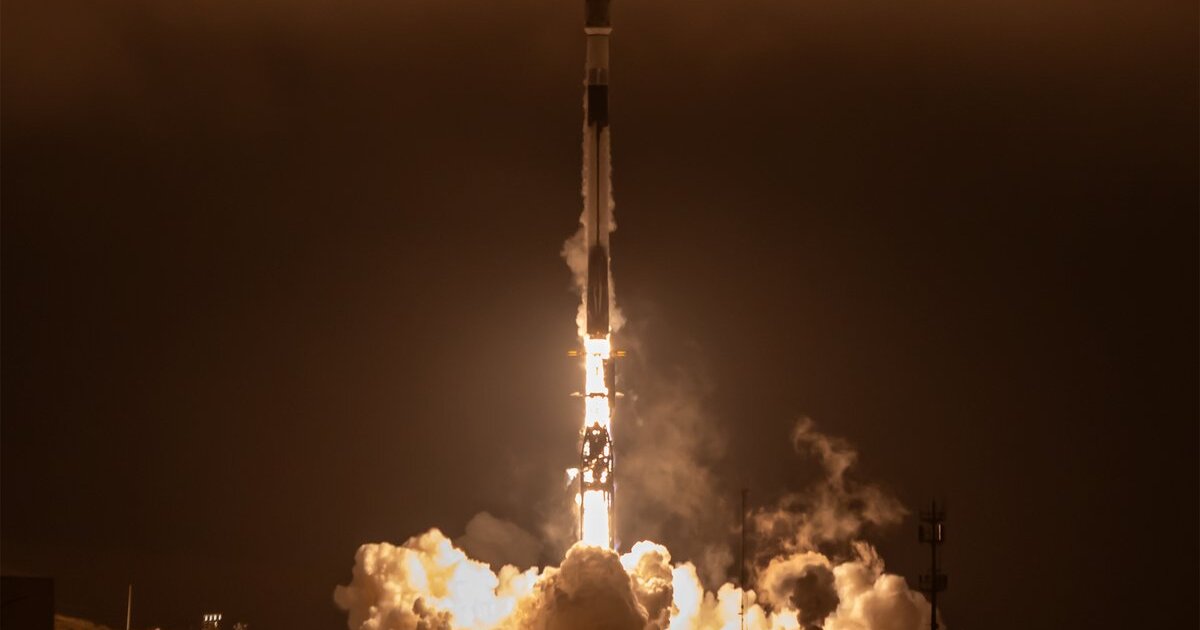
City Labs has launched the world’s first commercial satellite carrying a nuclear-powered payload into orbit. Lofted atop a SpaceX Falcon 9 rocket, the Betavoltaic Orbital High-Reliability (BOHR) CubeSat is designed to demonstrate using tritium as an energy source.
Nuclear power for spaceflight has been around since long before the first Sputnik went into orbit in 1957. In fact, the idea of splitting atoms for propulsion and power was being seriously considered almost as soon as the first atomic explosions were made public. It was even being tested in orbit as early as 1961 with the US Navy’s Transit navigational satellites.
The United States and the Soviet Union used nuclear power for a series of military and experimental government satellites – usually for missions that required more power than solar panels could supply, including radar reconnaissance and meteorological satellites. As satellite arrays became larger and more efficient, and electronics more sophisticated, orbital nuclear power systems were largely confined to exploration missions to the outer Solar System by the 1990s.
However, that is changing as the US Department of Defense seeks more robust, less vulnerable power systems for military satellites that are less hazardous than the older spacecraft powered by uranium and plutonium.
Part of this effort resulted in the BOHR project, which was approved to not only demonstrate the performance and reliability of City Labs’ technology, but to act as a regulatory pathfinder under federal space safety guidelines to clear the way for future commercial space nuclear systems.
If you’re old enough, that may sound alarmingly like a setup for a replay of the Kosmos 954 incident of January 24, 1978, when a Soviet satellite carrying a BES-5 nuclear fission reactor containing approximately 31.1 kg (68.6 lb) of highly enriched uranium-235 made an uncontrolled reentry after the automatic safety eject system that should have sent the reactor into a graveyard orbit failed to engage. The result was a scattering of highly radioactive material across a 600-km (373-mile) area in Canada, from Great Slave Lake in the Northwest Territories southeastward into portions of Alberta and Saskatchewan.
Though this occurred over a sparsely populated wilderness, the incident sparked a major cleanup operation by Canada and the United States, along with a significant diplomatic flap and the payment of millions of dollars by the Soviets for damages.
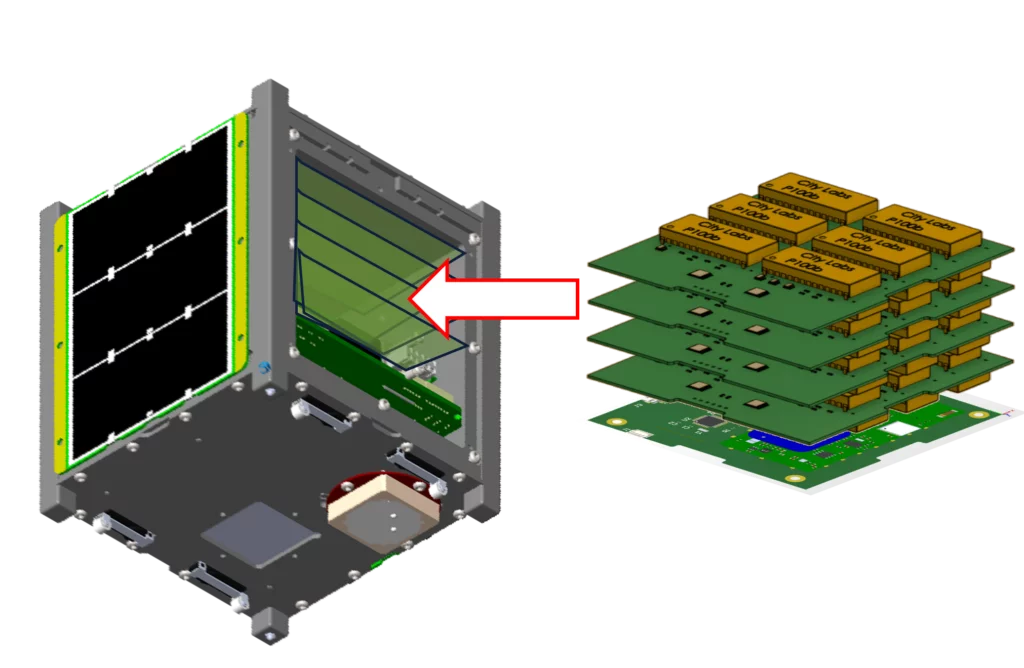
That can’t happen with BOHR because it is only a CubeSat weighing less than 6 kg (13.2 lb) and it works on a completely different principle. While the satellite uses solar cells to run the main satellite bus and conduct routine operations, the demonstration payload runs independently on City Labs’ proprietary NanoTritium Betavoltaic power system.
Instead of using heavy elements like uranium, BOHR runs on the natural beta decay of tritium, a radioactive isotope of hydrogen. Instead of producing energy from heat, as with the radiothermal generators found on deep-space probes like Voyager 2, the NanoTritium system generates electricity directly. As the tritium decays, it gives off beta particles, which strike a semiconductor p-n junction, creating electron-hole pairs and generating an electrical current.
It isn’t a massive amount of wattage, but tritium has a half-life of 12.3 years, allowing the system to generate uninterrupted power for over 20 years. In addition, the tritium is far safer compared to historical alternatives because beta particles cannot penetrate human skin, and the gas is securely stored in the form of a solid metal hydride foil, eliminating the danger of leakage or explosion.
Launched as a rideshare payload on SpaceX’s Transporter-17 mission, BOHR is reported to have achieved insertion into low Earth orbit and is being readied for commissioning.
“This is a historic step for commercial nuclear power in space,” said Peter Cabauy, CEO of City Labs. “BOHR demonstrates that safe, compact, and regulatory-approved nuclear power systems are ready for routine commercial deployment. This capability enables persistent, always-on payload operations that are not constrained by sunlight or battery life.”
Source: City Labs

