


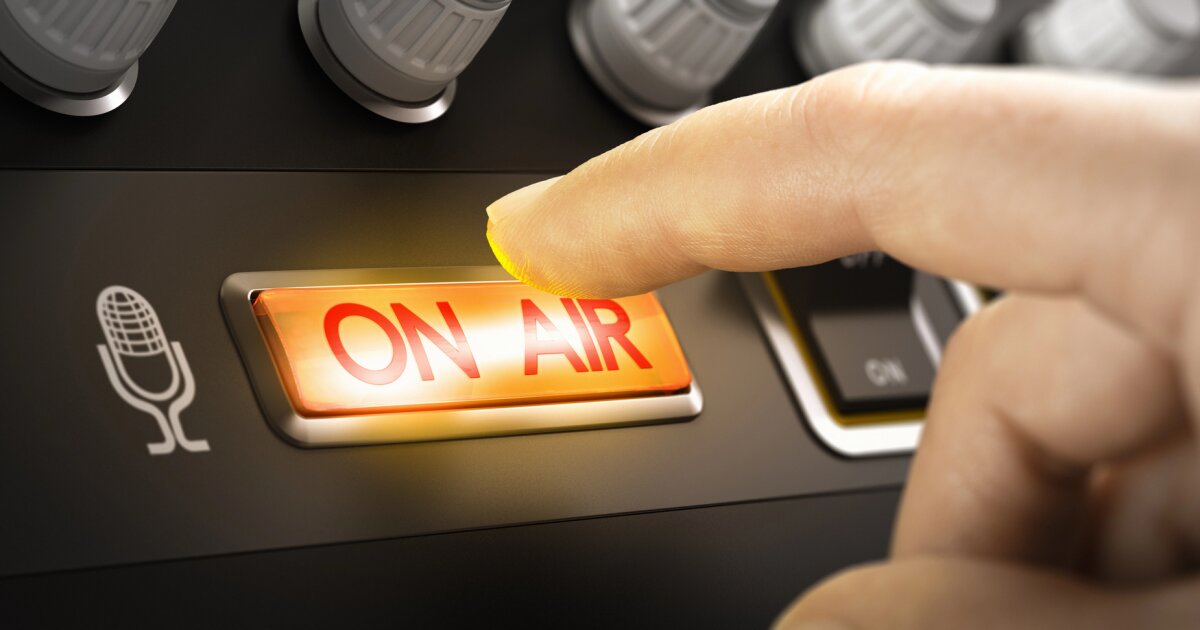
After more than a century, an era comes to an end as the world’s longest-running long-wave radio service shuts down. On June 27, 2026, the BBC switched off its Radio 4 long-wave broadcast for good, with an even more startling cancellation in the works.
In July of 1924, the BBC began testing long-wave audio transmissions from the Marconi works in Chelmsford on a wavelength of 187.5 kHz. A year later, on July 27, 1925, regular service was inaugurated from Borough Hill in Daventry, Northamptonshire, with the call sign 5XX.
From this elevated central position within England, the BBC’s 25-kW transmitter, with its newly invented water-cooled thermionic valves, gave the corporation the power to reach 94% of the population. As the technology for the new radio medium rapidly developed, including 150-kW transmitters, the long-wave service moved to a permanent home in Droitwich, Worcestershire, eventually transmitting on 200 kHz, and then shifting to 198 kHz in 1988.
Uniting the country with a single broadcasting program, the long-wave service soon became a part of everyday life, broadcasting the Test Match Special of international cricket, the Daily Service of Christian worship, and Yesterday in Parliament. Even supposedly niche programs like the Shipping Forecast, the live tolling of Big Ben, and the Greenwich Time Signal pips marking the exact hour were listened to almost religiously. In fact, the time pips became vital in the pre-internet days for international navigation, scientific calibration, and structural timekeeping across Northwestern Europe and, in many ways, remain superior to digital timing.
BBC 4
The long-wave service played a vital part during the Second World War when its beefed-up transmissions spread its reach into occupied Europe, sending coded messages to resistance fighters as well as news, propaganda, and entertainment. To protect the British homeland from Luftwaffe air raids, transmitters were carefully synchronized to prevent German bombers from using the radio signals as navigational beacons.
In peacetime, the service was home to the successive Light Programme, Radio 2, and Radio 4, yet it also acted as a vital link with the Royal Navy’s submarine fleet. Because long-wave signals can penetrate seawater to a depth of several meters, Vanguard-class submarine commanders would regularly tune into the Today program on Radio 4 to make sure the country was still there. If the BBC and regular military channels went dead for more than 48 hours, the sub commander was authorized to open their sealed “Letters of Last Resort” from the Prime Minister.
However, just as Radio 4 listeners have had to adapt, the Navy has thad to find new verification methods because the long-wave service is no more. With the introduction of digital media, listeners to the long-wave service have dwindled over the past three decades to roughly 90,000, and the cost of maintaining the infrastructure has skyrocketed. Worse, the unique thermionic valves that the transmitters rely on aren’t manufactured anymore, and there are only 11 spares in existence.
With all this, the BBC decided to pull the plug on long wave, but this is only a foreshadowing of a more dramatic plug-pulling that could happen in as little as eight years.
The same arguments that caused the demise of long wave also apply to broadcast television, referred to officially as Digital Terrestrial Television (DTT) or Freeview. Television audiences are moving away from broadcast channels toward online digital media, making it harder to justify the expense of traditional transmission equipment. As a result, the government and industry bodies are evaluating a transition away from traditional TV broadcasts between 2034 and 2044.
If major broadcasters make the switch entirely to the internet, then it probably won’t be long before television, as it’s been known since the 1930s, goes the way of the gramophone, slide projectors, and those little Tamagotchi things.
And I’ve only just sorted out how to use the remote.
Source: BBC Media Centre

