


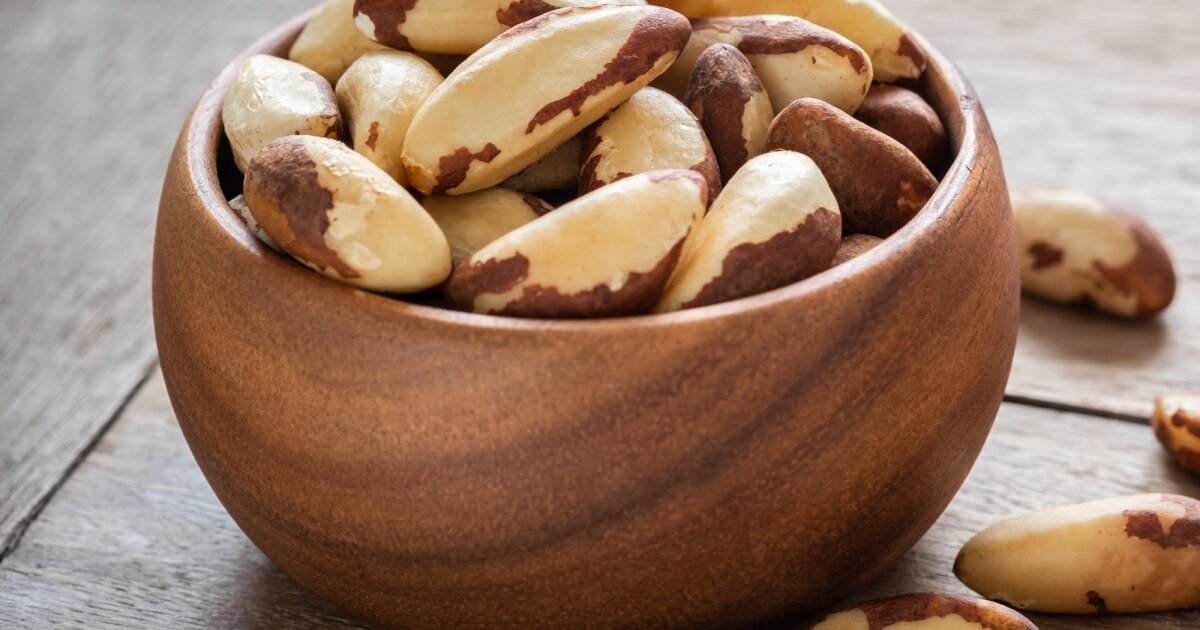
The only commercial nut exclusively harvested in the Amazon, the Brazil nut is highly sought after for its health benefits, including its remarkable concentration of selenium, a necessary antioxidant in the human body. Not only is the Brazil nut a protein-packed addition to a typical bag of trail mix, but it could also protect the Amazon rainforest from deforestation.
Harvested across parts of Bolivia, Peru, and Brazil, Brazil nut trees stand out in more ways than one. One of the tallest trees in the rainforest, the Brazil nut can reach 40 meters (130 feet) tall and two meters wide. These forest giants can also live for an extremely long time – scientists have dated some individual Brazil nut trees to over 1,000 years old.
Despite their name, Brazil nuts are predominantly harvested in Bolivia, which exports nearly 28,000 tons of the seeds annually.
One of the many unique aspects of this tree is that its nuts need to be harvested in the wild. Because of their interrelated relationship with other keystone species, Brazil nuts rely on intact rainforests to produce fruit. Without a fully functioning forest ecosystem surrounding them, they will stop reproducing and eventually die off.
Typically, local communities harvest Brazil nuts by collecting fallen seed pods from the forest floor. Each seed pod contains around 10 to 25 seeds arranged like an orange within a thick, hard shell, which harvesters crack open with machetes. The seeds are then transported to processing facilities in towns several days’ river boat trip away, where they will be prepared for export.
Lior Golgher (upper left and upper middle), US Department of Agriculture (upper right), mauroguanandi (bottom left), USDA Forest Service, (bottom right)/RoRo/Wikimedia Commons
Global market demand for Brazil nuts has made these seeds the most economically productive crop harvested in the Amazon, by far. The Brazil nut industry is worth over $70M USD, and the vast majority of Brazil nuts are purchased and consumed by countries in Europe and North America. The relatively high price fetched for these seeds provides local communities with an incentive to protect not only the Brazil nut, but the whole forest ecosystem around it.
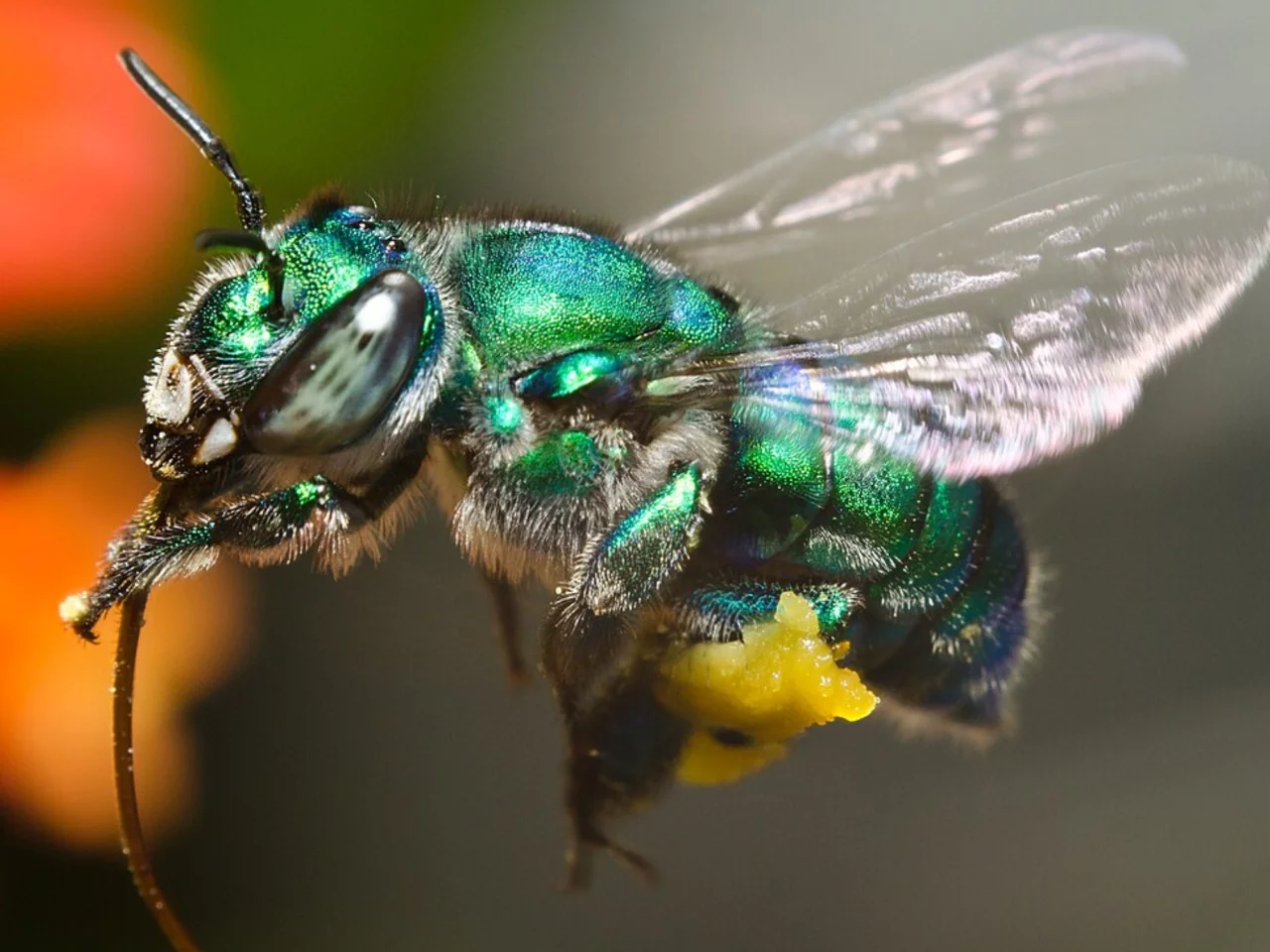
According to Dr. Rens Brouwer, a forest management researcher at Van Hall Larenstein University, the Brazil nut’s flowers are structured in a way that only a few pollinators can access them, namely by endemic Euglossine bees, or orchid bees.
The Brazil nut’s flower is protected by a heavy “lid” that prevents most pollinators from entering the flower. Local female euglossine bees are the only bees large and strong enough to lift the heavy lid of the Brazil nut flower and drink the plant’s nectar.
The male euglossine bees also play a special role in this interaction: to reproduce, they must first “prove” themselves to the females by coating themselves in the scent of orchid flowers. These males visit a variety of local orchid species to create a unique scent concoction to impress female bees. Not only does this behavior pollinate the Brazil nut tree, but it also helps pollinate countless other flower species in the forest at the same time.
Eframgoldberg/Wikimedia Commons
Even after pollination and bearing fruit, the Brazil nut relies on another special animal to disperse its seeds. A large rodent and relative of the capybara, the agouti is the only known animal able to crack the coconut-like shell of the Brazil nut with their large front teeth. Agoutis eat the seed and bury the rest to save for later. The seeds they forget about eventually grow into mature Brazil nut trees. This is the only way Brazil nuts naturally reproduce in the wild.

Herve06/Getty Images/Canva
Brazil nut trees also help protect the Amazon by replenishing forest soil. Researchers based in Brazil found that Brazil nut trees can restore the soil health of forests that have been altered by up to 50% by fixing nitrogen and potassium back into the ground.
Because of their relationships with so many other forest species, Brazil nuts cannot be grown in monoculture plantations.
“Productivity depends not only on the trees themselves, but also on maintaining the surrounding ecological conditions that support pollinator populations,” Brouwer says.
Likewise, the health of the rainforest also greatly impacts Brazil nut productivity. Keeping the forest intact means these trees will have a higher seed yield.
When comparing trees planted in different parts of the forest, Brouwer’s studies on the success of Brazil nut propagation found that “fruit production in secondary forest sites was 262% higher compared to Brazil nut trees planted in pastures, where pollinating bees may be less abundant.”
While Brazil nut harvesting provides a meaningful livelihood for many communities across the Amazon, there are many limitations to scaling the industry as a widespread conservation initiative. Firstly, Brazil nuts take a long time to produce fruit. Of the trees that Brouwer’s team researched, the youngest Brazil nut tree to reach reproductive maturity was nine years old. This means that investing in the Brazil nut industry requires local communities to think very long-term, which might not always be possible.
Especially in deep parts of the Amazon, land rights and ownership can be very tenuous and insecure. Many farmers and local community harvesters lack formal titles to the lands they harvest from, which creates difficulties in managing and monitoring harvesting sites.
“This creates uncertainty for farmers and landholders who are considering investing in a tree crop that may only become productive many years into the future,” says Brouwer. Without secure rights to land and future benefits, many might not consider the long-term investment in Brazil nut harvesting a worthwhile incentive.
While Brazil nut cultivation is not a quick-fix solution to prevent deforestation in the Amazon, the industry can be an impactful incentive for local communities to keep the rainforest system intact.
To Brouwer, Brazil nuts are a key component in a diversified livelihood strategy and should be incorporated with other forestry products, including timber. “Sustainable agriculture and sustainable forest management can both play important roles in supporting local livelihoods while reducing pressure on remaining forests.”
Fact-checked by Mike McRae.

