


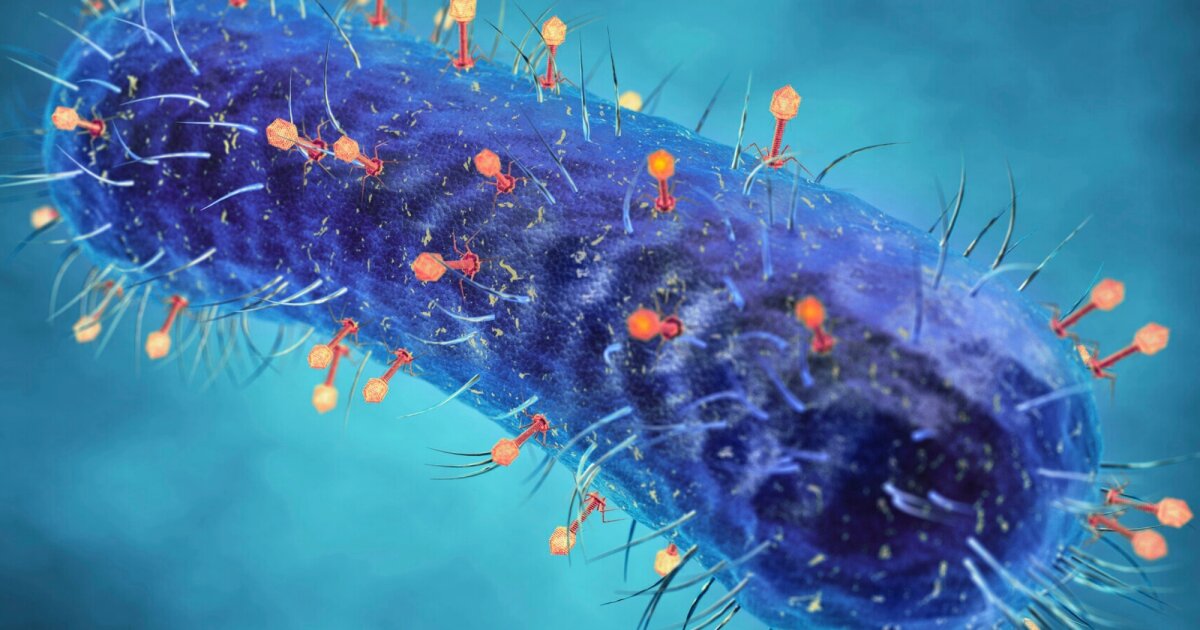
Colorectal cancer (CRC) has long been linked to a microbial imbalance in the gut, a phenomenon scientists call dysbiosis. But a new study from the University of Southern Denmark and Odense University Hospital points to this dynamic being more complicated than initially thought, with not just bacteria behind it but the viruses living inside them.
Among all the bacterial pathogens involved in CRC pathogenesis, Bacteroides fragilis is one of the most studied. A ubiquitous gut resident in healthy human ecosystems, in CRC patients, its presence takes on a darker hue.
This creates a paradox that scientists have been trying to reconcile: how can the same species be both a benign companion and a potential accomplice in cancer? So researchers considered whether functional differences might exist in the bacterium itself.
It seems the answer may lie among variations in the microbe’s genes.
Lead author Flemming Damgaard, a molecular biologist from Odense University Hospital, says, “We have discovered a virus that has not previously been described and which appears to be closely linked to the bacteria we find in patients with colorectal cancer.”
This link was first identified in Denmark, where health records of two million people showed that a small proportion of patients who received treatment for B. fragilis bloodstream infections more than six months later had been diagnosed with colorectal cancer.
Damgaard and his team assembled a highly specific collection of B. fragilis isolates from CRC patients and healthy controls. Using a pangenome-wide association analysis, they searched for genetic differences responsible for the bacterium’s duality.
Compared with samples taken from healthy subjects, B. fragilis collected from people with colorectal cancer were more likely to contain viruses, including a variety that had never been reported. These viral hitchhikers were Caudoviricetes prophages, bacteriophages that integrate into the bacterial genome and are inactive until activated under certain conditions. In CRC patients, B. fragilis was twice as likely to carry these prophages.
The team further validated their analysis beyond Denmark in a large-scale metagenomic sequencing cohort of 877 individuals who provided stool samples, including CRC patients and cancer-free controls.
“It was important for us to examine whether the association could be reproduced in completely independent data. And it could,” says Damgaard.
This is the first instance in which researchers have linked one of the main bacterial suspects in CRC to specific bacteriophages. This finding calls into question conventional models of dysbiosis that have often regarded bacteria as static organisms rather than dynamic populations influenced by viral infection.
Although this study shows strong associations between the virus and colorectal cancer, it does not provide definitive evidence of a causal relationship.
“We do not yet know whether the virus is a contributing cause, or whether it is simply a sign that something else in the gut has changed,” says Flemming Damgaard.
The researchers stress that these results are still early and experimental. More studies are needed before the approach can be used in medical practice. One key question they are now exploring is whether the virus alters the bacterium’s behavior, which could, in turn, affect the gut environment.
This research was published in Communications Medicine
Source: University of Southern Denmark
Fact-checked by Mike McRae

