


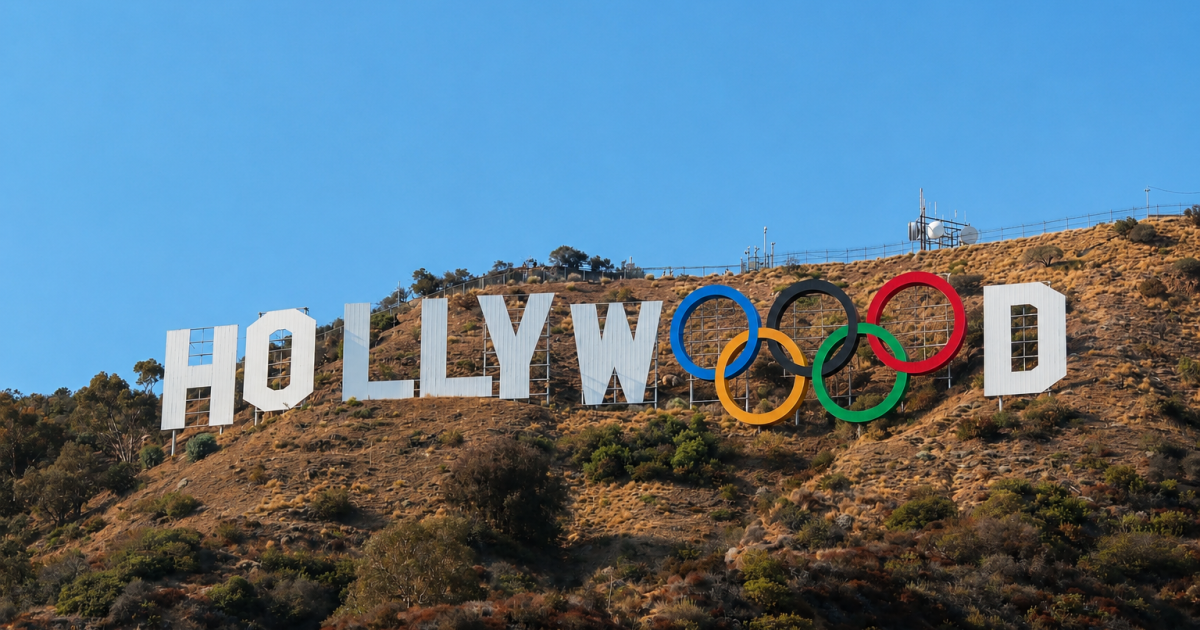
In 2028 Los Angeles will become the first city to hold the (modern) Olympic Games for a third time, following previous runs in 1932 and 1984.
The 2028 Summer Olympics, also known as LA28, are shaping up to be one of the most unconventional Olympic Games in modern history – not because of new stadiums or architectural spectacle, but precisely because of their absence. In a striking departure from the model followed by many recent host cities, Los Angeles is pursuing a “no-build” Olympics, repurposing existing venues with sports-specific renovations but no new builds.
That’s not the biggest surprise, either; LA is attempting something even more radical for a car-centric city: a “no-car” Games built around public transport rather than private vehicles.
This approach reflects a broader shift in how mega-events are conceived in the 21st century. After decades of escalating costs, underused infrastructure, and environmental criticism, Los Angeles is attempting to redefine what it means to host the Olympics.
The LA28 “No-Build” Infrastructure Plan
Perhaps the most defining feature of LA28 is its commitment to using existing infrastructure. Unlike cities such as Beijing, Athens, or Rio de Janeiro, which invested heavily in new stadiums that later struggled to find long-term use, Los Angeles has pledged to construct no new permanent venues for the Games.
Instead, the city is drawing on its extensive network of professional sports arenas, university facilities, and entertainment complexes. Iconic venues such as SoFi Stadium, Crypto.com Arena, and the Los Angeles Memorial Coliseum will host major events, while other competitions will be distributed across Southern California. Where existing venues are insufficient, the solution is not permanent construction but temporary or repurposed infrastructure.
Sports such as cricket, for example, will be staged in purpose-built temporary facilities rather than newly constructed stadiums. This strategy offers several advantages. It reduces costs, avoids the long-term burden of underused facilities, and allows for greater flexibility. Temporary venues can be dismantled or adapted after the Games, leaving a lighter footprint.
The reuse of venues goes beyond simply selecting existing stadiums. The LA28 plan involves retrofitting and adapting dozens of venues to meet Olympic standards. This includes upgrading facilities, improving accessibility, and installing temporary seating, media infrastructure, and athlete services. In effect, Los Angeles itself becomes a distributed Olympic park. Rather than concentrating events in a single precinct, the Games will unfold across a wide metropolitan area. This decentralized model reflects the geography of Los Angeles, a sprawling city with multiple centers. It also leverages the city’s identity as a global sports and entertainment capital.
The LA28 “No-Car” transport plan
If the venue strategy is ambitious, the transport plan is even more so. Los Angeles is famously one of the most car-dependent cities in the world, relying on a spaghetti of interconnecting freeways that spread out across a sprawling area. Some 93% of all LA passenger miles in 2022 were undertaken in cars, according to the Oliver Wyman Forum.
Yet organizers are aiming for a “no-car” Games. Spectators will be strongly discouraged from driving, and parking near venues will be extremely limited. Instead, attendees will rely on public transport, shuttle services, and park-and-ride systems. The goal is for all ticketed spectators to reach venues without using private cars, in a city where only around 2% of miles are currently undertaken on public transit, and 5% by walking – again, according to the Oliver Wyman Forum’s 2022 data.
Despite the emphasis on public transport, Los Angeles is not building an entirely new system in time for LA28. Instead, it is accelerating existing projects and improving current infrastructure.
Rail extensions, bus network enhancements, and better connections between key locations are all part of the plan. In addition, thousands of buses may be borrowed from other regions to handle peak demand during the Games. Organizers are also considering behavioral strategies such as encouraging remote work and staggering business hours to reduce congestion.
Underlying both the venue and transport strategies is a focus on sustainability. By avoiding new construction, the Games reduce carbon emissions and environmental disruption. Discouraging car use also aims to cut traffic congestion and improve air quality. The approach signals a shift toward more environmentally responsible mega-events.
The vision is ambitious but not without risks. Public transport capacity may be stretched, and persuading LA residents and visitors to avoid cars while the Games are on could prove difficult.
The spread-out nature of venues increases reliance on a transport system that must operate efficiently. Timing is also critical, as infrastructure upgrades must be completed on schedule.
Despite these challenges, the Los Angeles approach could represent a turning point. By focusing on existing infrastructure and operational efficiency, it offers a more sustainable and financially responsible model. If successful, it may influence how future Olympic Games are planned, reducing the need for large-scale construction and encouraging smarter use of existing resources.
The 2028 Los Angeles Olympics are not about building more, but about using what already exists in smarter ways. By repurposing venues and prioritizing public transport, the city is attempting to redefine how the Games are delivered.
Whether it succeeds will depend on execution, but the ambition is clear: to create an Olympics that is more sustainable, more efficient, and more aligned with the realities of the modern world.
Sources: LA28 / Various

