


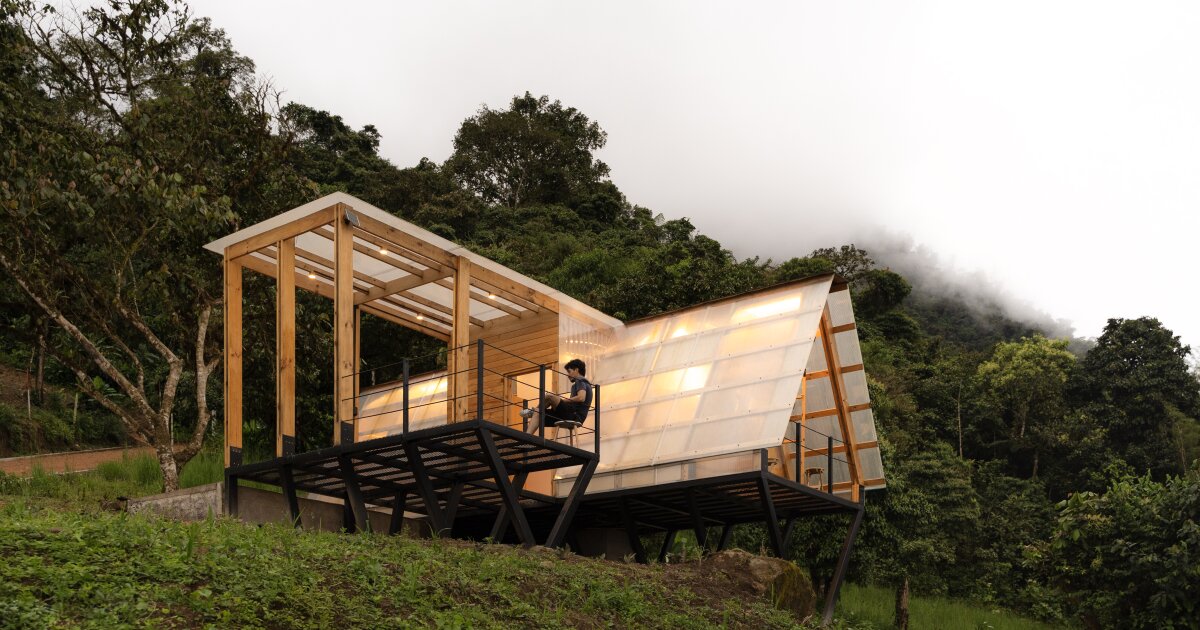
A compact elevated shelter by Baquio Arquitectura has been installed on the slopes above Mindo, in Ecuador’s Chocó cloud forest. Dubbed Casa 6-3, the project is a tiny timber retreat with a lightweight footprint, overlooking the surrounding mountains and rainforest.
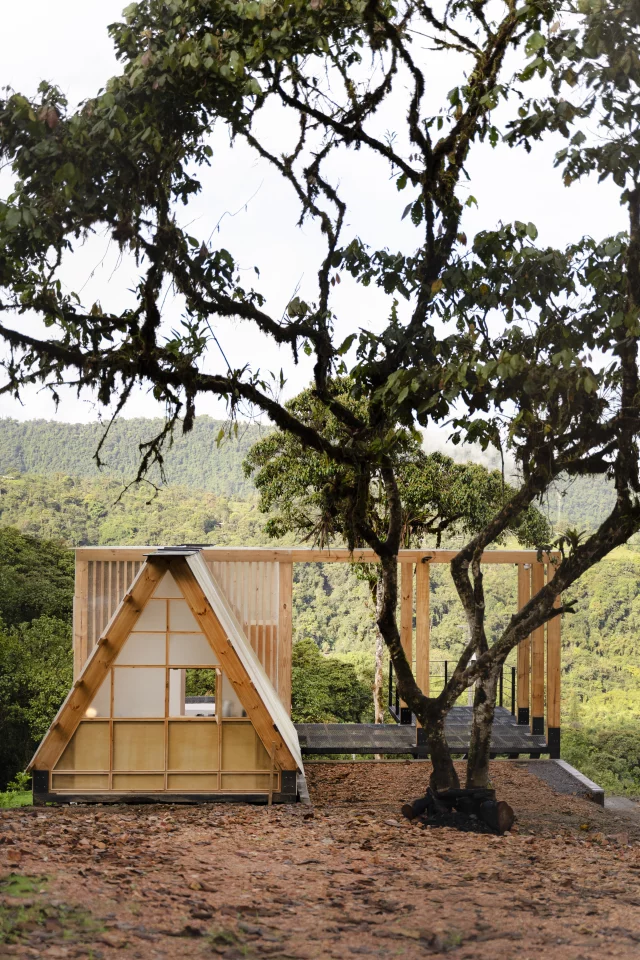
Perched above the ground on a triangular wooden support system, the Casa 6-3 cabin hovers over the hillside. The timber load-bearing system was specifically chosen for its economic advantages and ease of assembly on site, taking into consideration its remote location. By raising the structure off the ground, the architects were able to conserve the existing natural landscape, limiting the cabin’s footprint on the site. In addition, the use of lightweight materials simplified transport and assembly.
Baquio Arquitectura
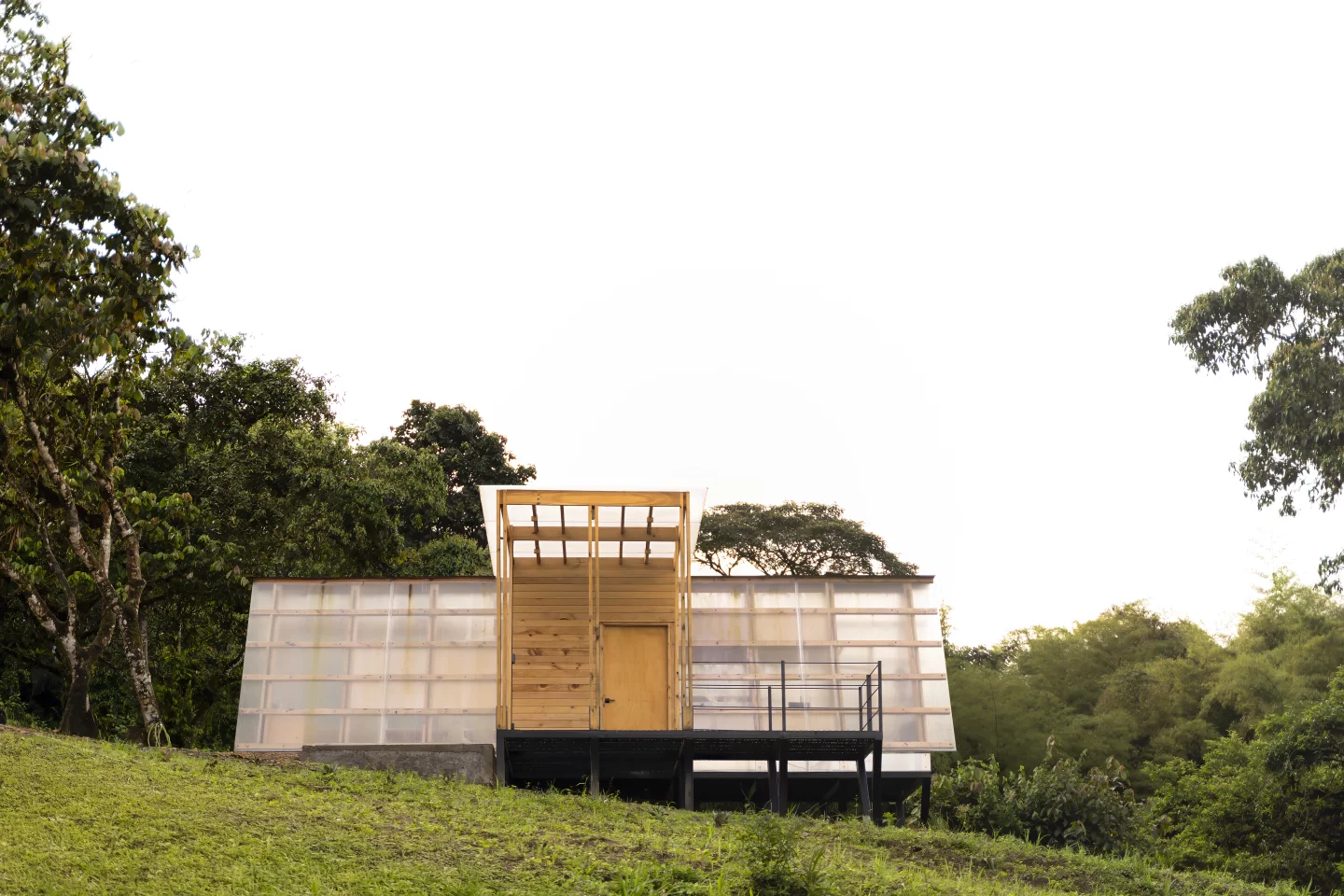
The timber frame is wrapped in white polycarbonate thermoplastic, which allows natural daylight to filter into the interior spaces of the cabin. Due to its semi-transparency, the facade invites the shifting sky and the green hues of the surrounding forest canopy into the interior, creating an environment that softens the line between inside and out. Furthermore, the choice to go with this type of prefabricated cladding helped keep overall costs relatively low and reduce construction time of the project.
“The choice of the building envelope responds to a search for breaking away from the rigidity of everyday life,” Baquio Arquitectura tells New Atlas. “The use of polycarbonate was not only an efficient budget solution but also a strategic decision to enhance perceptual and sensory connection.”
Baquio Arquitectura
The A-framed cabin has been positioned so that it points toward the direction of the mountains. The design includes a series of simple shutters that open upward and outward, allowing natural light and fresh air inside. Each opening shutter frames views in all directions, making the interior spaces feel part of the surrounding landscape.
Inside the cabin, the interior design has been kept to the bare minimum, featuring a continuous floorplan without the need for doors. The cabin is equipped with a simple compact timber kitchen, timber floorboards, a space-saving desk that folds away, a hidden bed, full bathroom, open living space, and two large outdoor terraces.
While the cabin’s porous envelope maintains visual and acoustic connections to the forest, the architects have designed the dwelling so it can evolve into a more permanent structure. To achieve this, the outer cladding can be removed and replaced with a more durable material. For example, treated tropical hardwood, fiber‑cement, standing‑seam metal or composite rainscreen panels would allow the tiny cabin to evolve from a temporary shelter into a more permanent and comfortable dwelling.
Baquio Arquitectura
As is, Casa 6-3 does raise some practical questions though. Translucent plastics used in a humid, high‑UV tropical setting tend to degrade faster, causing fading, loss of transparency, and expansion with heat in ways that could undermine both light quality and visual appeal. The very openness that binds the cabin to the landscape may prove difficult to reconcile with privacy and comfort needs during long‑term use, particularly after dark or in sustained rainfall. Whether the envelope can adequately buffer wind noise, wildlife sounds, and temperature swings also remain untested.
For now, Casa 6-3 stands as a concise prototype for a no-fuss lightweight mountain cabin, prioritizing minimal site impact and direct engagement with the surrounding natural environment. Its long‑term success will depend on how well it weathers the climate, and adapts to changing demands.
Source: Baquio Arquitectura via Designboom

