


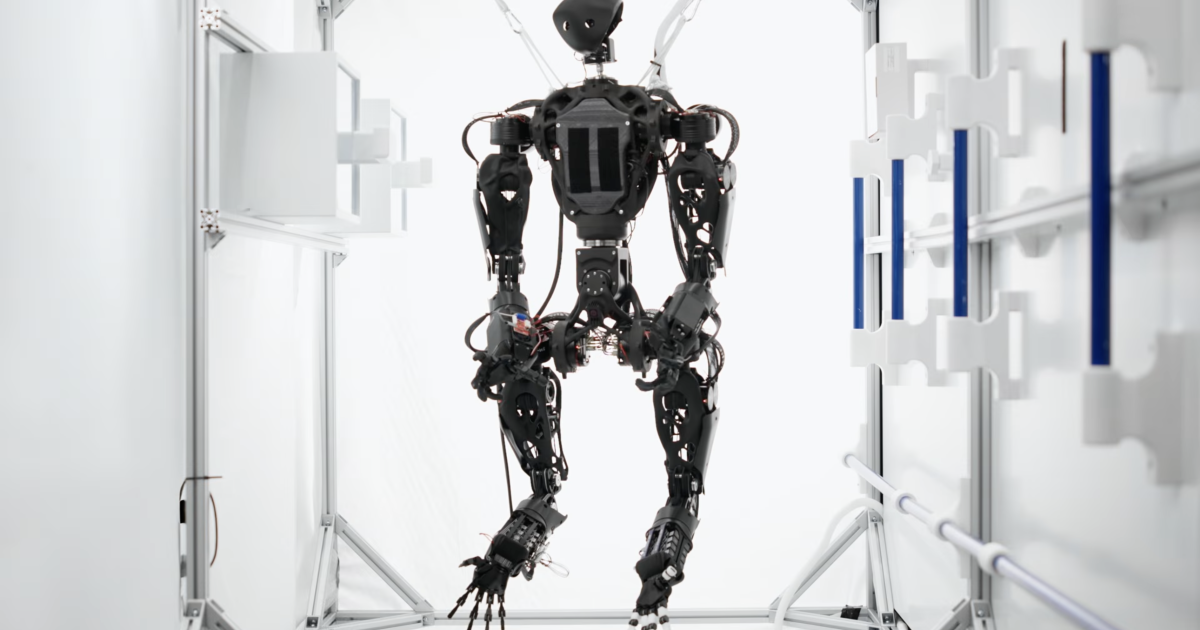
In microgravity, walking doesn’t exist. Balance doesn’t exist. What does exist is the need to grip surfaces, manipulate tools, move through narrow corridors, and not go flying every time you push against something. Two legs solve none of those problems.
Orbit Robotics, an academic spinout from ETH Zurich, built Helios around a single premise: don’t design for a gravity environment if you’re going to work in microgravity. The result is a four-armed robot that looks like the febrile delirium of a science fiction writer but represents one of the most coherent bets in space engineering in years.
According to the company, Helios uses two pairs of arms with complementary roles. Two anchor the robot to interior surfaces while the other two do the work: unloading cargo, handling tools, moving equipment. This lets it stabilize and operate at the same time, something a two-armed and two-legged humanoid simply can’t do while floating in zero gravity.
Orbit Robotics/Youtube
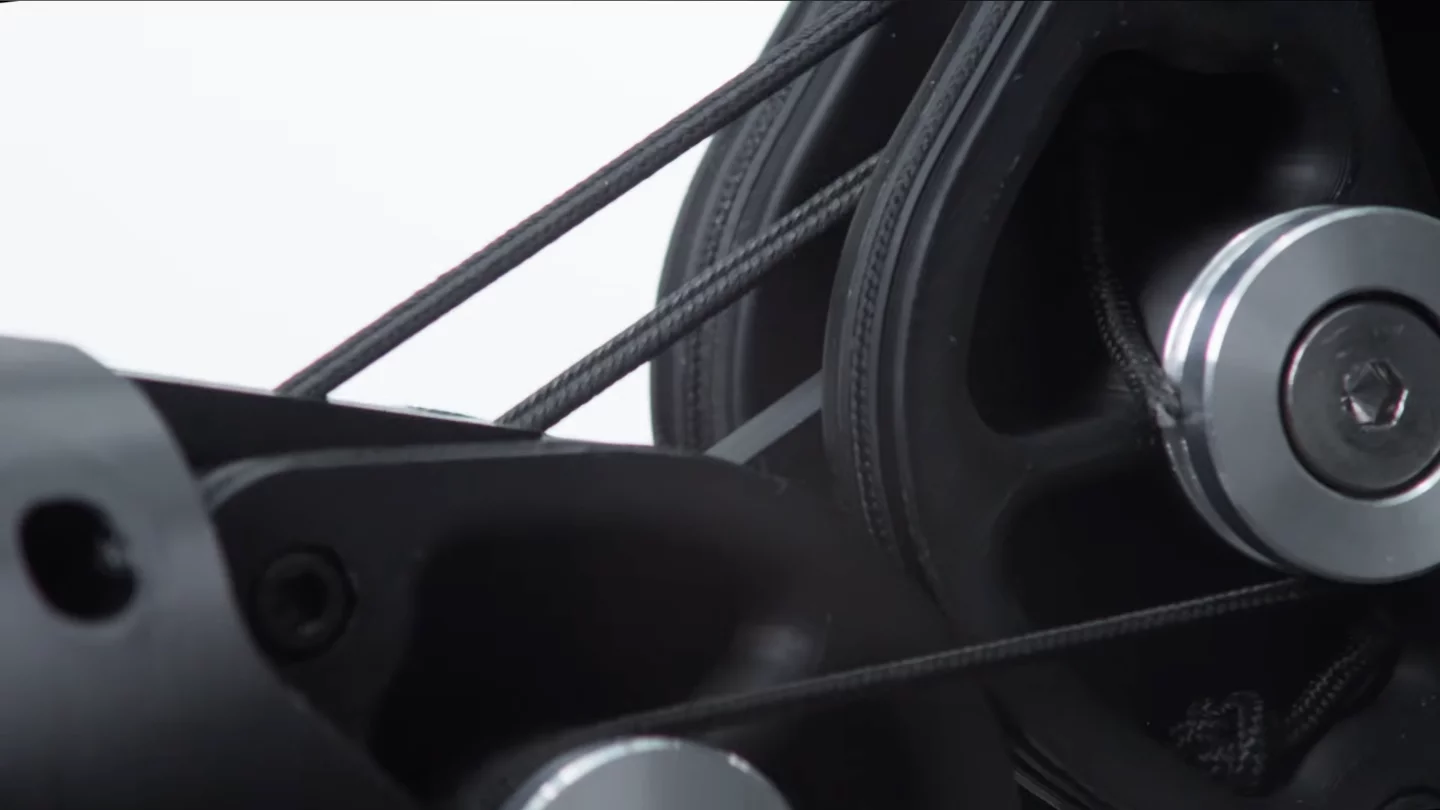
The four arms don’t rely on motors at each joint. Instead, Orbit says, a tendon-driven system concentrates the motors near the shoulders and transmits force through cables and pulleys, reducing weight at the limb ends without sacrificing range of motion. Helios also incorporates a rolling-contact elbow joint engineered for smooth, controlled movement. That detail sounds minor, but in microgravity it is critical. A sudden jerk can destabilize both the robot and whatever it’s holding.
Before Helios, the team built IKARUS, an earlier platform that served as a testbed for teleoperation, imitation learning, and dual-arm manipulation. IKARUS validated the engineering approach that would later shape Helios.
Orbit Robotics says its mission isn’t to replace astronauts but to free them. The idea is that humans could focus on high-value science – aging research, cancer treatments, organ bioprinting in microgravity – while a robot handles repetitive tasks.
Orbit Robotics/YouTube
That repetitive work carries an astronomical price tag. Maintenance accounts for roughly 35% of crew time aboard the International Space Station. At an estimated cost of US$140,000 per astronaut-hour, sorting supplies or moving equipment is a huge waste.
Helios doesn’t need to make complex decisions to do that work. It needs to navigate narrow corridors, stay stable without gravity, and manipulate objects precisely. That’s exactly what it was designed for.
While the initial focus is interior work, Orbit Robotics envisions a broader role that includes satellite servicing and in-space construction. If launch costs keep falling – driven by programs like SpaceX’s Starship – the number of orbital stations and commercial habitats will grow, and each will need maintenance, logistics, and cargo management. Every successful launch expands the market, and autonomous spacecraft have already proven the model, exploring Mars, flying past Pluto, and leaving the solar system without a single human aboard.
Meanwhile, the scientific evidence of what space does to the human body keeps piling up. Astronauts who spend months in orbit suffer radiation damage, bone loss, vision problems, and cognitive effects from fluid shifts in the brain. Which is why many scientists argue the case for human spaceflight is getting harder to defend. As robots grow more capable and AI more sophisticated, a growing chorus of researchers contends that machines can go further, do more, and take on greater risk – all at a fraction of the cost of keeping a human alive in orbit.
Orbit Robotics frames Helios as a partner to astronauts, not a replacement. But the same logic that led engineers to build arms instead of legs – if the environment demands a different body, build a different body – ultimately points to a much harder question: is the human body really the best hardware for exploring the cosmos?
The future is here! HELIOS
Source: Orbit Robotics

