


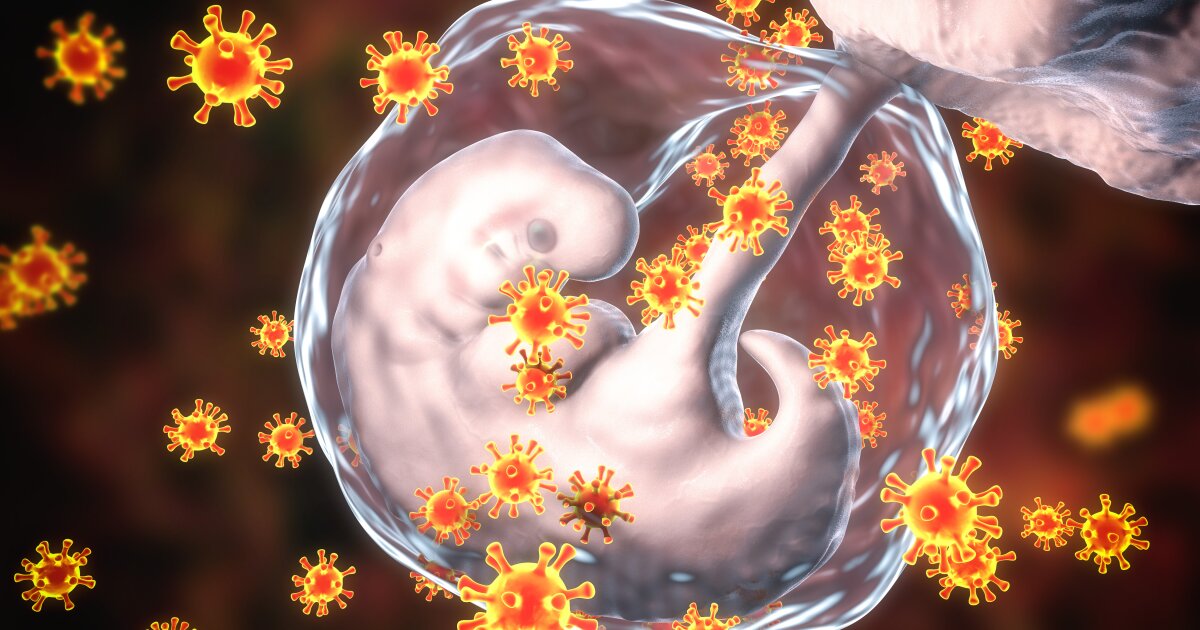
Pregnancy is filled with small moments of anticipation: the first flutter of movement, the sound of a heartbeat, the quiet question of whether everything is unfolding as it should. At the same time, much of what shapes development is happening out of view, long before those milestones arrive. And even before those moments are felt, the environment surrounding pregnancy is already beginning to shape how the baby’s brain develops.
One part of that environment drawing increasing attention is what researchers call “prenatal immune activation.” This refers to the body’s response to infection during pregnancy, when immune signals can shift the conditions surrounding the developing fetus.
A growing body of research suggests that these responses can influence how the developing brain unfolds, with links to a higher risk of neuropsychiatric conditions later in life.
Building on that work, a large Danish national cohort study examined health records spanning more than three decades. The researchers looked at maternal infections before, during, and after pregnancy and their association with long-term mental health outcomes in offspring. Among those outcomes, the team found that individuals exposed to maternal infection had a greater risk of suicide attempts later in life.
But when the researchers looked more closely at when those infections occurred, an unexpected pattern emerged.
Rather than being limited to pregnancy itself, the association also appeared in infections that occurred before and after pregnancy. The team found that children whose mothers had infections during these periods showed similar increases in suicide-attempt risk: around 45% before pregnancy and 31% post pregnancy.
It’s a pattern that complicates what might otherwise seem like a straightforward explanation: that infections during pregnancy directly affect fetal brain development. Instead, it points to a more complex picture, one shaped not just by when an infection occurs, but by how the immune system responds.
The study, led by researchers at McGill University, the Danish Research Institute for Suicide Prevention, the University of Copenhagen, and the Johns Hopkins Bloomberg School of Public Health, analyzed data from Denmark’s national health registers. It followed more than two million individuals from adolescence into early midlife.
A pattern that extends beyond pregnancy
Maternal infections were tracked using hospital data and included bacterial, viral, and other infections contracted before, during, and after pregnancy. Suicide attempts in offspring, by contrast, were based on cases requiring medical attention after the age of 10, when such events can be more reliably captured in clinical records.
When the research team examined the results, they found the increase in suicide attempts to be modest. Among individuals exposed to maternal infection during pregnancy, there were roughly 141 suicide attempts per 100,000 people each year, compared to around 90 per 100,000 among those not exposed.
While that difference matters at the population level, the overall risk for any one person remains low. Most children did not go on to develop serious neuropsychiatric conditions, nor did they become a suicide risk.
How infection may shape the developing brain
To help interpret these findings, Refractor spoke with Dr. Mady Hornig, M.D., a visiting scientist and professor at the Feinstein Institutes for Medical Research in New York, who was not involved in the study.
“Maternal infections before but close to the time of pregnancy might continue to impact the type and number of immune cells and other factors circulating in blood, and thereby exert a more persistent influence over what happens at the maternal-fetal interface during pregnancy, including dysregulation of offspring brain development,” says Hornig.
Hornig further notes that maternal infections identified after pregnancy may also reflect processes that began earlier but went unrecognized, and could still influence fetal brain development through events in the womb.
In other words, it’s not just the presence of infection, but how the maternal immune system responds, and how those effects can be carried forward to the fetus through the placenta.
Rather than acting as a passive barrier, the placenta actively regulates what signals are passed along. This means that when an infection occurs, it can trigger inflammation between both mother and fetus. In turn, this can potentially shift the signals that reach the fetus during brain development. Hornig emphasizes that this relationship between the placenta and the maternal immune system is far from simple, and still not fully understood.
Hornig also points to more indirect pathways, including changes in the maternal microbiome. These shifts can quietly, yet meaningfully, influence how immune cells behave. Metabolites produced by gut or vaginal microbes, for example, can enter the bloodstream, cross the placenta, and affect inflammatory signaling, as well as the developing blood-brain barrier.
Timing, genetics, and how risk may take shape
The researchers also examined paternal infections over the same time periods. In contrast to the maternal findings, no association was observed between paternal infections and offspring suicide attempts. With no similar pattern seen in paternal infections, the findings suggest that processes that unfold during pregnancy itself may play a role, rather than shared genetics or environment alone.
Hornig tells us that epigenetic changes may play a role in shaping these effects, with infection potentially influencing how developmental signals are interpreted.
They also examined whether timing within pregnancy made a difference and found the risk to be modestly higher when infections occurred during the second and third trimesters, periods when neural circuits are rapidly forming and refining. However, these differences were small, and the data did not point to a clearly defined window of vulnerability.
What this could mean in the context of widespread infection
This broader pattern becomes especially relevant in the context of the COVID-19 pandemic, where large numbers of people were exposed to infection over a relatively short period of time. Hornig points out that in the case of SARS-CoV-2 infections, even in instances that do not lead to long COVID, there may still be lasting neurocognitive and neuropsychiatric effects that unfold over time.
For children born during or around the pandemic, the full extent of those effects remains unclear, and may take years, or even decades, to fully come into view. Hornig notes that in the first year of the pandemic, close contact within households was common, creating environments with increased susceptibility to infection. The pandemic also brought widespread exposure to respiratory infections, which can be more pronounced in the period after pregnancy.
She adds that early-life exposure pathways are complex, and still poorly understood, including skin-to-skin contact, respiratory transmission and immune signalling during breastfeeding.
The complexity of how infection is transmitted and experienced is reflected in the study itself; the authors note that further research is needed to fully understand how these effects unfold over time. This understanding is shaped in part by the limits of what the data can capture.
And because suicide attempts were identified based on cases that resulted in a hospital visit, instances outside of this may not have been captured. As with any large population study, unmeasured factors, including aspects of maternal health, medication use, or lifestyle, could also influence the results – and the findings demonstrate an association rather than direct causation.
Future research for the team will continue to explore other early-life factors that may shape long-term vulnerability to suicide, including complications during pregnancy and childbirth. Expanding that lens may help clarify how risk builds, and where opportunities for intervention may lie.
This study was published in the journal Molecular Psychiatry.
Source: McGill University via MedicalXpress
Fact-checked by Loz Blain

