


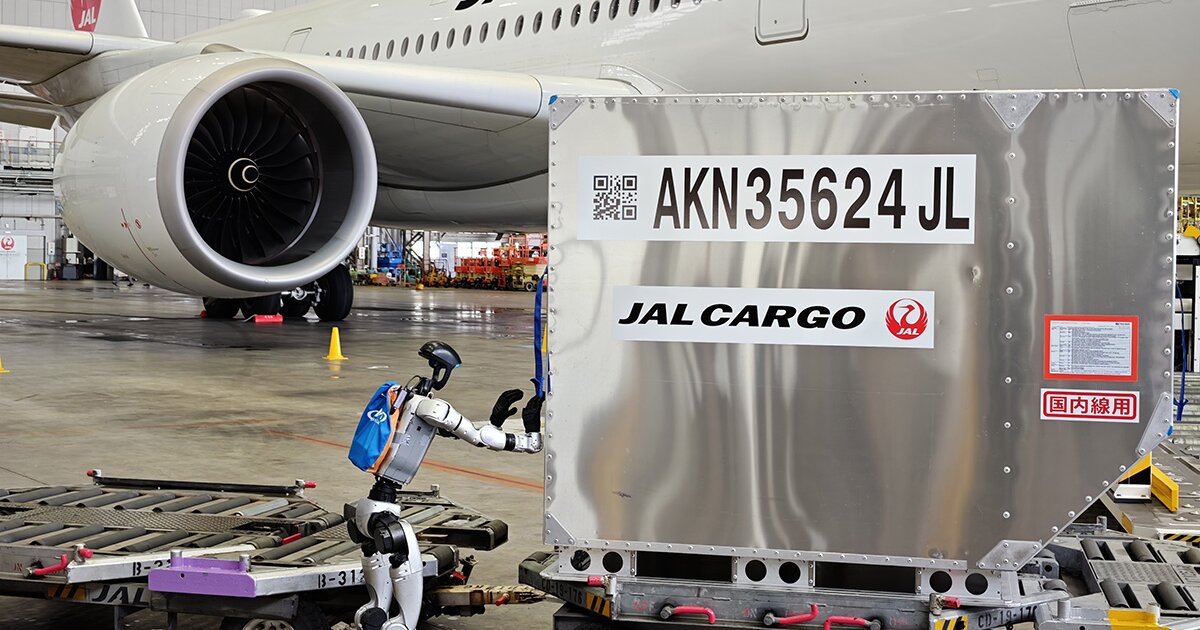
The next time you fly through Tokyo’s Haneda Airport, your luggage might be taken care of by the dexterous hands of a humanoid robot.
Japan Airlines is piloting the use of these robots starting this month in a bid to tackle the growing influx of tourists coming into the country, amid what it describes as a labor shortage in the aviation industry.
The robots appear to be G1 models from China’s Unitree, which stand just over 4 ft (130 cm) tall, weigh about 77 lb (35 kg), move at up to 4.4 mph (2 m/s), and work for 2 hours on a full charge. Each of these costs about US$13,500 for a basic variant.
Humanoid robots set to handle baggage at Tokyo airport
Humanoids like these can adapt to the challenging tasks assigned to ground support staff, which include operating a range of equipment such as loading dollies that hold cargo units, service stairs used in place of jet bridges, and units for supplying electrical power and temperature-controlled air to planes. They’ll also load baggage onto aircraft and clean cabins.
The Guardian noted in its coverage this week that Japan is facing a serious labor shortage. That’s all in the face of a shrinking indigenous workforce, calls to rein in immigration which the government is responding to with more stringent regulations for entrepreneurs, a potential rise in tourism, and a growing need for foreign workers to meet its 2040 growth targets.
Reports of automation and adding robots into the mix understandably spark concerns about jobs being taken away from humans. For its part, Japan Airlines notes that ground handling labor is currently in short supply, due in part to a decline in the population of working-age people. The issue has posed substantial difficulties amid an increase in tourism.
GMO AI & Robotics Corporation
Haneda Airport, which sees more than 60 million passengers move through it each year, will be the proving grounds for this program through 2028. It’s part of a joint project between the airline and Japanese tech company GMO Internet Group’s division that promotes the social implementation of AI and robotics.
The airline says it’s aiming for efficiency and cutting down on ground support labor requirements. But if you’ve ever seen Japan’s human baggage handlers at work, you’ll know the bar’s set high for thoughtful luggage handling – so these robots will have to hone their chops at treating your stuff with utmost care.
Source: Japan Airlines

