


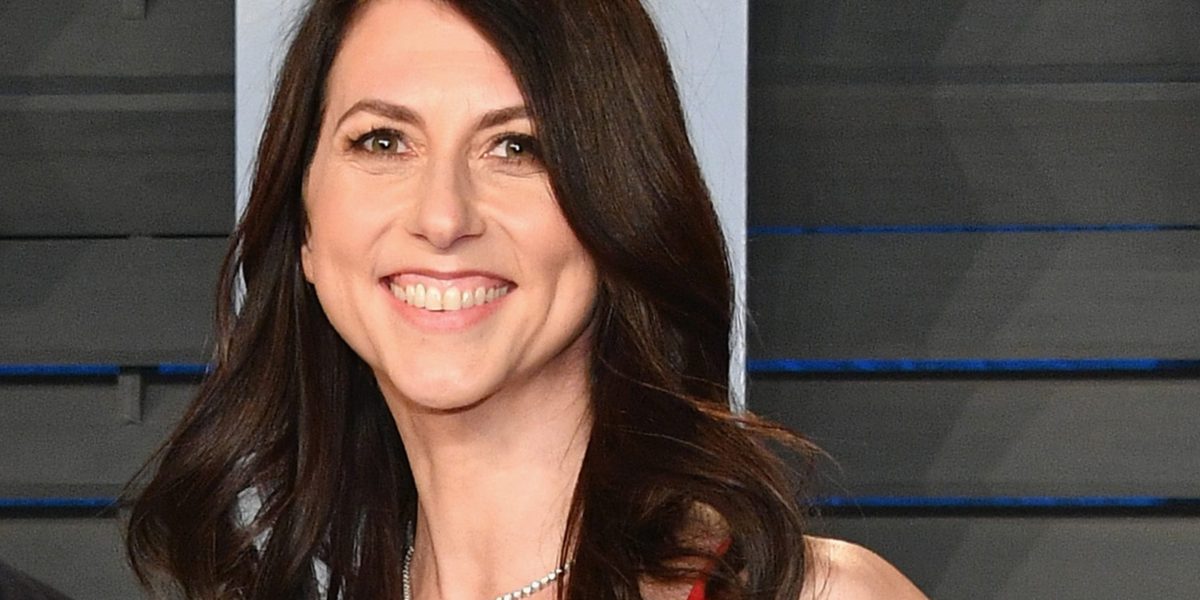
While billionaires have come under fire for not living up to their philanthropic promises, one person is rising from the rest: MacKenzie Scott. She’s pouring billions into education, public health, and the environment—and now, she just funneled some of her fortune to help feed and support millions of Americans.
Scott recently gave a $70 million unrestricted donation to Meals on Wheels America, a nationwide charity providing meals, social connection, and safety checks to more than 2 million U.S. seniors and homebound people every year.
The organization announced Scott’s donation last Friday, adding that her contribution comes at a time when one in three local Meals on Wheels providers have a waitlist, with elderly citizens having to wait an average of four months for meals and services.
Scott’s $70 million donation is just a drop in the bucket of her $26 billion philanthropic streak since 2020. The early Amazon employee and ex-wife of Jeff Bezos worth $41.1 billion is rewriting the playbook of billionaire philanthropy.
How Scott’s $70 million donation will support America’s isolated elders
Thanks to Scott’s latest investment, Meals on Wheels said it can focus more on opportunities to “strengthen the network’s capacity” in the long-term and give more resources to local providers.
Meals on Wheels currently supports more than 5,000 community-based programs related to senior hunger and isolation. Scott’s gift will make a real difference, the organization says, but it won’t completely bridge the country’s growing needs—it hopes her donation will inspire others to support.
“We will steward the investment thoughtfully and responsibly to help generate economies of scale and impact that strengthen the capacity of local providers so they can reach more older adults with meals, connection and care,” Kristine Templin, chief development and marketing officer at Meals on Wheels America, tells Fortune in a statement.
“Ultimately, success means more seniors are able to access the support they need to live more nourished, independent and healthy lives.”
Scott’s $26 billion in donations has made her the face of ultra-rich philanthropy
Scott isn’t just donating millions to combat America’s issues of hunger and isolation—her foundation, Yield Giving, has been stealthily donating billions since 2020 with no strings attached.
Less than a week ago, Scott donated $7 million to Minnesota tribal college Red Lake Nation College; and just weeks before that, it was revealed Scott had donated $42 million to Elizabeth City State University, one of America’s historically Black colleges and universities. That contribution set her at a new milestone: it pushed her total giving to HBCUs over the $1 billion mark. Since 2020, she has been on a spending spree to support the schools; the 56-year-old has given $20 million to Xavier University, $20 million to Morehouse College, $80 million to Howard University, and $38 million to Spelman College, to name a few.
The mega philanthropist has also given an eye-watering $436 million in unrestricted giving to Habitat for Humanity: a global non-profit organization helping alleviate the housing crisis. Plus, she’s invested in climate action, donating $90 million to the Forests, People, Climate (FPC) collaborative determined to end tropical deforestation. Even the Girl Scouts of the USA received about $84.5 million from Scott to support girls’ leadership and programming.
The philanthropist donated a whopping $7.2 billion in 2025 alone and is named the third most generous philanthropist in the world, having given away 46% of her net worth, according to an analysis from Forbes earlier this year. In contrast, Forbes also estimated that Bezos and his wife, Lauren Sánchez Bezos, have only donated $4.7 billion throughout their entire lives. In total, her philanthropic vehicle Yield Giving totals her more than 2,700 donations at $26 billion—but the size of her checks is only one way she’s shaking up billionaire charity.
Notably, philanthropy experts have told Fortune that Scott strays from the pack through her “stealth giving” practice: donating unrestricted money directly to nonprofits, trusting them to handle the funds as they see fit. She’s in direct opposition to “very technocratic” ways of giving, emulated by many billionaires who have been in the spotlight, like Bill Gates—and organizations are keen to see if others will follow in her footsteps.
“I think she’s a trendsetter and sort of moral ballast to the way that Gates has been,” Bella DeVaan, associate director of the charity reform initiative at the Institute for Policy Studies, told Fortune last year. “I do see that being not just a trend, but shifting common sense toward trust-based philanthropy.”

