


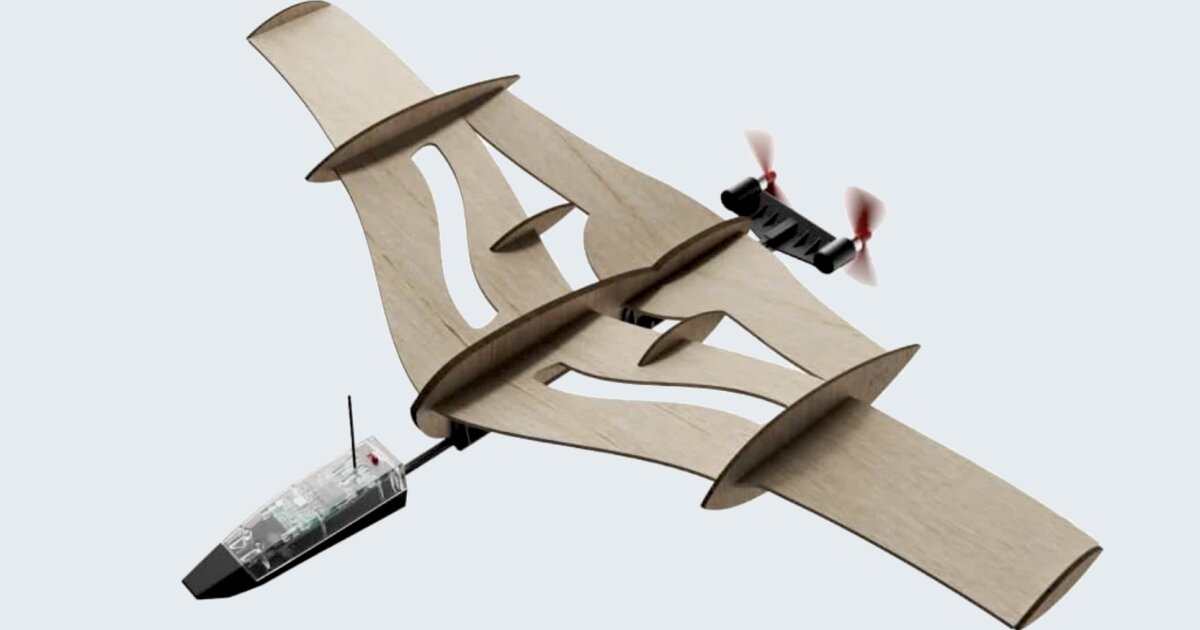
In its most ambitious set, PowerUp Toys’ Starflux Balsa Wood RC Airplane Kit delivers a hands-on experience where each step influences success in the air. And let’s just say, the experience was quite a humbling one for a flight enthusiast like myself.
We’ve covered PowerUp’s innovative smart planes before, but the latest kit takes things up a notch with more involved assembly. Once again the hobby company has teamed up with Brad and Bruce Williamson – aka Nighthawk Gliders – two flight enthusiasts with a long history of creating small-scale balsa-wood models designed to get in the air and stay there. The model features PowerUp’s 4.0 smartphone-controlled engine but far more opportunity for experimentation than previous simpler paper and wood designs.
The Starflux kit also introduces a novel 2-in-1 design where the finished wooden body can be rotated 180 degrees – essentially flipping the plane around – for a completely different operating experience. It’s also more “floaty” than previous models, offering more control in executing creative maneuvers in the air, rather than straight flight from point A to B.
PowerUp Toys
The kit is advertised for ages 14 years and up, but I found it to be a deceptively challenging build involving some intricate work – not a strong point of mine – as well as the use of superglue, sanding and other tools. So I can guarantee it’s for adults, too. The materials are quite delicate, and there are quite a lot of steps involved – unlike the old days of slotting two pieces together to launch into the air via rubber band – which I learned the hard way, snapping one of the wing pieces after not taking the time to sand a connecting joint well enough (I glued and sanded it back into shape, and then hoped for the best).
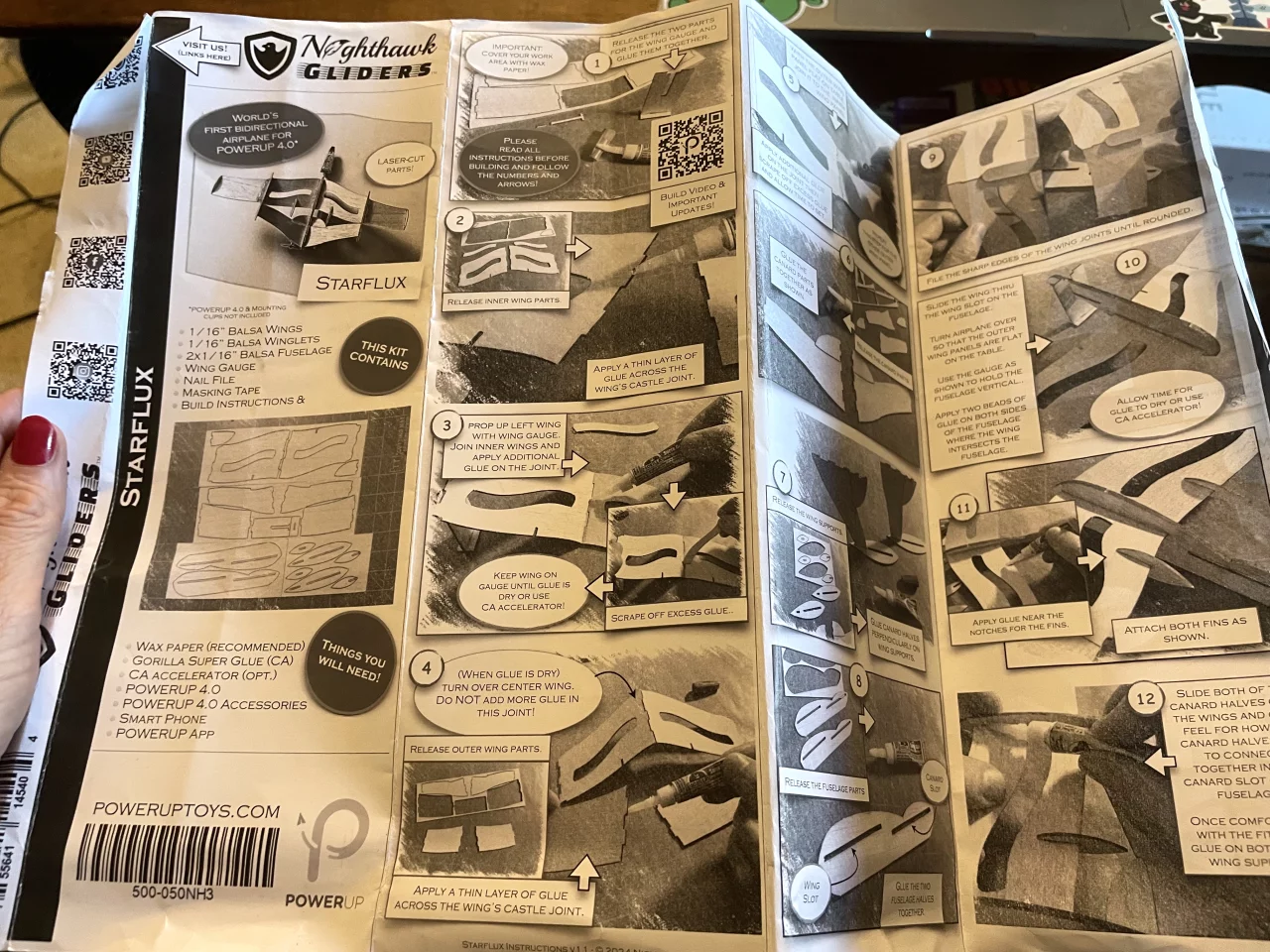
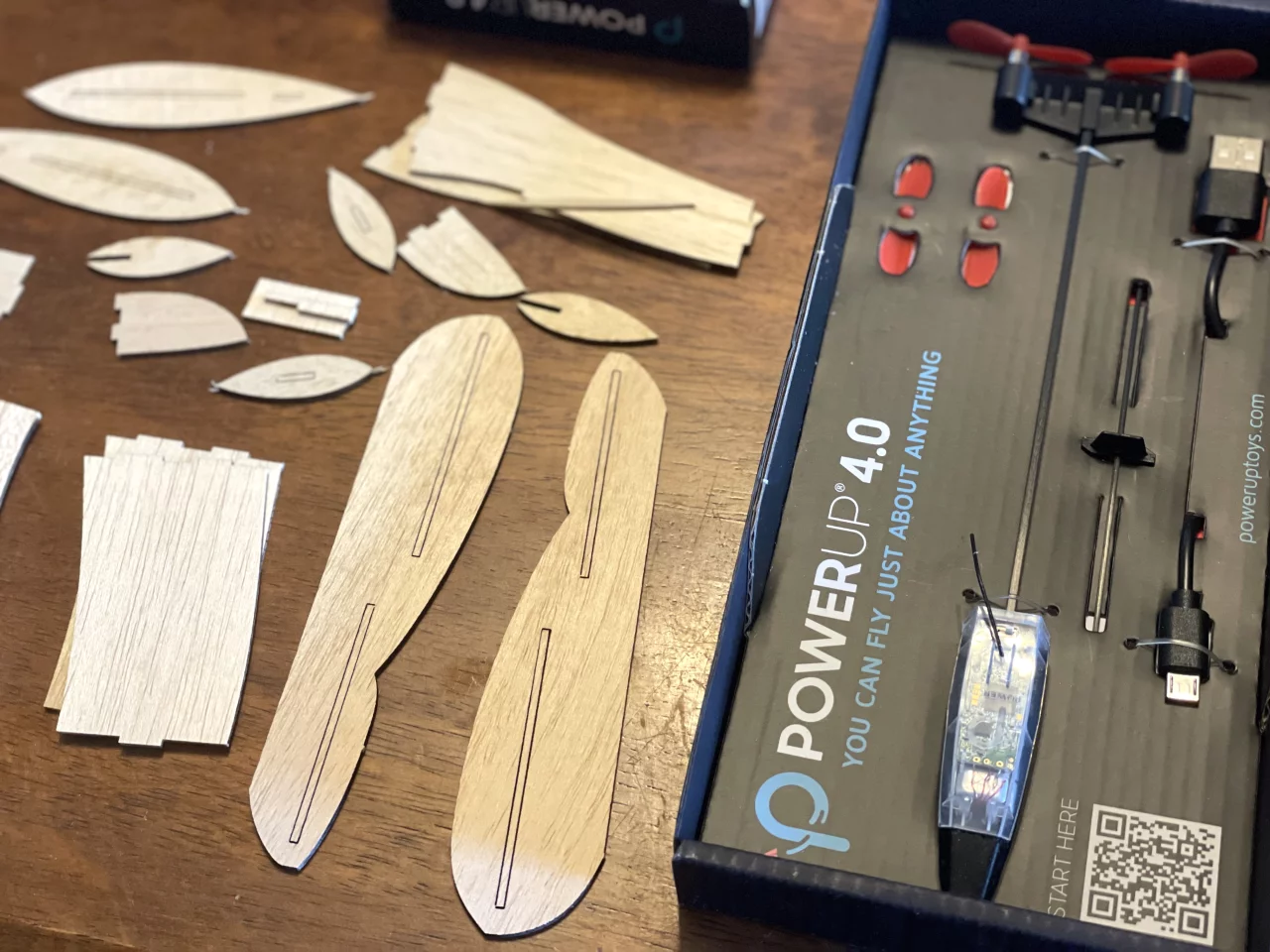
In the box, you’ll find the balsa wood rectangles with laser-cut pieces to pop out, as well as a large and detailed fold-out instruction manual that’s half step-by-step guide and half retro comic strip. You may be totally fine with following the directions from this – or not need it at all – but if you’re new to the game, it can be a little tricky to determine the right positioning of some of the smaller pieces. And it’s not the most practical manual if you don’t have a lot of space to work with.
New Atlas
Fortunately, PowerUp has provided an excellent step-by-step guide for putting all the pieces together – a huge help for not just seeing the work involved (where to glue, how to get the angles right, issues to look out for). Bear in mind that if you’re just using normal superglue or a similar strong wood adhesive, you’ll have a few pauses in construction unlike in the video, where the maker uses an accelerant to speed up the process.
POWERUP Starflux
When it comes to putting things together, from IKEA furniture to flat-pack ebikes, I can confidently say it’s not a process I enjoy in the slightest. Did i enjoy building this plane? Yes and no. But it’s quite a meditative experience and before long, even if you’re a complete newcomer, you’ll intuitively sense what’s going to hinder or help your finished plane when it comes to launch time. In this sense, it feels more like a relaxing craft project than a quick-fire assembly job – which I found more enjoyable once I got the hang of it.
New Atlas
Once finished, you’ll be able to attach the 4.0 hardware – which is laid out neatly in the compact box and probably the easiest part of the whole build. When the battery is charged (around 30 minutes) you can connect your plane to the PowerUp app via Bluetooth. While the app is fairly basic, it does allow for some in-flight control adjustment and like previous models has in-built adjustments for different weather conditions. If you’ve done a good job, you’ll ideally then have control over not just flying but trying out some more ambitious tricks in the air. I’d recommend test flights with the more “classic” plane configuration, before moving onto that second canard-style positioning.
Sadly, while I can confirm that I did have a finished model – one that didn’t look quite as neat as the completed plane in the instruction video – the evidence sits on a smart tablet I was reviewing at the same time. And now I’m around 4,500 miles (7,250 km) from that evidence (convenient, I know).
The bar was set low as to how my poor model would perform if it didn’t nose-dive upon launch – like every paper plane I have ever tried to fold and fly – and let’s just say it was a harsh lesson in aerodynamics. Because of the nature of the construction, it’s difficult to go back to the “drawing board” and adjust things once they’re glued tight, without forcing and damaging the plane.
Reading others’ experience of building and flying the StarFlux model made me feel a little better – because success is the hopeful outcome but certainly not guaranteed. So if you fail with this one, just remember that the journey might be more enjoyable than the destination (something that few people would say about actual air travel).
New Atlas
The comprehensive bundle also comes with the existing bright-red PowerUp 4.0 paper plane – where I probably should have started, to be honest – that uses the existing carbon-fiber body that attaches to the balsa wood model in order to power and control this one. There’s certainly novelty in turning a classic folded paper plane into a smart device you fly with your phone. And the paper allows for a little more flexibility in adjustments.
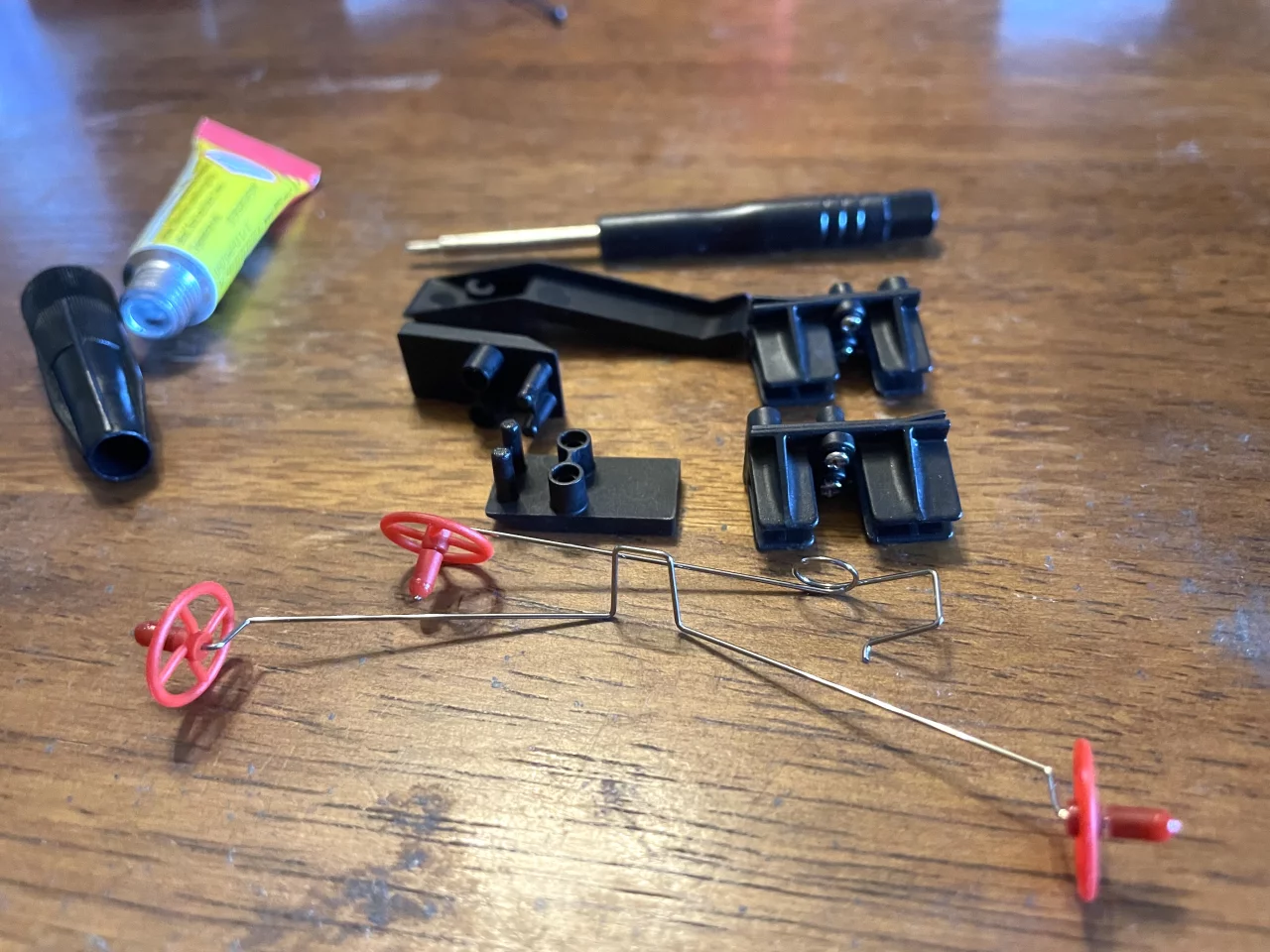
While this was about the extent of my patience with my very average engineering abilities (the rather crude phrase, “You can’t polish a turd,” comes to mind), you’ll also find an accessories box in the extensive kit. Featuring front and rear landing gear, vertical and horizontal connectors, a front clip, screws and screw driver, the kit lets you experiment with your paper plane with other materials including foam and cardboard.
This is a nice touch, given the paper model doesn’t allow for a whole lot of customization, and it offers mixed-medium experimentation that lets you see how the shape, weight and positioning of different materials acutely influence aerodynamics.

New Atlas
The Starflux Balsa Wood RC Airplane Kit is available from PowerUp for US$116.
Source: PowerUp Toys

