


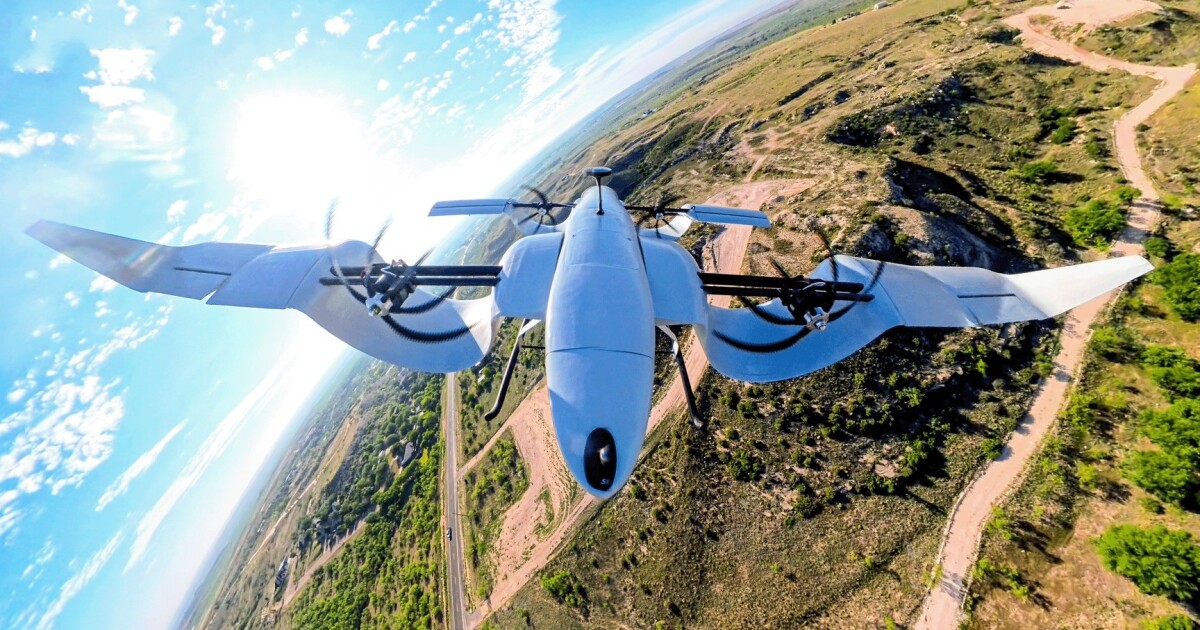
We’ve seen lots of designs for vertical take-off and landing vehicles over the years, but none are quite as striking as the wings on HopFlyt’s Cyclone. The curved wings have their root in a design first introduced in the 1920s but never employed in a commercial vehicle.
In 1925, a man named Willard Ray Custer had an interesting idea. Instead of getting an airplane to move at rapid speeds to create lift on its wings, why not move air over the wing using a propeller? So instead of pushing an entire plane through the air to get it skyward, you in effect, bring the air to the wings.
A few years later, Custer patented his design for a channel wing. This design, which features propellers set into a half-circle channel on each wing, provided planes shorter take-off distances thanks to lift at slower airspeeds. To demonstrate this, Custer had a man run alongside one of his channel wing planes until it lifted off the ground. In another test, Custer’s team strapped the plane down, and turned on the propellers. The resultant lift the craft exhibited is probably the first instance of plane taking off vertically.
Unfortunately, Custer never found a way to make channel wings commercially viable. Planes back then were simply too heavy to make the system efficient.
NASA Langley
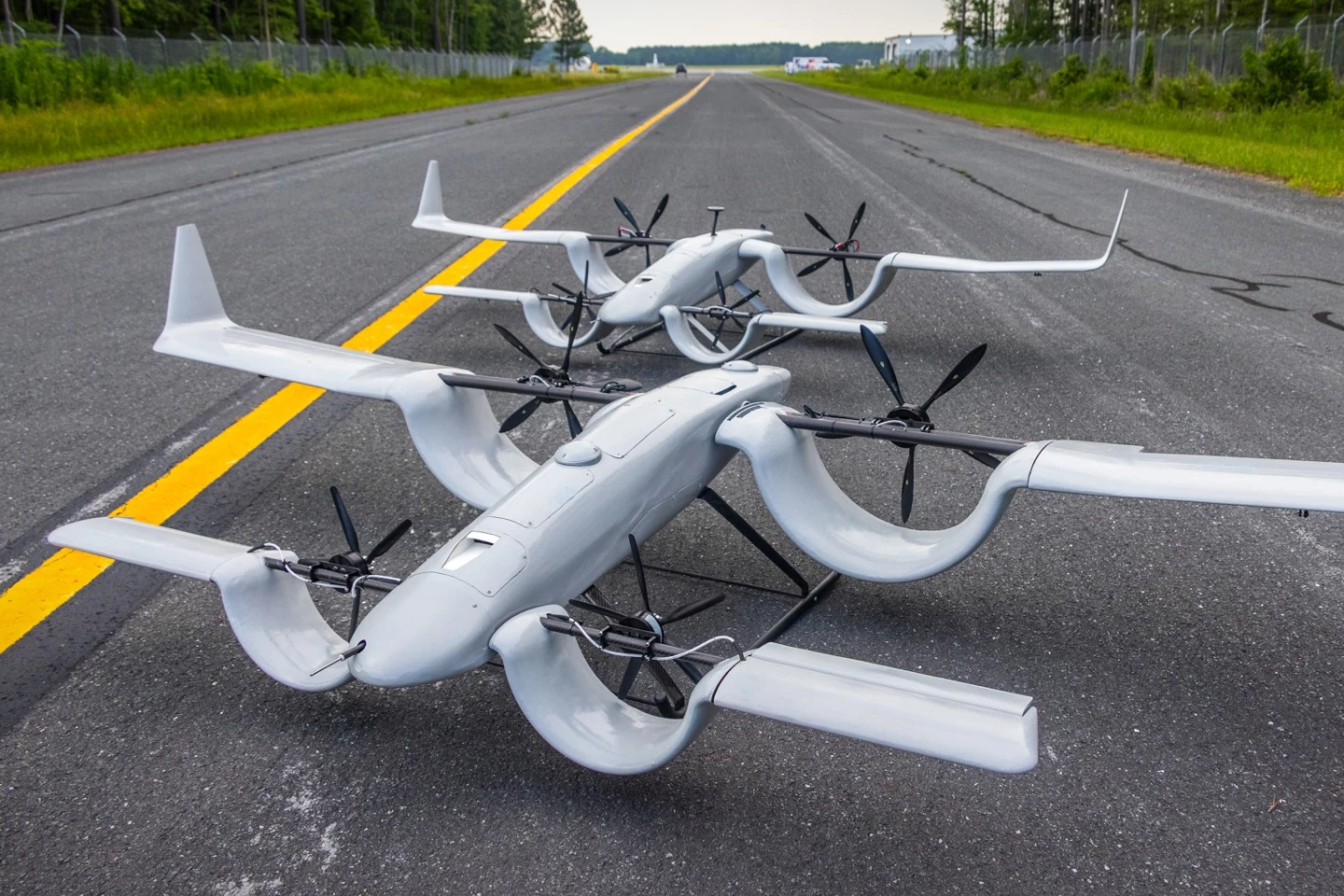
Fast-forward to today, and the advent of electric vertical take-off and landing vehicles (eVTOLs), which are a lot lighter than the planes of old. That’s, in part, what led the engineers at HopFlyt to try channel wings again – and this time, they allowed the channels to pivot. During takeoff, the channel section faces the rear of the craft, while during forward flight, the channel pivots to beneath the wing. The channels can also be used as a braking mechanism when needed.
This design not only proved effective, it also provided new efficiencies, and has now been incorporated into the company’s Cyclone hybrid VTOL drone, which you can see in action in the following video.
HopFlyt: Vertical Visions
“It’s kind of a funny thing, but I’ve heard people say that by the 1960s in aviation people had already thought of everything,” HopFlyt’s Chief Engineer Neil Winston told New Atlas. “But the technology wasn’t quite there to make everything work. There were variable takeoff and landing aircraft back then, but there weren’t the digital control systems. There were ideas for air taxis, but the electric motors and the types of propulsion that you needed didn’t exist back then.”
Thanks to its unique design, HopFlyt says that the Cyclone achieves its initial climb using a third less power than other VTOLs. And even though the craft runs on a mix of electric power and fuel, the company says that it burns less than three gallons per hour during flight, making it exceptionally efficient.
Plus that electric/fuel combo allows the Cyclone to fly over 800 miles (1,287 km) or to carry 250 lb (113 kg) of internal cargo over shorter distances. The company claims that the Cyclone will deliver a 90% lower operational cost than similar craft and a 50 times reduction in CO2 emissions.
HopFlyt
HopFlyt is targeting 2027 for the commercial release of the Cyclone, with possible applications including naval resupply, offshore energy rig resupply, and medical logistics. Future plans may include the development of passenger vehicles making use of the channel-wing’s efficiencies.
“It’s kind of an exciting time in aviation now,” says Winston, “where it’s a merging of a lot of technologies including battery systems, electric propulsion, and hybrid hybrid systems that are enabling this new class of drones and eVTOLs.”
Source: HopFlyt

