


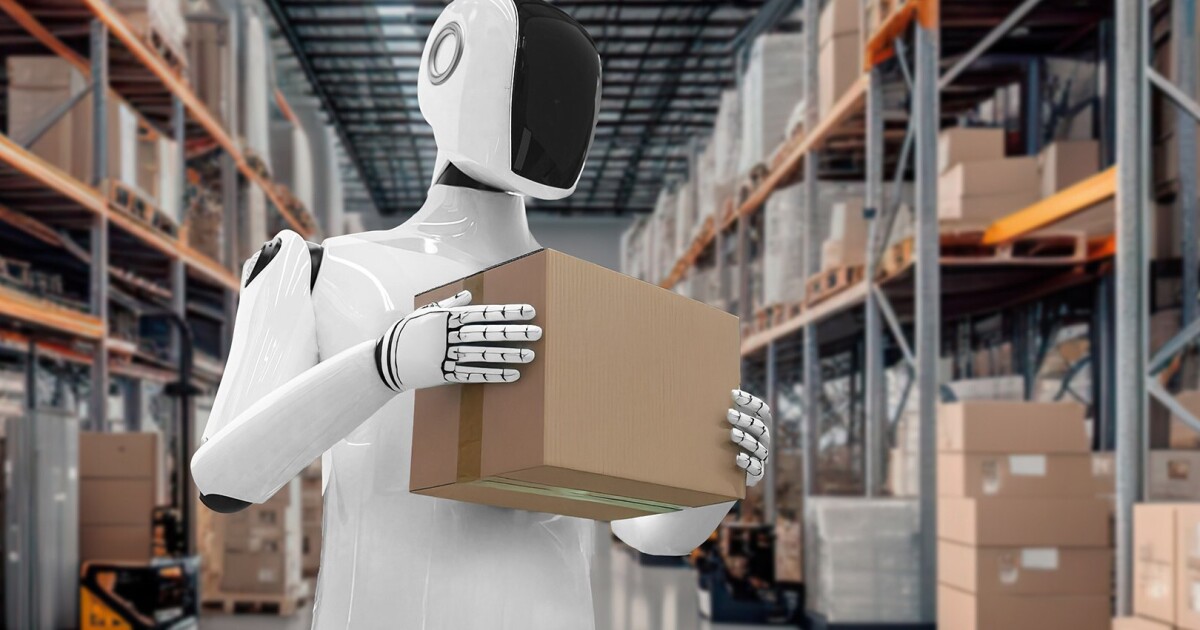
Texas Instruments has teamed up with NVIDIA to link technologies designed to “accelerate the path from simulation to the safe deployment of humanoid robots in the real world.” The partnership fuses real-world sensing tech with massive computing power.
Physical AI is coming on strong. If you’re not familiar with the term, it technically refers to machines, like humanoid robots, that can navigate autonomously and use artificial intelligence to make decisions about their actions. Not-so-technically, it means the world will soon have thinking autonomous robots who will take over the planet and make us their slaves.
Until the full robot domination happens, physical AI’s most visible application in the real world has thus far been in factories. Just this week, in fact, we reported on BMW’s use of the technology for the first time at one of its plants in Europe. And in January, Hyundai announced that Boston Dynamic’s Atlas robots were getting ready to hit the factory floor. To accelerate Atlas’ development, Boston Dynamics also announced a partnership with DeepMind, the artificial intelligence arm of Alphabet.
There’s also been a fair bit of talk about using physical AI to help with chores around the home, as bots first observe us, then mimic our actions – which is how LG’s new CLOiD bot rolls.
Not to be left behind in the push to accelerate physical AI, Texas Instruments (TI) announced that it will lend its mmWave radar technology to bots operating on NVIDIA’s Jetson Thor, which is basically a supercomputer designed to run from inside robots. The TI tech takes inputs from robot-mounted visual cameras as well as radar to allow the bots to make intelligent decisions about their surroundings.
For example, humanoids produced through this partnership will be able to avoid walking into glass doors that might look transparent and could seem invisible based on visual input alone. The radar system will also allow humanoids to operate in low light or difficult situations such as fog or smoke.
The TI and NVIDIA technologies will be linked through an ethernet connection by NVIDIA’s Holoscan Sensor Bridge, a high-speed data transmission system which is designed to reduce latency from input to output.
“The safe operation of humanoid robots in unpredictable environments requires a massive leap in processing power to synchronize complex AI models with real-time sensor data and motor controls,” said Deepu Talla, vice president of robotics and edge AI at NVIDIA. “The integration of Texas Instruments’ sensing and power management technologies with the NVIDIA Jetson Thor platform provides developers with a functional safety-capable foundation to accelerate the deployment of next-generation physical AI.”
Details of the new partnership will be announced at NVIDIA GTC, an AI conference for developers to be held in San Jose, California, from March 16-19.
Source: Texas Instruments

