


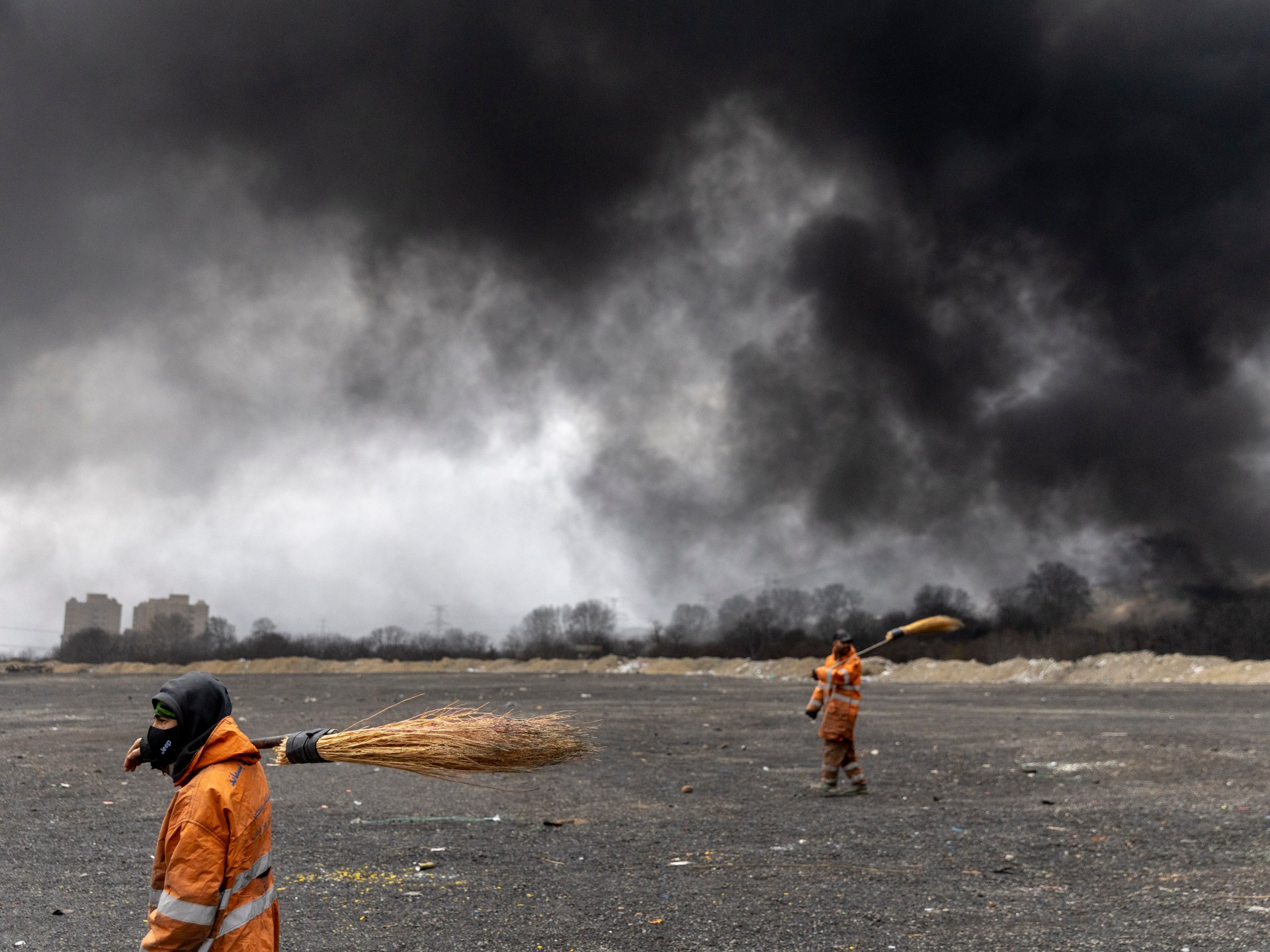
Tedros Adhanom Ghebreyesus says children, the elderly at particular risk after damage to Iranian petroleum facilities.
Published On 9 Mar 2026
The head of the World Health Organization has warned that recent Israeli attacks on oil facilities in Iran could have negative effects on public health, with Iranian children and the elderly among the most vulnerable.
Tedros Adhanom Ghebreyesus said in a statement on Monday that damage to Iranian petroleum facilities “risks contaminating food, water and air”.
Recommended Stories
list of 3 itemsend of list
Those hazards “can have severe health impacts especially on children, older people, and people with pre existing medical conditions”, Tedros warned in a post on X. “Rain laden with oil has been reported falling in parts of the country.”
The Iranian authorities said oil facilities in the capital, Tehran, and the nearby province of Alborz were targeted on Saturday in the United States-Israeli war against the country, the Fars news agency reported.
Israel said it struck “a number of fuel storage facilities in Tehran” that were used “to operate military infrastructure”.
The strikes sent massive flames and clouds of thick, black smoke into the sky above Tehran, with Al Jazeera’s Tohid Asadi reporting that black raindrops fell early on Sunday morning.
The attacks on Iran’s energy infrastructure came as the US and Israeli governments had vowed to continue to bombard the country despite mounting international concern over the widening conflict.
Iran has retaliated to the US-Israeli strikes by launching missiles and drones at targets across the Middle East, including energy infrastructure in nearby Arab Gulf states.
Human rights groups have condemned both Iran and the US and Israel for targeting civilian infrastructure.
Agnes Callamard, the head of Amnesty International, said on Monday that “Israel should have taken all feasible precautions to avoid or minimize the risks to civilians when targeting oil refineries” in Iran.
“The incidental harm to civilians, including the release of toxic substance, appears to indicate that too little precautions were taken and that the incidental harm to civilians is disproportionate,” she wrote on X.
“The scenes of catastrophe described by Iranians after Tehran’s oil depots were bombed are yet another demonstration that ultimately, whatever they may say, the US and Israel’s attacks on Iran are harming first and foremost civilians, including children.”


