


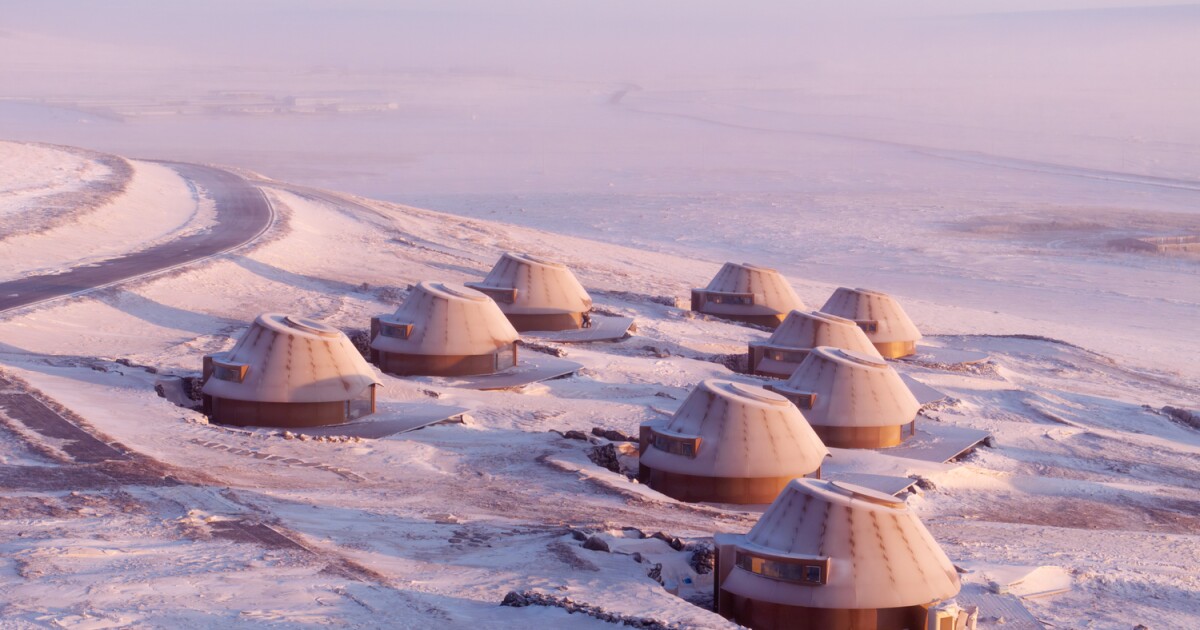
PLAT ASIA has completed a 1,634-square-meter (17,588-sq-ft) hotel in the Baiyinkulun Steppe of Inner Mongolia, China. Dubbed Volcano-In Hotel of Arrivals, the resort forms part of a wider development within an ancient volcanic field and seeks to combine high-end accommodation with land rehabilitation in a fragile ecosystem.
The hotel sits southeast of a long-dormant volcanic crater dating back roughly 150,000 years. The chosen site for the hotel, which is exposed to seasonal snowdrifts and shifting sand, has struggled to sustain vegetation. The architects strategically chose to position the accommodation guest suites directly over existing sand depressions, in an attempt to halt their spread and encourage soil recovery.
The resort is comprised of a series of compact dwellings that are scattered across the landscape. Each cabin features a spherical façade clad in reddish metal panels and an aluminum roof. The cabins hover lightly above the terrain, and curved retaining walls double as snow screens and a protective perimeter to help buffer winds. Each unit was constructed with prefabricated components assembled on site, in order to reduce heavy groundwork and minimize any disturbance to the landscape.
supplied by PLAT ASIA
Stone-paved walkways connect the network of individual cabins. Inside the guests suites feature a sleeping area, relaxed living zone, bathroom, and private outdoor terrace. Above the bed, an oval skylight provides direct views of the night sky for optimal stargazing from the comfort of the bed. In addition, a narrow horizontal window frames the endless views of the volcanic horizon.
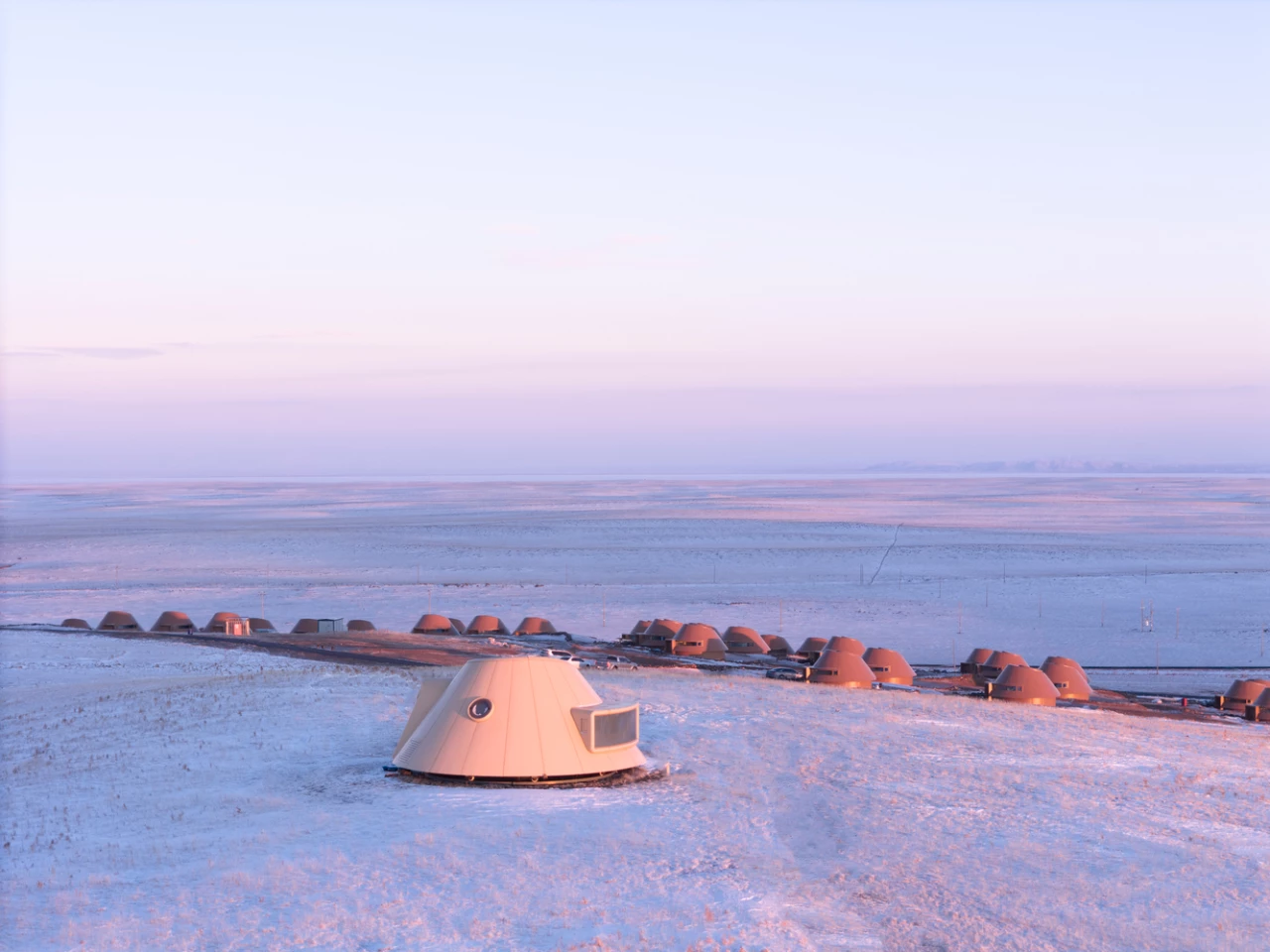
Perched on a nearby hilltop, an earlier prototype stands apart from the cluster of cabins. The prototype is smaller than the current guest units, and was a part of the resort’s experimental phase that preceded the current development.
supplied by PLAT ASIA
The long-term success of the project will depend on how the landscape responds over time. For now, the Volcano-In Hotel of Arrivals operates as a unique retreat for travelers wishing to connect with this isolated part of the world. It is also part of the larger Baiyinkulun Steppe & Volcano Tourism Resort, with its Volcano-In Visitor Center.
Source: PLAT ASIA

