


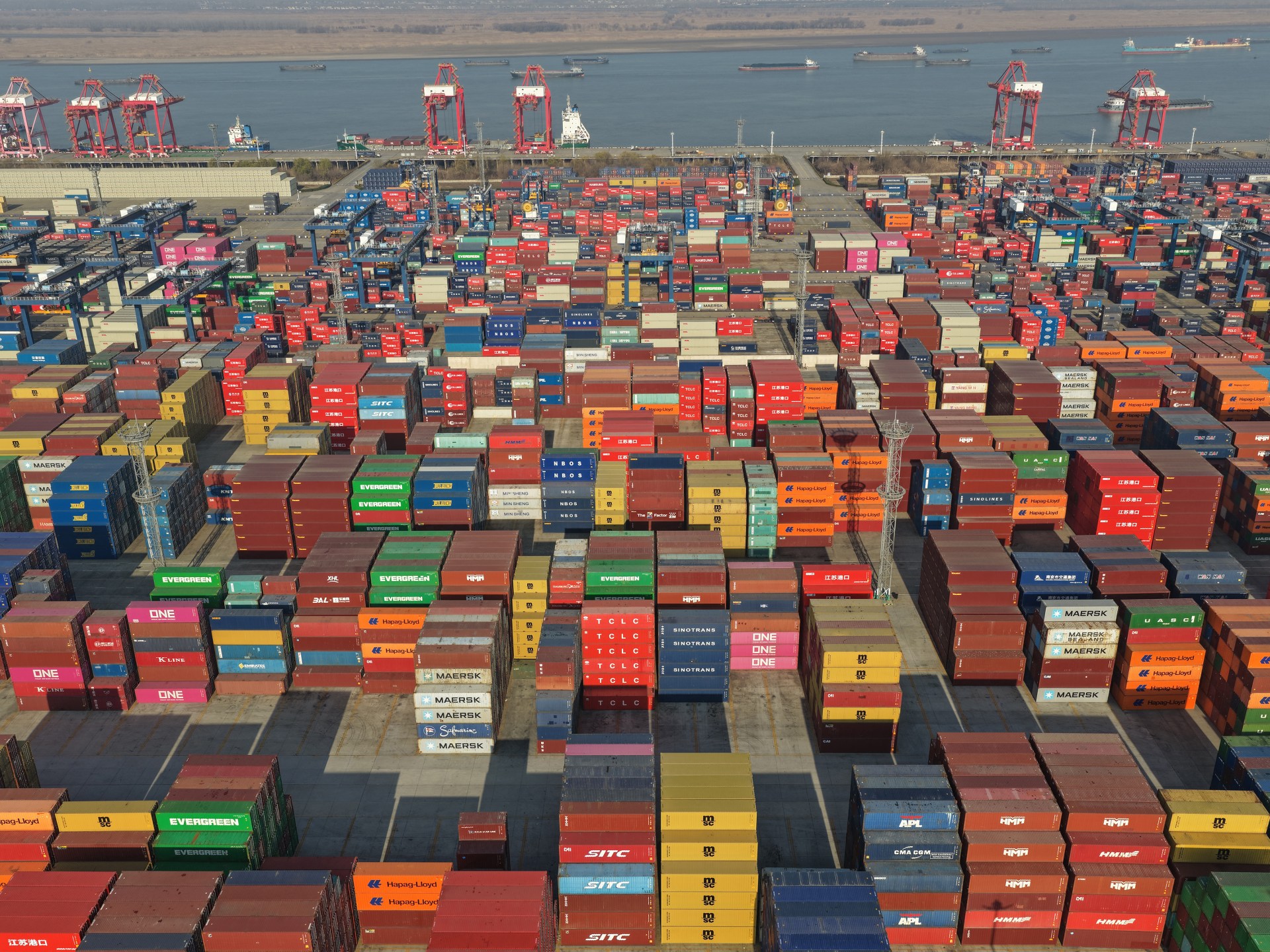
The second straight monthly deterioration in the United States’ trade deficit occurred as US firms boosted imports of computer chips and other tech goods.
Published On 19 Feb 2026
The United States trade deficit has widened sharply in December amid a surge in imports, and the goods shortfall in 2025 was the highest on record despite US President Donald Trump’s tariffs on foreign-manufactured merchandise.
The second straight monthly deterioration in the trade deficit reported by the US Commerce Department on Thursday suggested that trade made little or no contribution to gross domestic product (GDP) in the fourth quarter.
Recommended Stories
list of 4 itemsend of list
Exports rose 6 percent last year, and imports rose nearly 5 percent.
The US deficit in the trade of goods widened 2 percent to a record $1.24 trillion last year as American companies boosted imports of computer chips and other tech goods from Taiwan to support massive investments in artificial intelligence.
Amid continuing tensions with Beijing, the deficit in the goods trade with China plunged nearly 32 percent to $202bn in 2025 on a sharp drop in both exports to and imports from the world’s second-biggest economy. But trade was diverted away from China. The goods gap with Taiwan doubled to $147bn and shot up 44 percent, to $178bn, with Vietnam.
Trump last year unleashed a barrage of tariffs against trading partners with the aim, among other things, of addressing trade imbalances and protecting US industries. But the punitive duties have not yielded a manufacturing renaissance, with factory employment declining by 83,000 jobs from January 2025 through January 2026.
“There just isn’t any evidence out there in the economic research literature to suggest that tariffs have materially impacted trade deficits historically when countries have implemented them,” said Chad Bown, senior fellow at the Peterson Institute for International Economics.
The trade gap ballooned by 32.6 percent to a five-month high of $70.3bn, the Commerce Department’s Bureau of Economic Analysis and the US Census Bureau said. Economists polled by Reuters forecast the trade deficit would contract to $55.5bn.
The report was delayed because of last year’s government shutdown.
Imports increased 3.6 percent to $357.6bn in December. Goods imports surged 3.8 percent to $280.2bn, boosted by a $7bn increase in industrial supplies and materials, mostly non-monetary gold, copper and crude oil. Capital goods imports increased by $5.6bn, lifted by computer accessories and telecommunications equipment. That rise is likely related to the construction of data centres to support artificial intelligence.
But consumer goods imports fell, pulled down by pharmaceutical preparations. There have been large swings in imports of pharmaceutical preparations because of tariffs.
“But strong imports should also imply strength in details like inventories or business investment,” said Veronica Clark, an economist at Citigroup. “Surging computer imports in particular should correspond with stronger business equipment investment and could remain strong due to AI-related demand.”
Exports fell 1.7 percent to $287.3bn in December. But capital goods exports increased, boosted by semiconductors. There were increases in exports of consumer goods, including pharmaceutical preparations.

