


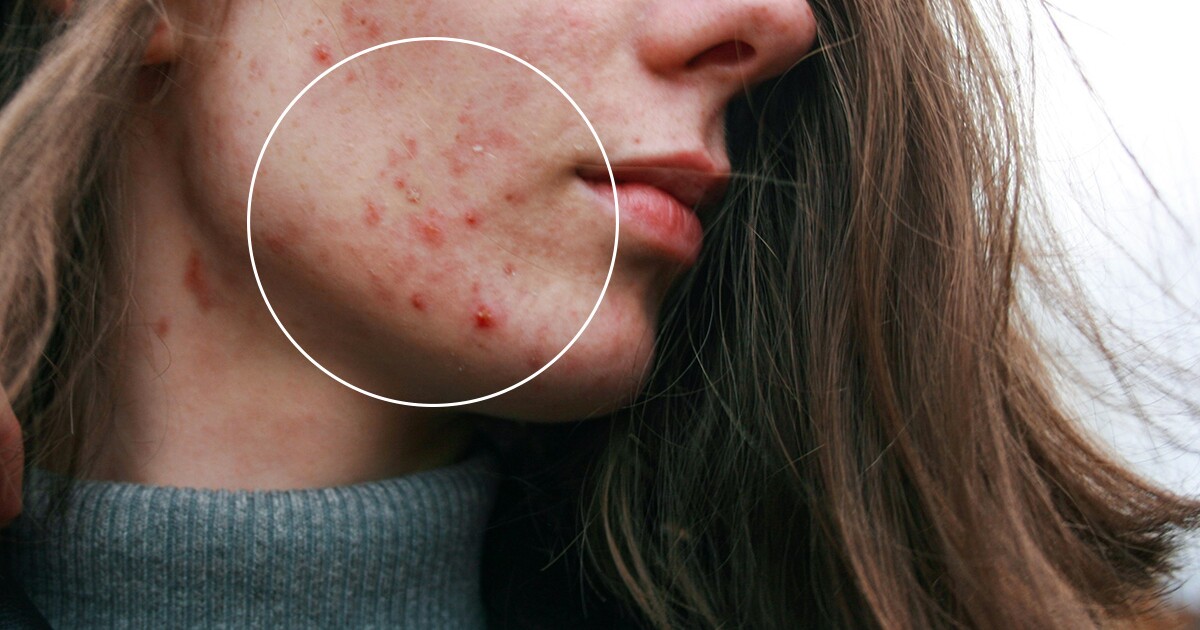
The future of acne treatment might look a whole lot different than the range of oral and topical medications currently on pharmacy shelves.
Previous attempts to use nano-scale delivery drivers to administer an antibiotic known as Narasin, and a combination of microneedles and ultrasound from a couple of years ago have shown promise.
Now, a team of researchers from Tsinghua Shenzhen International Graduate School and collaborating institutions across China have developed a new platform for simultaneously delivering hydrophilic and hydrophobic drugs directly into skin.
The major benefit of this approach is that it can provide an effective and safe pathway to treating acne vulgaris, which has a multifaceted pathogenesis that requires combination therapy. It also helps avoid oral treatments that can cause side effects.
The team has integrated hollow bubble structures within dissolving microneedles that can fit on a patch, which can be applied to the affected area of skin to treat it – while leaving no sharp waste behind. It’s fabricated from hyaluronic acid, and can be loaded with different drugs in each region of the microneedle, which is key for treating this surprisingly complex disease.
Image courtesy of the researchers
Each of these drugs with various properties can also be released at different paces. For example, you could have a hydrophilic anti-inflammatory agent in the main body, a hydrophobic antibacterial compound within the bubble walls, and a keratolytic agent in the base layer. Active ingredients like salicylic acid, PIONIN, and dipotassium glycyrrhizinate can thus be delivered precisely into affected areas in the skin for effective treatment.
The study’s corresponding author noted, “By introducing bubble structures into dissolving microneedles, we created dedicated compartments for hydrophobic and hydrophilic agents without compromising mechanical strength or biocompatibility. The resulting sequential release profile closely matches the biological needs of acne lesions, offering rapid symptom relief together with sustained antibacterial action.”

Image courtesy of the researchers
The researchers tested this treatment in mice with acne induced using a P.acnes bacterial injection in their ears. The specialized microneedle bubble patches, applied once daily for three days, reduced swelling, bacterial load, and pro-inflammatory cytokines. Plus, the tiny holes made by the needles disappeared within 5 minutes without causing any extra irritation or swelling. The findings were published in the journal Microsystems & Nanoengineering last November.
It certainly sounds promising so far. The paper concludes there is more work to be done optimizing the patch fabrication process to ensure the bubbles are uniform, so they can be used for long-term treatments. If it’s commercialized, the team’s platform could eventually bring relief to the estimated 800 million people who suffer from acne globally. The team hopes its utility could also extend to treating a variety of challenging skin conditions that require multiple drugs.
Source: AlphaGalileo

